Vishwaguru
Awakening the Cosmos...
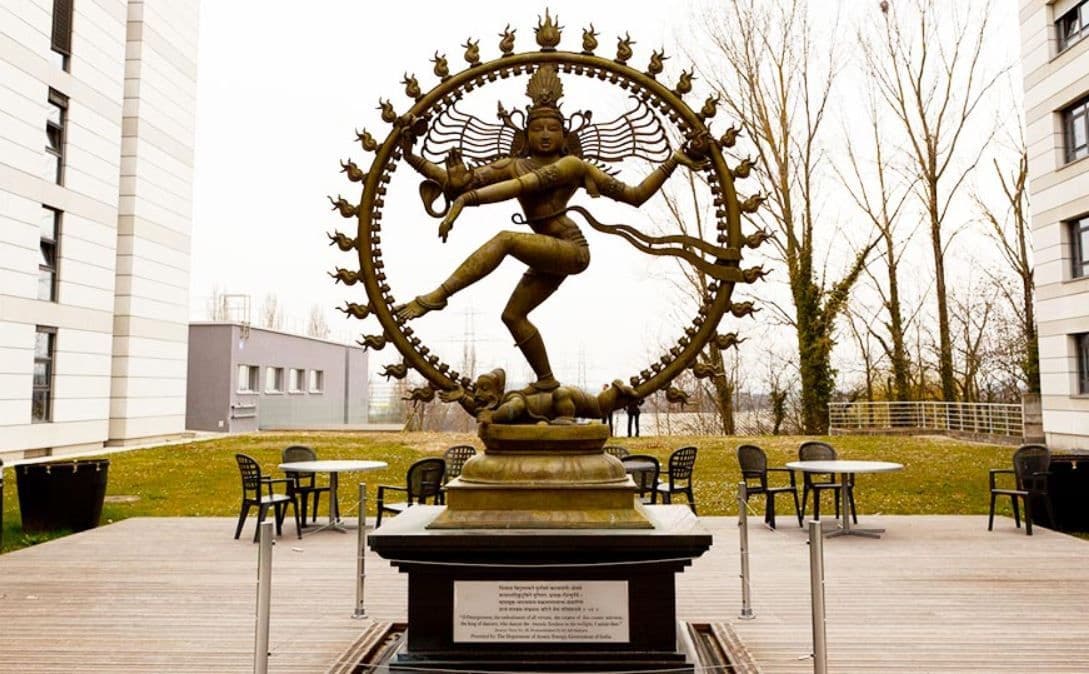
Nataraja
The Lord of Dance and the Cosmic Choreographer.
Who is Nataraja?
Nataraja is a depiction of the Hindu god Shiva as the divine cosmic dancer. His dance, the Ananda Tandava (Dance of Bliss), represents the continuous cycle of creation, preservation, and destruction.
Why is Shiva at the CERN Laboratory?
In 2004, the Indian government gifted a 2-meter statue of Nataraja to CERN (The European Organization for Nuclear Research). But why place an ancient deity at the center of the world's most advanced particle physics laboratory?
"Modern physics has revealed that every subatomic particle not only performs an energy dance, but also is an energy dance... For the modern physicists, then, Shiva's dance is the dance of subatomic matter."
How the Dance Came to Earth
Lord Shiva's Tandava
The supreme cosmic dancer performs the vigorous Tandava and goddess Parvati responds with the graceful Lasya.
Lord Brahma & The Natya Veda
Witnessing this dance, Brahma distilled the essence of the four sacred Vedas into a single form: the Natya Veda.
Bharata Muni's Natya Shastra
Brahma passed this knowledge to the sage Bharata Muni, who codified it into a structured manual: the Natya Shastra.
The Classical Dances
From the Natya Shastra, the strict rules of expression (Bhava), melody (Raga), and rhythm (Tala) evolved into the dances we see today.
The Three Pillars of Dance
Nritta
Pure Dance
Abstract movement focusing purely on rhythm, timing, and the geometric movements of the body in space.
Nritya
Expressive Dance
Dancing with emotion. Utilizing the Navarasas and intricate mudras to convey feelings and artistic sentiment.
Natya
Storytelling
The ultimate dramatic storytelling. Combining Nritta and Nritya to enact complete narratives from the epics.
Sacred Geometry
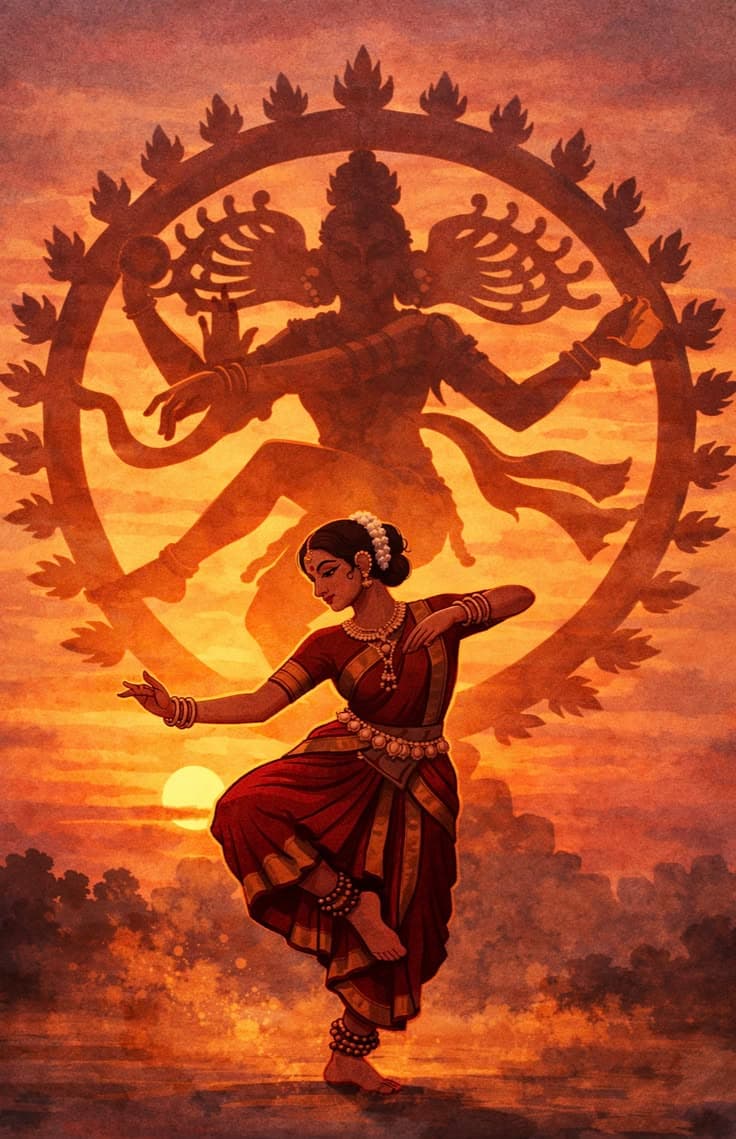
In Indian classical dance, sacred geometry lives within every gesture. The dancer's body becomes a moving Yantra, tracing circles, triangles, and lotus patterns that mirror the cosmic order.
"Dance is not only movement. It is mathematics in motion. Every line, angle, and symmetry creates harmony between body, rhythm, and space."
The Triangle
Bharatanatyam
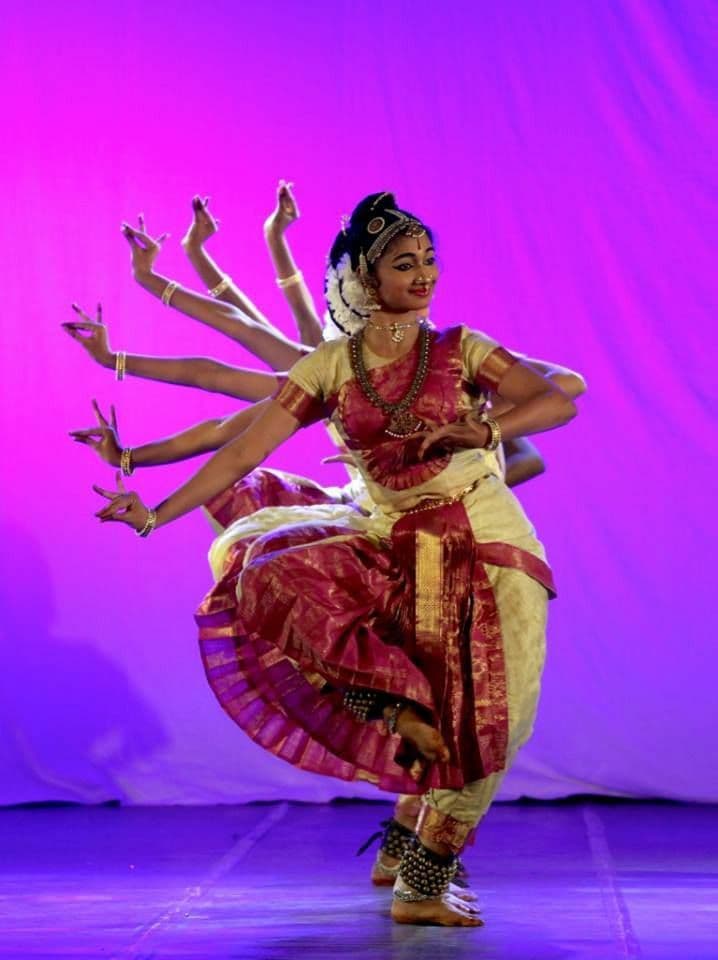
The Araimandi posture creates interlocking triangles, representing Fire and stability.
The Circle
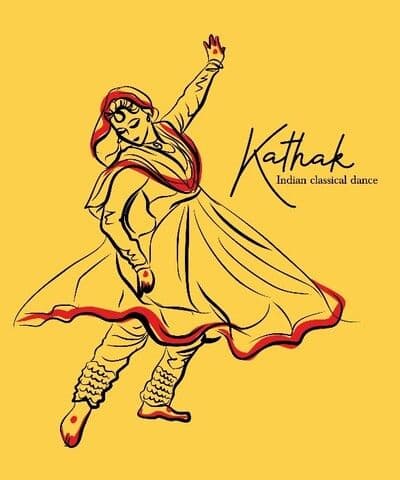
Kathak
During rapid Chakkars, the spine is the center point, tracing a perfect Mandala.
The Lotus
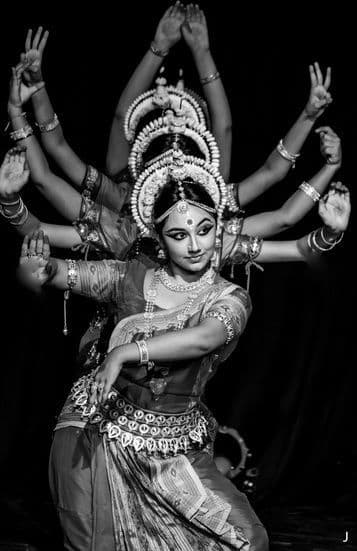
Odissi
Hands bloom from a bud alongside sweeping arm arcs, symbolizing spiritual awakening.
The Square
Kuchipudi
Balancing on a brass plate rim uses precise footwork representing the physical Earth.
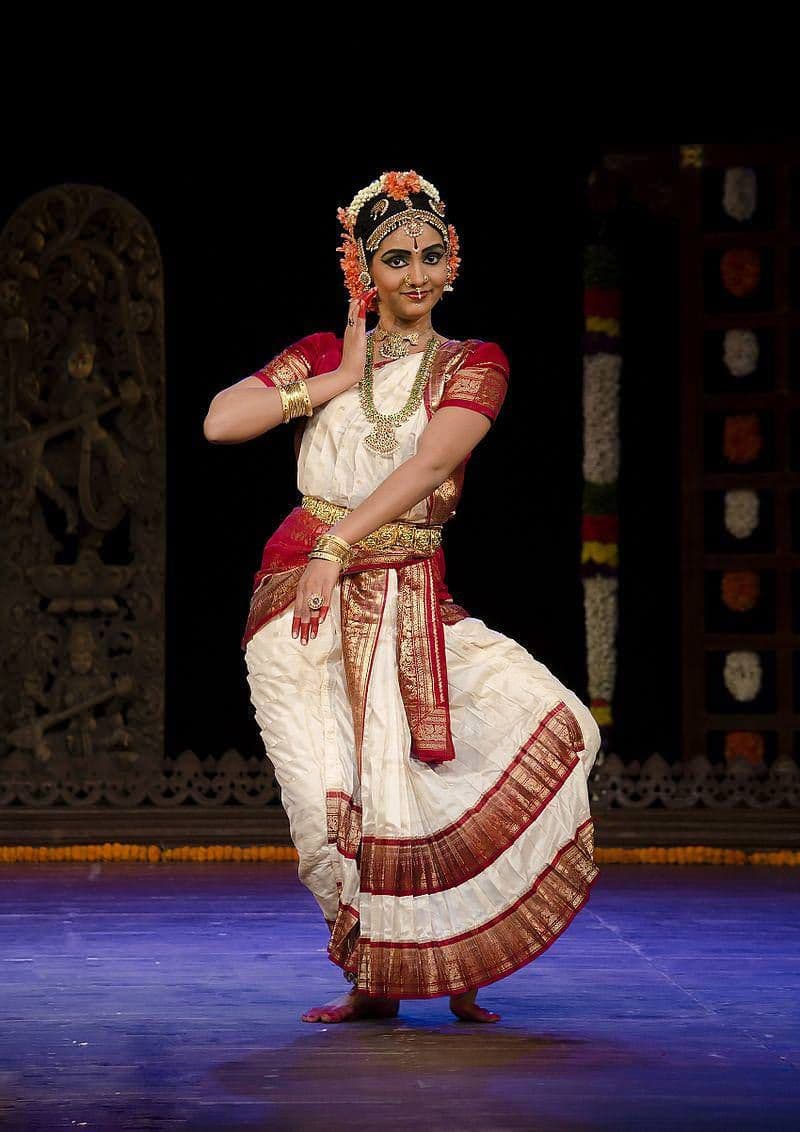
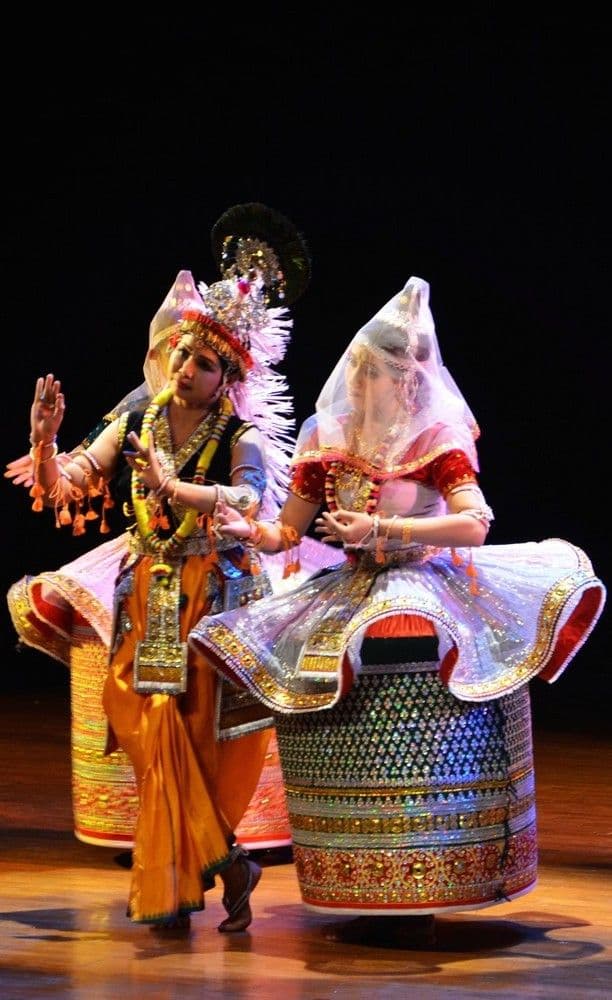
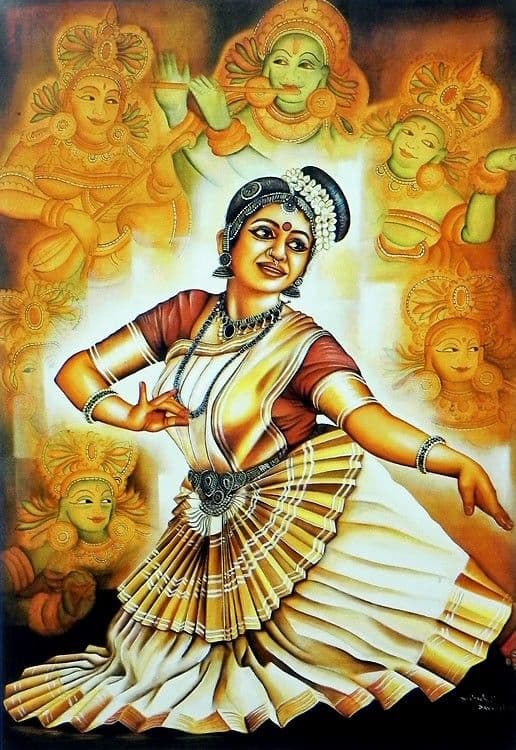
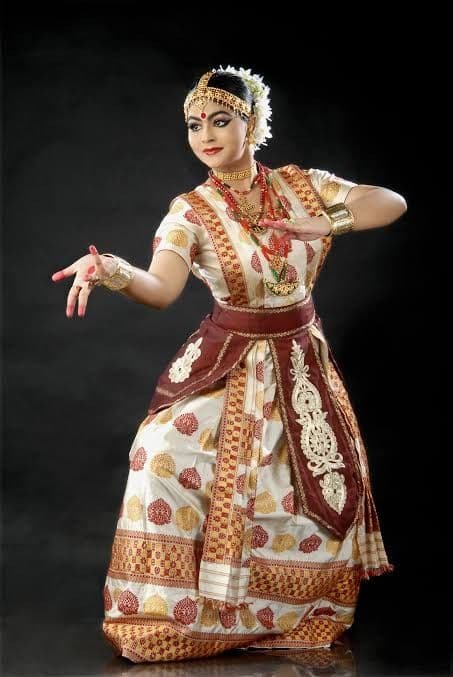
The 8 Classical Dances
Evolving from the Natya Shastra, recognized by the Sangeet Natak Akademi.
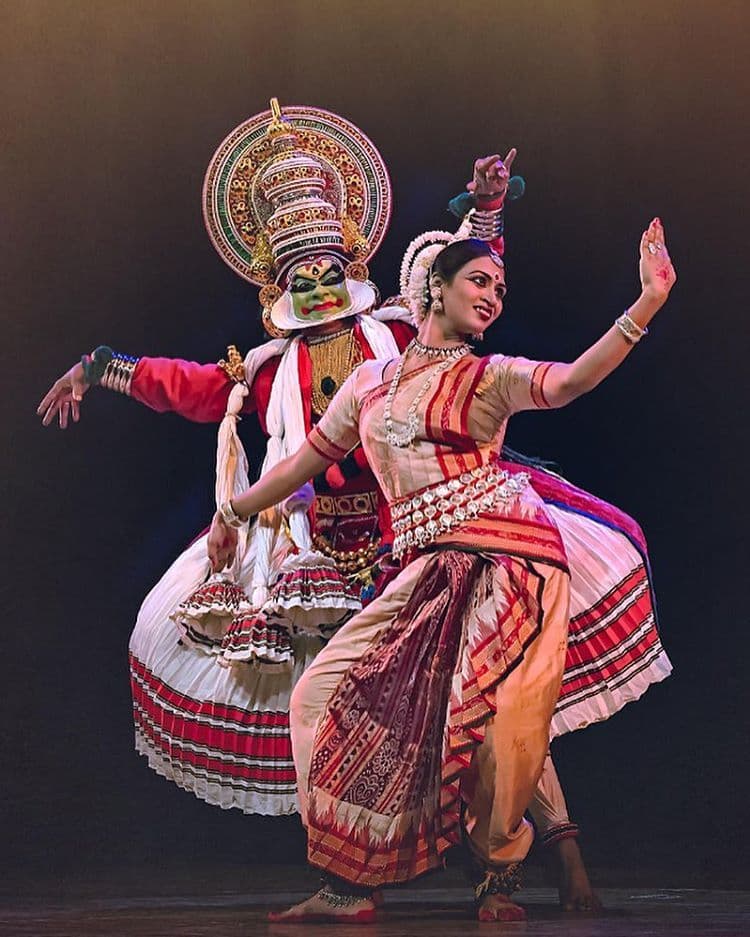
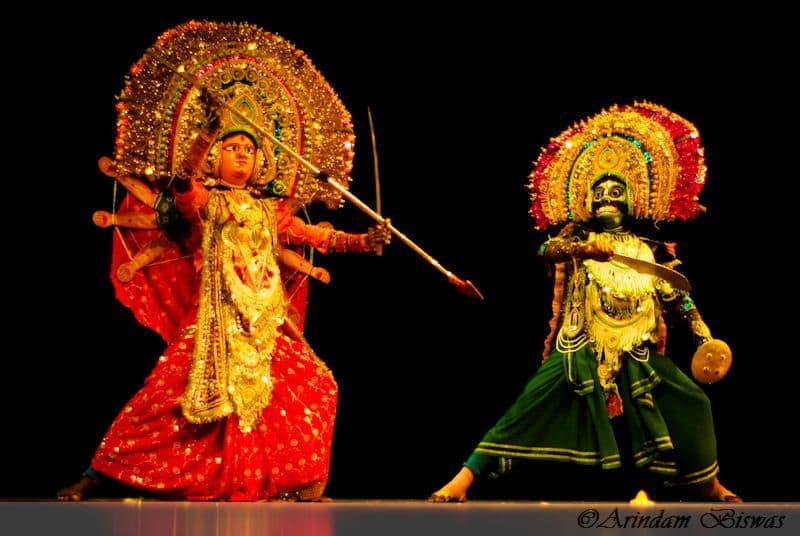
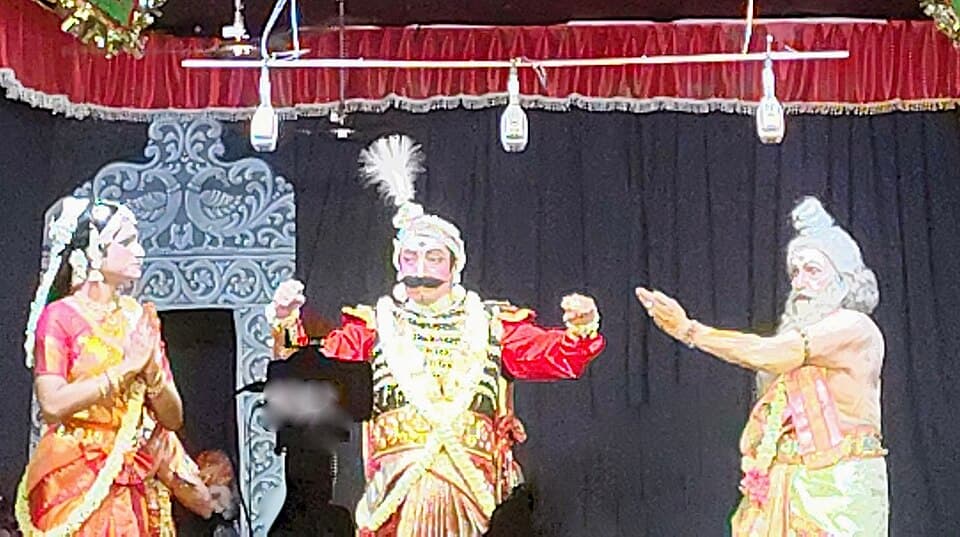
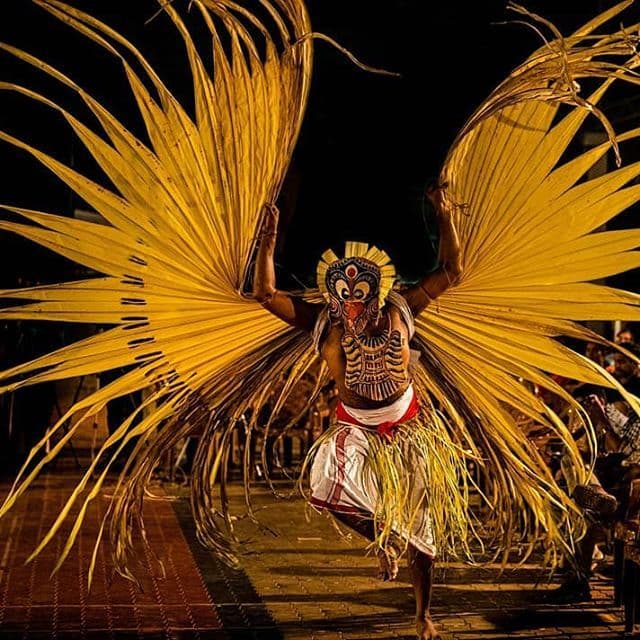
Theatrical Traditions
Straddling the line between classical dance, religious theatre, and ancient martial arts featuring massive masks and explosive energy.
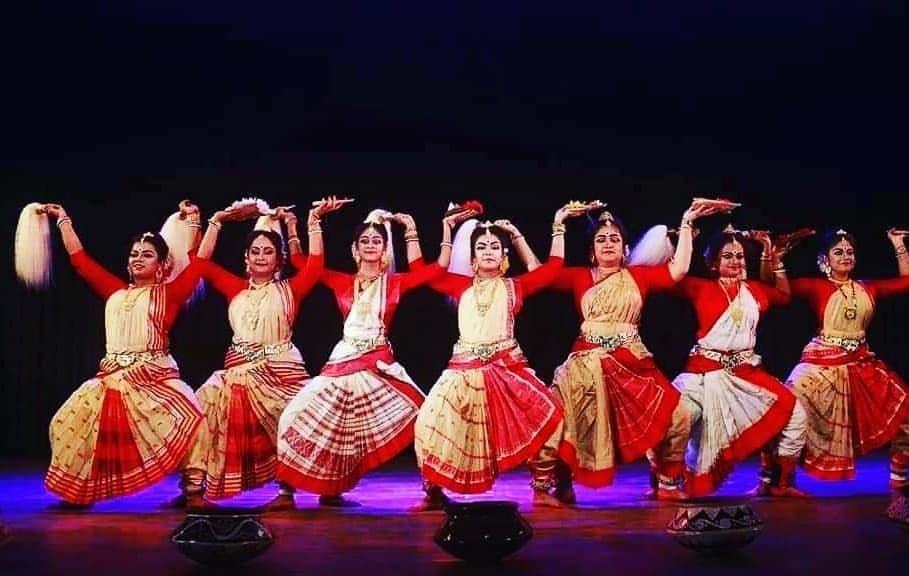
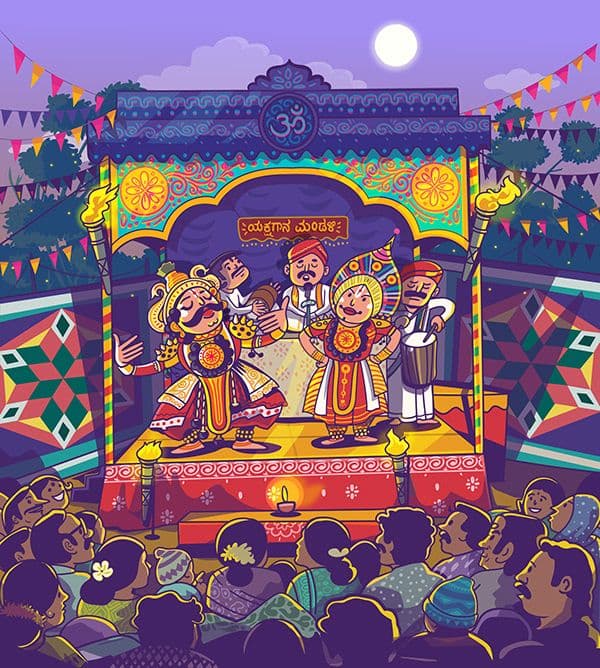
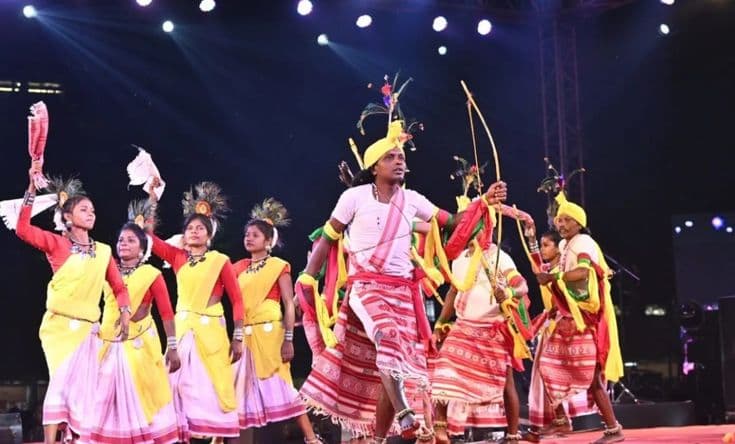
Regional Folk Traditions
Unlike the strict rules of classical forms, folk dances emerged spontaneously from local traditions. They are vibrant, community-based expressions celebrating the agricultural cycles, myths, and joyful diversity of India's states.
Lava
A vibrant, rhythmic dance performed by men to the beats of drums.
Garadi
A celebratory dance historically associated with the epic Ramayana.
Dekhni
A semi-classical Goan dance combining Indian and Western musical styles.
Nicobari
A traditional tribal dance performed during the Ossuary Feast.
Perini Shivatandavam
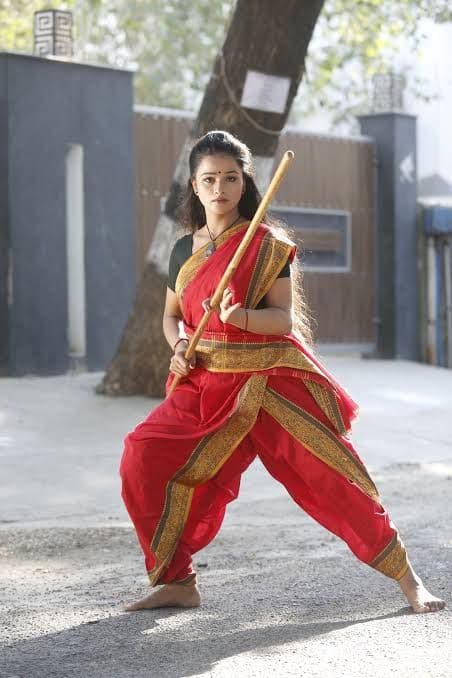
An ancient warrior dance performed by men in honor of Lord Shiva.
Lavani
A high-energy dance known for its powerful rhythm and expressiveness.
Tarpa
A tribal dance performed in a circle around a musician playing a wind instrument.
Garba
A joyful, circular devotion dance performed during the Navaratri festival.
Jawara
A harvest dance performed by women balancing baskets of jawar on their heads.
Gaur Maria
A ritualistic tribal dance imitating the movements of the wild bison.
Jhumair
A lively folk dance performed during the harvest season and local festivals.
Hojagiri
Performed by women balancing earthen pitchers and lamps on their heads.
Cheraw
A highly skilled dance involving the rhythmic tapping of bamboo staves.
Chang Lo
A warrior dance traditionally performed to celebrate a victory over enemies.
Buiya
A joyful dance of the Digaru Mishmi tribe celebrating community ties.
Bihu
A joyous dance celebrating the Assamese New Year and the spring season.
Chu-Faat
A Lepcha tribal dance performed in honor of Mount Khangchendzonga.
Ka Shad Suk Mynsiem
The 'Dance of the Joyful Heart', a thanksgiving festival dance.
Jat-Jatin
A narrative dance depicting the story of the lovers Jat and Jatin.
Ghumar
A graceful, twirling dance traditionally performed by women in flowing skirts.
Jhumar
A lively dance, taking its name from the 'Jhumar' ornament worn on the forehead.
Choliya
A martial sword dance traditionally performed during marriage processions.
Nati
A slow, rhythmic community dance celebrating the harvest and new year.
Bhangra
A highly energetic, vibrant harvest dance performed to the beat of the dhol.
Rouf
A traditional springtime dance performed by women in synchronized rows.
Kathok Chenmo
A traditional monastic dance deeply related to Buddhist rituals.
Contemporary Forms
Breaking the rigid rules of antiquity. These forms fuse classical vocabulary, martial arts, and yoga with global modern techniques.