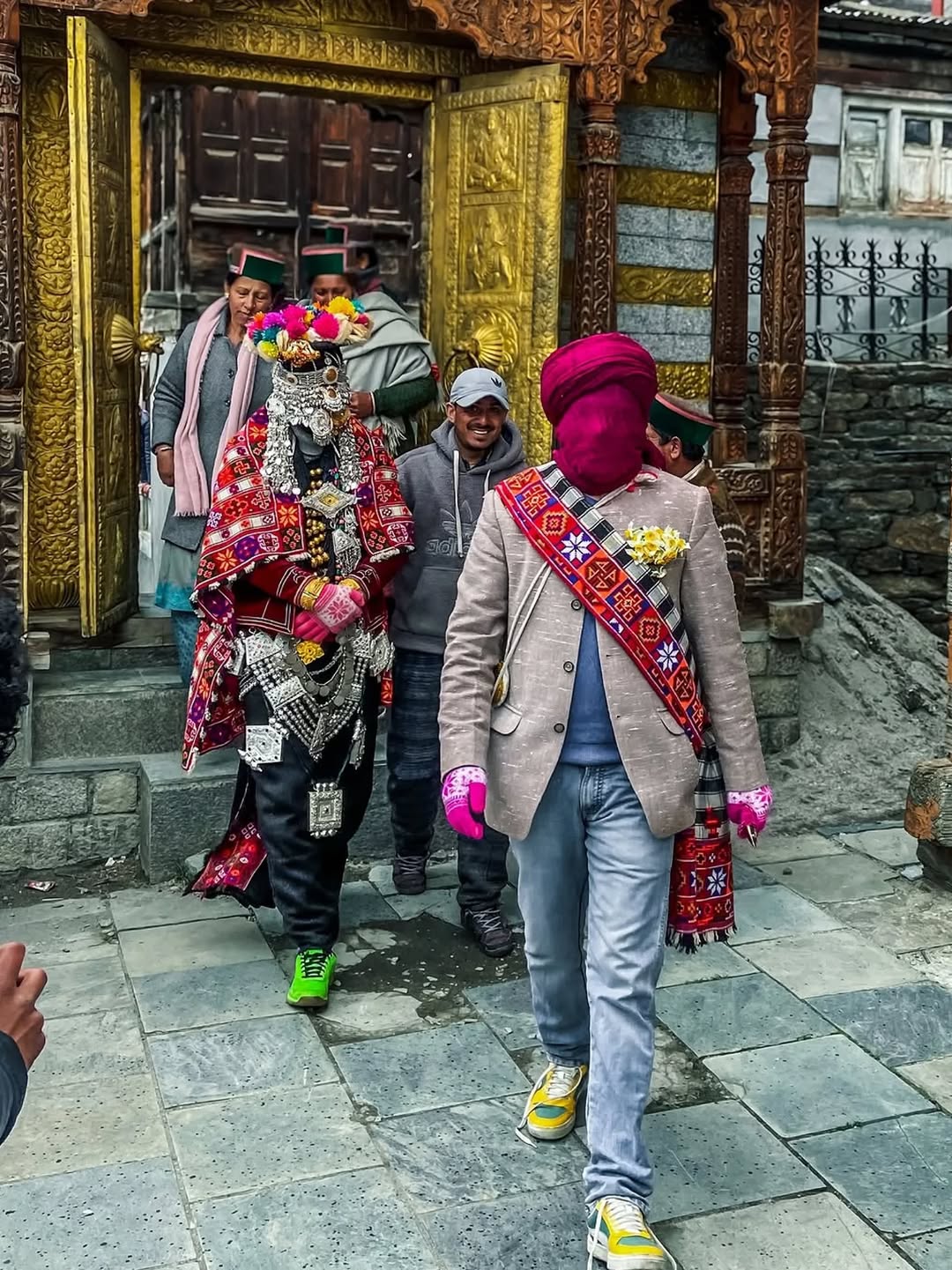
Kalpa (Kinnaur Valley), Himachal Pradesh, India
Raulane Tradition
Also known as: Raulane Festival, Rolane Mela, Fairy Carnival of Kinnaur
Folk TraditionAnimism / ShamanicSeasonal FestivalHimalayan HeritageSauni FairiesRaula and RaulaneNagin Narayan TempleSattuFaux Bride-Groom
Believed by locals to be over 5,000 years old, Raulane is one of the most mysterious and visually arresting living traditions in the Himalayas. It is a profound spring thanksgiving ceremony where the villagers of Kinnaur bid an emotional, ritualistic farewell to the 'Sauni'—celestial mountain fairies who descended to guard them through the deadly winter.
Primary DeityThe SauniForm of Celestial Mountain Fairies / Guardian Spirits
TraditionIndigenous Himalayan Folklore / Animism
AdministrationLocal Village Communities & Temple Committees of Kalpa
Historical ManagementThis is an ancient, community-driven ritual passed down entirely through oral history and lineage for millennia. It is organized and managed collectively by the village elders (divided into 'Sarings' or community wards) in Kalpa and surrounding hamlets.
The History
The ritual unfolds at local indigenous temples, primarily the Nagin Narayan and Vishnu temples in Kalpa. The exact historical origin of Raulane is lost to time, surviving exclusively through folk songs, agricultural rhymes, and inherited ritual memory that connects the pre-modern Himalayan cosmology to the present day.
Sacred Architecture
Village Courtyards and the Kinner Kailash
Unlike a static stone monument, Raulane is an embodied, spatial tradition. The entire village becomes a ritual space. Courtyards are washed with cow dung and rice flour. The performances culminate at the traditional wood-and-stone Kath Kuni style temples of Kinnaur, where the natural, breathtaking backdrop of the snow-capped Kinner Kailash mountain serves as the ultimate divine architecture.Legend of the Deity
According to Kinnauri folklore, when the brutal Himalayan winter freezes the land, the 'Sauni' (gentle, protective mountain fairies) descend from their high-altitude alpine meadows (Kandas) to watch over the isolated people, livestock, and fields. Children are told that the Sauni tuck them into bed with invisible blankets. Once the snow melts and spring arrives, the fairies must return to the high peaks, and Raulane is performed to honor their departure.
Worship & Rituals
Worship during Raulane is deeply intertwined with ecology and silent reverence. A sacred water procession initiates the event. Because the visiting deities are believed to be mute, the Raula and Raulane perform a slow, rhythmic, hypnotic dance without speaking a single word. They, along with masked figures called Zannpundulu (who ward off evil), throw Sattu (roasted barley flour) at the onlookers as a divine blessing for a prosperous harvest. In recent years, the visual of fully masked, elaborately dressed men performing a silent 'faux bride-groom' ritual in the snow has gone viral on social media, sparking worldwide curiosity. While the internet marvels at the mystery, the local emotion remains incredibly pure: shedding human ego to thank invisible protectors. The heavy ancestral silver jewelry (like the 'Daglo' and 'Gau') worn by the 'bride' is crowd-sourced from local families, symbolizing that the entire community is collectively marrying off and saying a loving goodbye to their fairy guardians.
Festivals
The core of the festival is an embodied storytelling ritual featuring the Raula (Groom) and Raulane (Bride). Two chosen men from the village act as this symbolic pair. They are dressed in heavy, traditional Kinnauri woolens (Doru, Choli, Pattu) and ancestral silver jewelry. Crucially, their entire faces and hands are completely concealed with fabrics and gloves. This signifies that they have shed their human identities to become pure, silent vessels for the celestial spirits.
⏳ Daily Schedule
Festival Timing: Occurs annually in late winter to early spring, usually right after Holi, lasting for 4 to 7 days.
(Note: This is a highly sacred, silent village ritual, not a commercial tourist spectacle. Visitors are strictly expected to maintain silence and respect local boundaries.)
(Note: This is a highly sacred, silent village ritual, not a commercial tourist spectacle. Visitors are strictly expected to maintain silence and respect local boundaries.)
Continue Journey
Associated Shrines
Bering Nag Temple, Sangla
Regional Kinnaur Heritage
Another ancient, wooden architectural marvel in the region dedicated to the serpent god, deeply tied to the valley's indigenous spiritual ecosystem.