🕉️

Vishwaguru

Awakening Heritage...

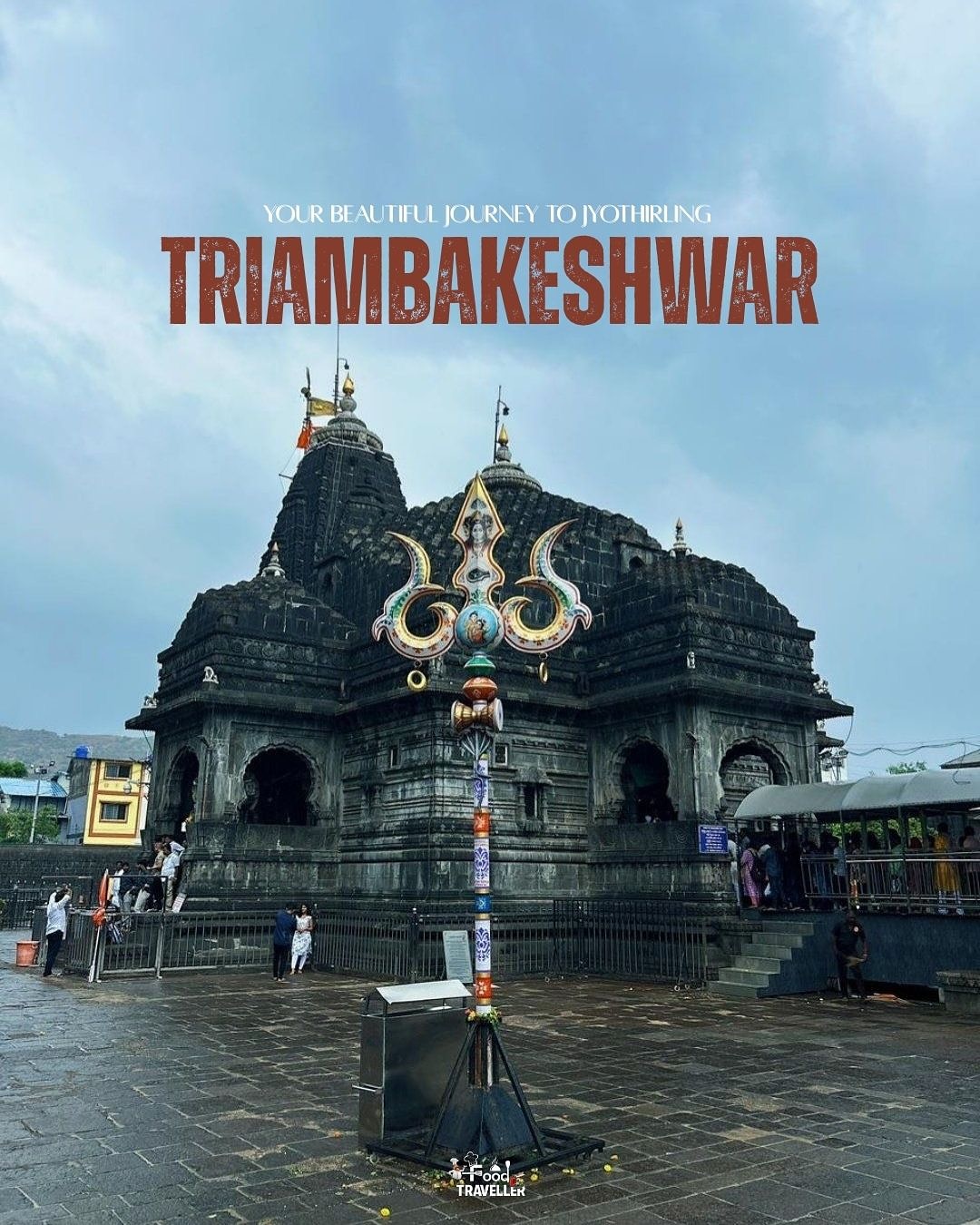
Shri Trimbakeshwar Jyotirlinga Temple

Trimbak, Nashik District, Maharashtra, India

Shri Trimbakeshwar Jyotirlinga Temple

Also known as: Tryambakeshwar Temple, Trimbak Temple

ShaivismJyotirlingaRiver SourcePilgrimage EpicenterGodavari RiverKumbh MelaNarayan NagbaliKushavarta KundPeshwa Architecture

Nestled at the foothills of the lush Brahmagiri mountain, Trimbakeshwar is a highly revered ancient temple and one of the 12 supreme Jyotirlingas. It is spiritually monumental not just for Lord Shiva's immense presence, but as the sacred origin point of the mighty Godavari River, often called the 'Ganga of the South'.

Primary DeityLord Shiva (Trimbakeshwar)Form of Jyotirlinga (Three-faced Lingam representing Brahma, Vishnu, and Shiva)
TraditionHinduism (Shaivism)
AdministrationShree Trimbakeshwar Devasthan Trust
Historical ManagementThe current majestic black basalt stone temple was constructed by the third Peshwa, Balaji Baji Rao (Nanasaheb), between 1755 and 1786 CE on the site of an older, ruined shrine. Today, it is managed by the Shree Trimbakeshwar Devasthan Trust under the guidance of the local administration.

The History

While the spiritual sanctity of the site dates back to ancient Puranic times, the current architectural masterpiece was funded and built in the 18th century by the Maratha Peshwa Balaji Baji Rao. The Peshwas reportedly dedicated massive wealth to the deity, including a priceless, gem-studded golden crown, which is still meticulously preserved and displayed today.

Sacred Architecture

Hemadpanthi Black Basalt Architecture

The temple is a classic and grand example of Hemadpanthi architecture, constructed entirely out of black basalt rock sourced from the surrounding hills. The temple courtyard is massive, surrounded by thick stone walls, and the main Shikhara (tower) features an ornate, deeply carved Kalasha at its peak. The most unique architectural anomaly is the Garbhagriha (sanctum). The Jyotirlinga is not elevated on a high pedestal; instead, it is situated inside a small depression or cavity on the floor, which constantly contains water oozing naturally from the subterranean roots of the Brahmagiri hill.

Legend of the Deity

According to the Shiva Purana, Sage Gautama and his wife Ahalya lived on the Brahmagiri hills. Falsely accused of killing a sacred cow (Gauhatya) by jealous locals, Sage Gautama performed severe penance to Lord Shiva, begging Him to bring the river Ganga down to wash away his sin. Pleased, Shiva brought down the Ganges as the river Godavari. At the request of the gods, Shiva decided to reside there eternally as 'Trimbakeshwar' (The Lord of the Three Eyes).

Worship & Rituals

Trimbakeshwar is structurally and ritually unique because the Lingam uniquely embodies the entire Hindu Trinity—represented by three distinct, thumb-sized lingas (Brahma, Vishnu, and Maheshwara) situated inside the hollow depression. Furthermore, the temple is globally famous as the absolute epicenter for highly specialized rituals like Narayan Nagbali, Kalsarpa Shanti, and Tripindi Shraddha, which are exclusively performed here to appease ancestral souls and remove deep astrological curses. The most dazzling lore involves the temple's legendary Jeweled Crown (Trideva Mukut). Believed by locals to date back to the era of the Pandavas (though historically gifted by the Peshwas), the golden crown is heavily studded with massive, priceless diamonds, emeralds, and a central ruby. It is kept under heavy police security and is brought out to be placed directly over the Jyotirlinga only on Mondays (between 4:00 PM and 5:00 PM) and during major festivals. Devotees firmly believe that getting darshan of the Lord adorned with this specific crown physically burns away bad karma.

Festivals

The most monumental event is the Nashik-Trimbakeshwar Simhastha Kumbh Mela, held every 12 years, drawing tens of millions of pilgrims and Naga Sadhus. Maha Shivaratri is celebrated with overwhelming grandeur, and the holy month of Shravan sees massive pedestrian pilgrimages (Kanwar Yatra) from surrounding regions.

Daily Schedule

Visiting Hours: Daily from 5:30 AM to 9:00 PM.
(Note: Only men wearing traditional unstitched clothing like a dhoti/sovala are allowed to enter the inner sanctum to touch the Lingam during specific morning hours. General darshan happens from a distance.)
Continue Journey

Associated Shrines

Kushavarta Tirth

Sacred Bathing Pond

A massive sacred tank built by the Peshwas located slightly away from the temple. It is the symbolic starting point of the Godavari river where millions bathe, especially during the Kumbh Mela.

Grishneshwar Jyotirlinga Temple, Ellora

Fellow Jyotirlinga

Another prominent Jyotirlinga in Maharashtra, often visited by pilgrims touring the state's ancient Shiva temples.