🕉️

Vishwaguru

Awakening Heritage...

Sri Chennakesava Temple, Somanathapura

Somanathapura, Mysore District, Karnataka, India

Sri Chennakesava Temple, Somanathapura

Also known as: Keshava Temple, Somanathapura Temple

VaishnavismHoysala ArchitectureUNESCO World Heritage SiteArchaeological MonumentTrikutaSoapstoneMallitammaStar-shaped platformKaveri River

Located near the banks of the Kaveri River, the Chennakesava Temple at Somanathapura is a breathtaking masterpiece of Hoysala architecture. Recently designated as a UNESCO World Heritage Site, it is uniquely celebrated because its three intricately carved towers (Vimanas) are perfectly intact, offering a complete, unblemished vision of 13th-century Hoysala grandeur.

Primary DeityLord VishnuForm of Maha Vishnu (Chennakesava, Janardhana, and Venugopala)
TraditionHinduism (Vaishnavism)
AdministrationArchaeological Survey of India (ASI)
Historical ManagementCommissioned in 1268 CE by Somanatha Dandanayaka, an illustrious general under Hoysala King Narasimha III. Following severe damage by the Delhi Sultanate in the 14th century, it ceased to be an active center of worship. Today, it is meticulously preserved by the Archaeological Survey of India (ASI).

The History

Built in 1268 CE during the zenith of the Hoysala Empire, the temple was originally the spiritual anchor of a thriving Agrahara (Brahmin settlement). Unfortunately, the temple suffered heavy mutilation during the invasions of the Delhi Sultanate. Because Hindu agamas strictly forbid the active worship of broken or desecrated idols, the temple eventually transitioned from a living shrine into a protected archaeological monument.

Sacred Architecture

The Perfect Trikuta and Soapstone Mastery

The temple is a flawless example of a Trikuta (three-shrined) layout. It sits proudly on a 16-point star-shaped Jagati (elevated platform) which allows visitors to circumambulate while viewing the walls at eye level. Carved entirely from soft soapstone, the outer walls are wrapped in horizontal bands of continuous friezes featuring marching elephants, charging horsemen, and epic stories. Remarkably, many sculptures here are signed by the master artisans, the most prolific being the legendary sculptor Mallitamma.

Legend of the Deity

The temple was designed to house three distinct forms of Lord Vishnu in its three sanctums: Lord Chennakesava (the beautiful Keshava) in the center, Lord Janardhana to the left, and Lord Venugopala (Krishna playing the flute) to the right. While the stunning Janardhana and Venugopala idols miraculously survived in their sanctums, the original central Chennakesava idol was lost to history, and the current one is a later, less intricate replacement.

Worship & Rituals

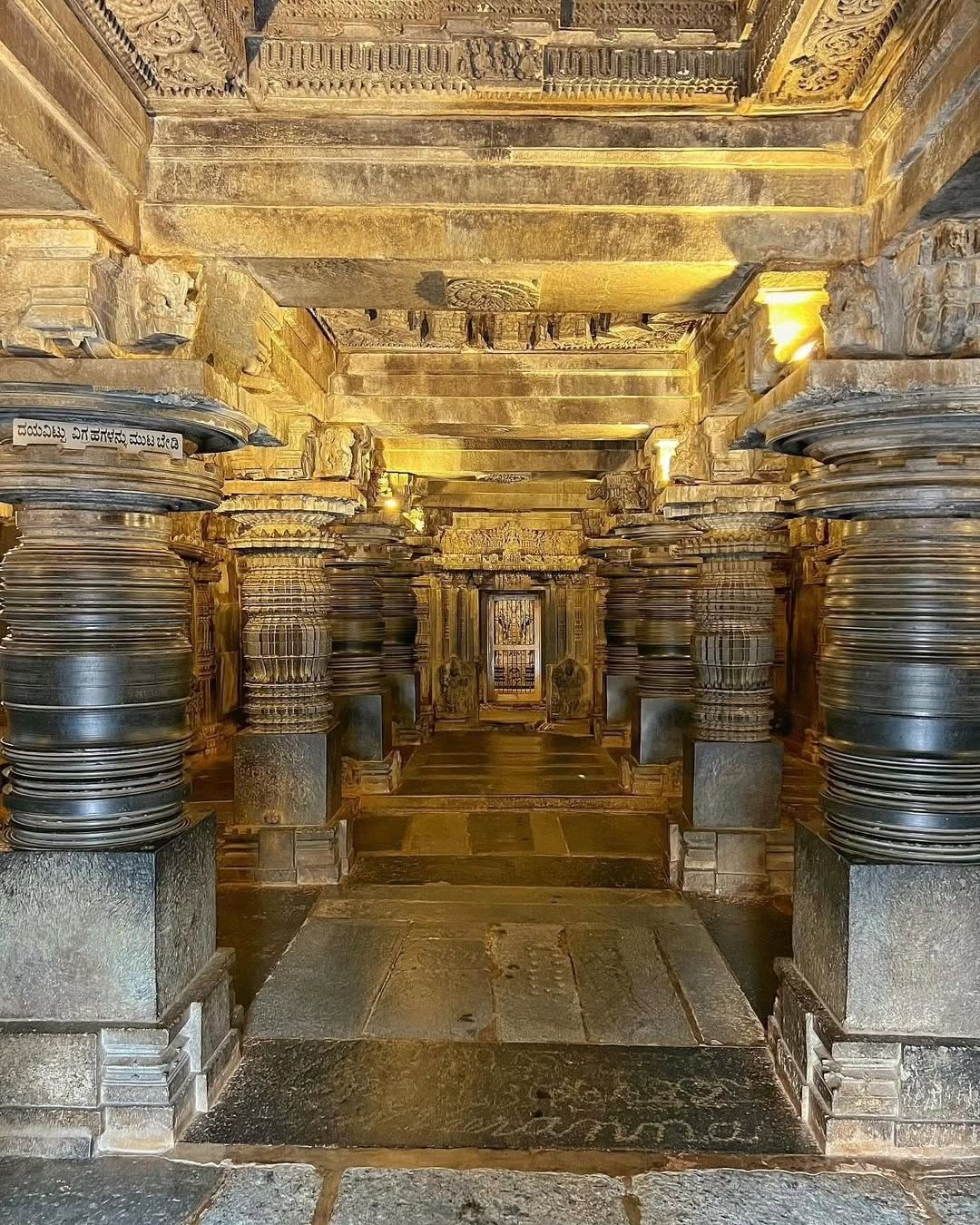
Active daily pooja is not performed here due to the historical desecration of the sanctums. Visitors cannot offer flowers or coconuts. However, walking through the cool, dark, lathe-turned pillars of the navaranga (main hall) still evokes a profound sense of spiritual awe, allowing visitors to marvel at the sheer devotion ancient artisans poured into every millimeter of the stone.Local folklore suggests that when the temple was completed, it was so flawlessly beautiful that celestial beings (Devas) became jealous and decided to physically lift it and carry it away to heaven. To prevent this, the master sculptor deliberately chipped one of the outer sculptures to create a 'flaw' (Drishti Bommai/evil-eye ward), thereby grounding the temple to earth forever. Additionally, the presence of the sculptors' engraved signatures—over 40 belonging to Mallitamma alone—beautifully shatters the modern myth that ancient Indian artists always worked anonymously.

Festivals

Since this is a 'non-living' (inactive) temple protected by the ASI, traditional religious festivals and car processions are no longer conducted. However, the site is a cultural epicenter, drawing tens of thousands of tourists, history buffs, and architecture students year-round.

Daily Schedule

Visiting Hours: Daily from 8:30 AM to 5:30 PM.
(Note: As an ASI monument, an entrance ticket is required. Arriving early in the morning or late afternoon provides the best natural lighting to view the incredibly detailed soapstone carvings.)
Continue Journey

Associated Shrines

Sri Chennakeshava Temple, Belur

Sister Heritage Site

The grandest Hoysala temple (ID 85 in your database), marking the glorious beginning of the architectural style that Somanathapura eventually perfected.

Hoysaleshwara Temple, Halebidu

Sister Heritage Site

The Shaivite masterpiece of the Hoysala empire, forming the legendary UNESCO triad with Belur and Somanathapura.