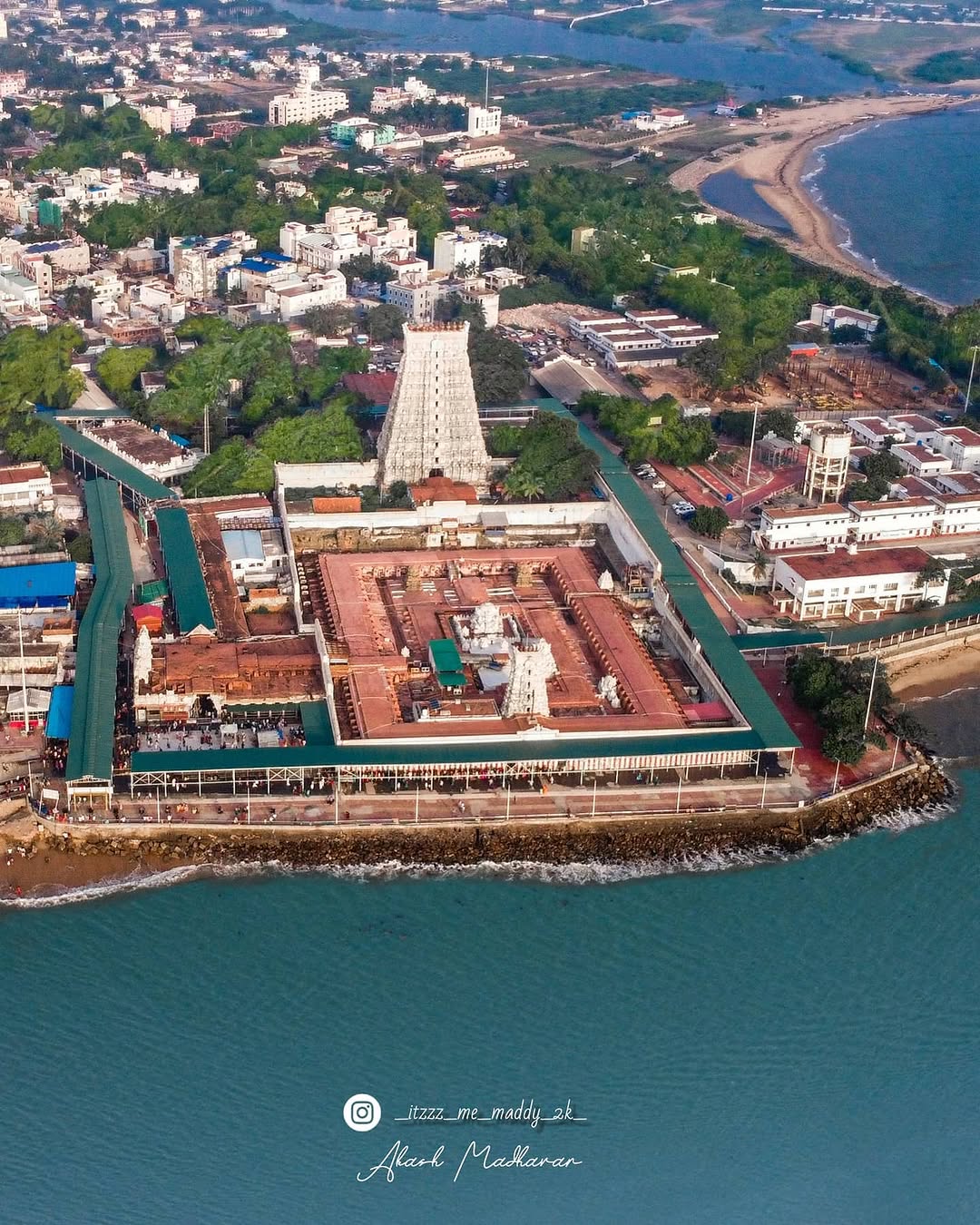
Tiruchendur, Thoothukudi District, Tamil Nadu, India
Arulmigu Subramaniya Swamy Temple
Also known as: Tiruchendur Murugan Temple, Senthilandavar Temple, Jayanthipuram
KaumaramArupadaiveeduCoastal TemplePilgrimage EpicenterSoorasamharamNazhi KinaruDutch HeistBay of BengalSix Abodes of Murugan
Situated on the red-sand shores of the Bay of Bengal, the Tiruchendur Subramaniya Swamy Temple is the second of the 'Arupadaiveedu' (Six Holy Abodes) of Lord Murugan. It marks the exact epic battlefield where the Lord achieved his ultimate victory over the mighty demon king, Surapadman.
Primary DeityLord Subramaniya Swamy (Murugan)Form of Skanda / Kartikeya (Supreme Commander of the Gods)
TraditionHinduism (Kaumaram / Tamil Agamic)
AdministrationTamil Nadu HR&CE Department
Historical ManagementAn ancient shrine referenced in 2,000-year-old Sangam literature. Over centuries, it was expanded by the Cheras, Pandyas, and local chieftains. Today, it is one of the wealthiest and most heavily visited temples managed by the Tamil Nadu Hindu Religious and Charitable Endowments (HR&CE) department.
The History
The temple's antiquity is established in classical Tamil texts like the 'Tirumurugatruppadai'. Unlike most temples built by kings, Tiruchendur was largely expanded by ascetic saints (Desikars) and widespread public contribution over centuries. A massive historical event occurred in 1648 when Dutch colonial forces occupied the temple, fortified it, and eventually looted the precious panchaloha (five-metal) idol of the Lord, mistakenly believing it was solid gold.
Sacred Architecture
The Western Gopuram and Nazhi Kinaru
Because the temple is built directly on the shoreline, the crashing waves of the sea form its natural eastern boundary. Consequently, unlike standard Dravidian temples that have their main entrance tower on the East, Tiruchendur's towering 137-foot Rajagopuram is uniquely located on the Western side. A geographical and architectural miracle within the complex is the Nazhi Kinaru, an ancient 14-square-foot well. Although it is located just meters away from the salty ocean, the water inside this specific well is crystal clear and completely sweet.Legend of the Deity
According to the Skanda Purana, Lord Murugan, acting as the supreme commander of the Devas, fought the formidable demon Surapadman on the shores of Tiruchendur. Refusing to surrender, the demon transformed himself into a massive, magical mango tree in the ocean. Lord Murugan hurled his divine spear (Vel), splitting the tree in two. One half transformed into his Vahana (Peacock mount), and the other half became his battle standard (Rooster flag).
Tiruchendur is rich with legendary lore. First is the Recovery of the Idol: When the Dutch looted the idol in 1648, their ship was caught in a massive, unnatural storm. Terrified of the deity's wrath, they dumped the idol into the sea. Years later, Murugan appeared in the dream of a devotee, Vadamaliyappa Pillai, telling him exactly where the idol was, marked by a floating lemon and a circling kite (Garuda). Pillai rowed out and miraculously recovered it. Second is the 2004 Tsunami Miracle: When the devastating Boxing Day Tsunami struck the east coast of India, the ocean inexplicably receded backward at Tiruchendur. Not a single drop of tsunami water entered the temple complex, which locals and millions of devotees firmly believe was Lord Murugan physically protecting his abode.
Tiruchendur is rich with legendary lore. First is the Recovery of the Idol: When the Dutch looted the idol in 1648, their ship was caught in a massive, unnatural storm. Terrified of the deity's wrath, they dumped the idol into the sea. Years later, Murugan appeared in the dream of a devotee, Vadamaliyappa Pillai, telling him exactly where the idol was, marked by a floating lemon and a circling kite (Garuda). Pillai rowed out and miraculously recovered it. Second is the 2004 Tsunami Miracle: When the devastating Boxing Day Tsunami struck the east coast of India, the ocean inexplicably receded backward at Tiruchendur. Not a single drop of tsunami water entered the temple complex, which locals and millions of devotees firmly believe was Lord Murugan physically protecting his abode.
Worship & Rituals
Worship here heavily involves physical purification. Before entering the temple, devotees are required to take a holy dip in the salty ocean, immediately followed by a purifying bath from the sweet waters of the Nazhi Kinaru well. Devotees often carry 'Kavadis' (decorated wooden arches) on their shoulders and pierce their cheeks with small 'Vels' as an extreme vow of devotion.
Festivals
The absolute zenith of the temple is the 6-day Kanda Shasti Festival (October/November). On the final day, an event called Soorasamharam is theatrically re-enacted on the beach. Millions of devotees gather on the sand to watch the festival deity (Senthilandavar) symbolically slay the demon, followed by a grand celestial wedding (Thirukalyanam) the next day.
⏳ Daily Schedule
Visiting Hours: Daily from 5:00 AM to 9:00 PM.
(Note: Darshan lines can be exceptionally long on Tuesdays, Fridays, and during the Tamil month of Karthigai.)
(Note: Darshan lines can be exceptionally long on Tuesdays, Fridays, and during the Tamil month of Karthigai.)
Continue Journey
Associated Shrines
Palani Dhandayuthapani Swamy Temple
Fellow Arupadaiveedu
The third and most famous abode of Lord Murugan, where he is worshipped as an ascetic youth holding a staff.
Thirupparamkunram Murugan Temple
Fellow Arupadaiveedu
The first abode of Murugan, marking the site where he married Goddess Deivanai after his victory at Tiruchendur.