🕉️

Vishwaguru

Awakening Heritage...

Sri Adikesava Perumal Temple

Thiruvattar, Kanyakumari District, Tamil Nadu, India

Sri Adikesava Perumal Temple

Also known as: Thiruvattar Temple, Adikesava Temple

VaishnavismDivya DesamKerala ArchitectureHistorical MonumentThiruvattarKadu-Sarkara YogamThree DoorsBrahma Samhita108 Divya Desams

Surrounded by the serene Kothai and Parali rivers, the Sri Adikesava Perumal Temple in Thiruvattar is a breathtaking ancient Divya Desam. It is globally renowned for its colossal 22-foot reclining idol of Lord Vishnu—viewed through three distinct doors—and is revered as the architectural and spiritual predecessor to the iconic Padmanabhaswamy Temple in Trivandrum.

Primary DeityLord Adikesava Perumal (Vishnu)Form of Maha Vishnu (Reclining on Adishesha)
TraditionHinduism (Vaishnavism / Sri Vaishnava)
AdministrationTamil Nadu HR&CE Department
Historical ManagementHistorically patronized by the Ay dynasty and later heavily expanded by the Venad kings (the Travancore Royal Family). Although geographically in Tamil Nadu due to the state reorganization act, its history is deeply intertwined with Kerala royalty. Today, it is managed by the Tamil Nadu Hindu Religious and Charitable Endowments (HR&CE) department.

The History

The temple's antiquity is well-established in ancient Sangam literature (Puranaanooru) and the hymns of the great Alwar saint, Nammalvar. In 1510 CE, the great saint Chaitanya Mahaprabhu visited this temple and miraculously discovered the lost, ancient manuscript of the 'Brahma Samhita' here, adding immense pan-Indian Vaishnava significance to the site.

Sacred Architecture

Kadu-Sarkara Yogam and the Three Doors

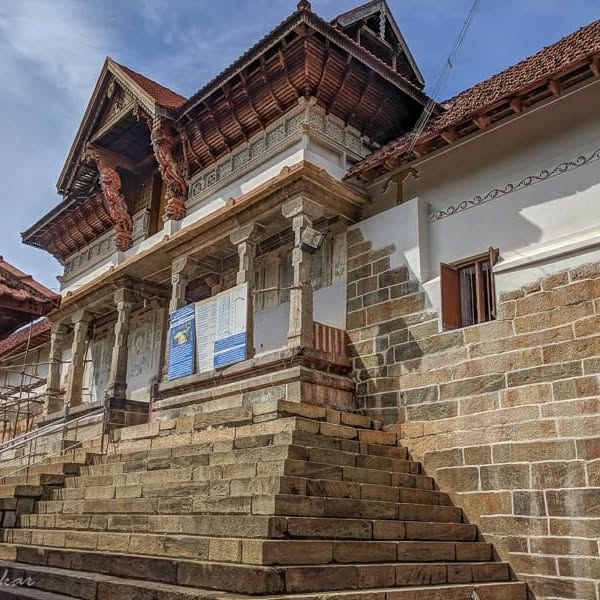
The temple is a masterpiece of traditional Kerala-style architecture with intricately carved wooden pillars, sloping roofs, and exquisite ancient mural paintings. The most astonishing feature is the main deity. The massive 22-foot idol is NOT made of stone or metal. It is crafted using Kadu-Sarkara Yogam—an ancient, highly complex Ayurvedic mixture of 108 different herbs, mustard, jaggery, and river sand. Due to the idol's immense size, devotees must view the Lord in three segments through three separate wooden doors: the face (first door), the torso (second door), and the lotus feet (third door).

Legend of the Deity

According to the puranas, Lord Vishnu fought a fierce battle with the demon Kesi. After defeating him, the Lord used His massive serpent bed (Adishesha) to bind the demon and lay over him to prevent his escape. Kesi's demonic wife invoked the rivers Thamirabarani and Kothai to flood the area and drown the Lord. However, Bhoomi Devi (Mother Earth) elevated the land where the Lord rested. The defeated rivers altered their course, peacefully encircling the temple like a garland.

Worship & Rituals

Worship strictly follows Kerala Tantric traditions rather than standard Tamil Agamas. Male devotees must adhere to a strict dress code: shirts and inner garments must be removed before entering the inner prakaram (wearing only a dhoti/mundu). The poojas are deeply steeped in ancient rituals, and the temple actively maintains a highly serene, uncommercialized atmosphere.

The historic Battle of Colachel (1741). Local history dictates that the Travancore King Marthanda Varma laid his famous sword at the lotus feet of Adikesava Perumal, seeking divine intervention before facing the technologically superior Dutch East India Company. Miraculously, the Travancore army crushed the Dutch naval forces. The King firmly believed that Adikesava Perumal Himself rode unseen into battle to secure the victory for the native kingdom, and subsequently dedicated massive wealth and land to the temple in gratitude.

Festivals

The major festivals are the Panguni Brahmostavam (March-April) and the Aipasi Brahmotsavam (October-November). Vaikuntha Ekadasi is also celebrated with tremendous grandeur, drawing thousands of pilgrims from both Tamil Nadu and Kerala.

Daily Schedule

Visiting Hours: Daily from 5:00 AM to 12:00 PM, and 5:00 PM to 8:00 PM.
Continue Journey

Associated Shrines

Sri Padmanabhaswamy Temple, Trivandrum

The Successor Shrine

Trivandrum's iconic temple was modeled directly after Thiruvattar. Both feature the Lord in a massive reclining posture viewed through three doors, though Adikesava is historically older.

Bhagavathy Amman Temple, Kanyakumari

Regional Powerhouse

The famous confluence shrine of the Goddess, located in the same geographic district.