🕉️

Vishwaguru

Awakening Heritage...

Sri Veerabhadra Swamy Temple

Lepakshi, Sri Sathya Sai District, Andhra Pradesh, India

Sri Veerabhadra Swamy Temple

Also known as: Lepakshi Temple, Kurmasaila Temple

ShaivismVijayanagara ArchitectureHistorical MonumentArchaeological MarvelHanging PillarMonolithic NandiJatayuFresco PaintingsNaga Linga

Built on a low, rocky tortoise-shaped hill known as 'Kurmasaila', the Veerabhadra Temple in Lepakshi is a staggering exhibition of 16th-century Vijayanagara art and engineering. It is globally celebrated for its mysterious hanging pillar, colossal monolithic sculptures, and exquisite ceiling murals that vividly depict the social and religious life of the era.

Primary DeityLord VeerabhadraForm of Lord Shiva (Fierce Warrior Form)
TraditionHinduism (Shaivism)
AdministrationArchaeological Survey of India (ASI) & AP Endowments Department
Historical ManagementConstructed in 1530 CE by two brothers, Virupanna and Veeranna, who were governors under Emperor Achyutaraya of the glorious Vijayanagara Empire. Today, it is a protected monument maintained by the Archaeological Survey of India (ASI), while active daily worship is overseen by the Andhra Pradesh Endowments Department.

The History

While the main structural marvels were funded and built by Virupanna (the royal treasurer of the Vijayanagara Empire) in the 16th century, the spiritual sanctity of the site dates back to the Ramayana. The temple serves as a stunning time capsule, preserving the zenith of Vijayanagara stone carving and natural-dye fresco painting.

Sacred Architecture

The Hanging Pillar and Monolithic Giants

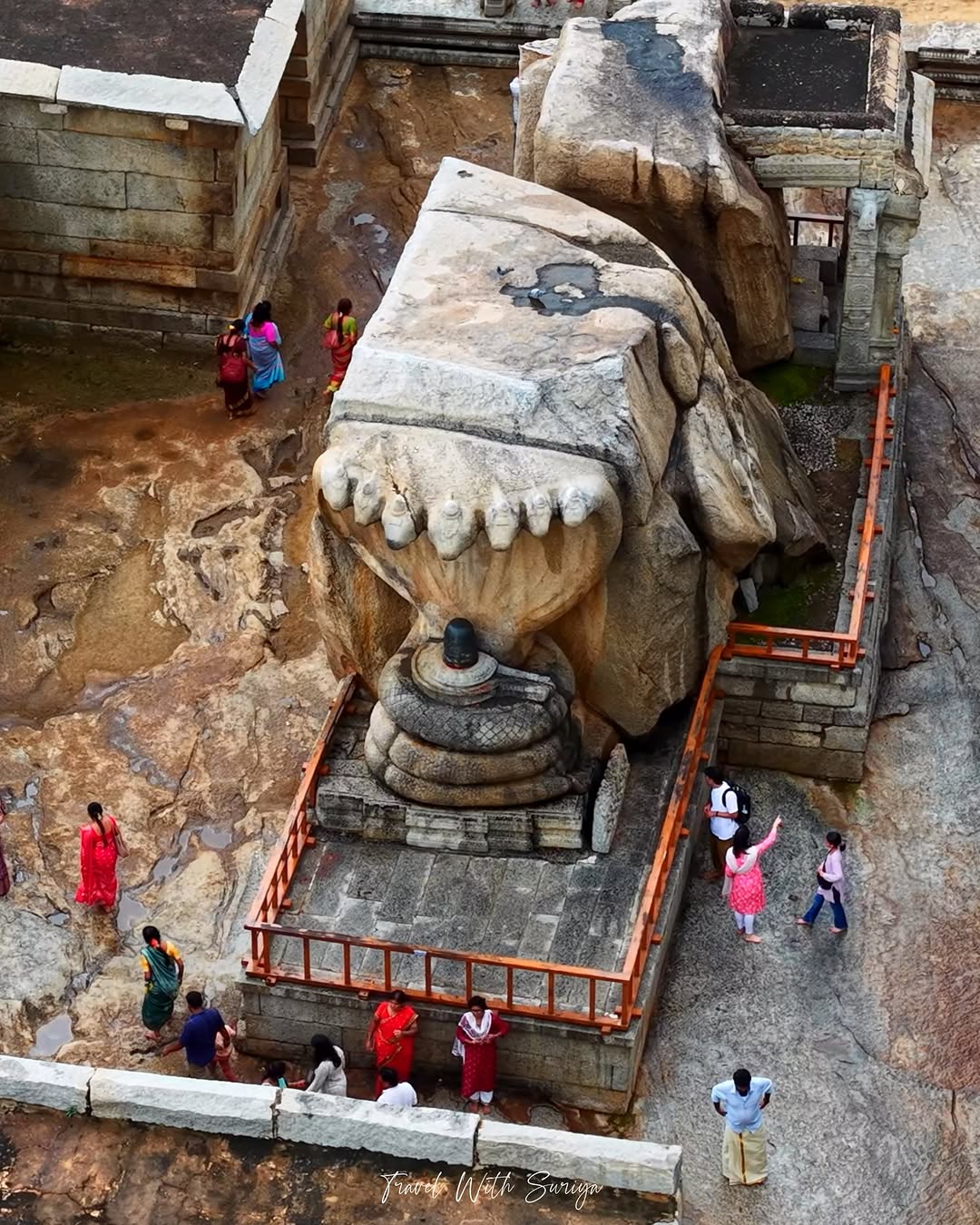
The temple is a masterclass in Vijayanagara Architecture. Its most famous anomaly is the Aakaasa Sthambha (Hanging Pillar)—a massive granite pillar in the main hall that does not touch the ground, allowing devotees to pass a thin cloth completely underneath it. Just outside the main temple complex sits the Lepakshi Nandi, a magnificent 15-foot-tall, 27-foot-long monolithic bull, which is one of the largest in India. Inside the courtyard, an immense Naga Linga—a seven-hooded serpent shielding a Shiva Linga—is breathtakingly carved out of a single granite boulder.

Legend of the Deity

The name 'Lepakshi' is deeply tied to the Ramayana. When the demon king Ravana abducted Goddess Sita, the great bird Jatayu fought him valiantly in the sky but was fatally wounded. Jatayu fell at this exact rocky spot. When Lord Rama arrived searching for Sita, he saw the dying bird, compassionately touched him, and said **'Le Pakshi'** (Telugu for 'Rise, Bird'). Thus, the village got its name, and the site became eternally sacred.

Worship & Rituals

Despite being an ASI archaeological site, it remains a fully functioning temple. Worship of Lord Veerabhadra here is intense and follows traditional Shaivite agamas. Devotees often tie small pieces of cloth or threads to the intricately carved pillars in the outer mandapam as a vow to fulfill their wishes. The temple is haunted by the tragic, gruesome lore of its builder, Virupanna. According to local history, envious courtiers falsely informed the Emperor that Virupanna was embezzling royal treasury funds to build the temple. Furious, the Emperor ordered Virupanna to be blinded. Hearing this, the deeply loyal Virupanna decided to carry out the punishment himself. He plucked out his own eyes and hurled them against the temple wall. To this day, visitors can see two dark red, blood-like stains on the western wall of the inner enclosure, which locals firmly believe are the eternal marks of Virupanna's tragic sacrifice. Furthermore, British folklore notes that during the colonial era, an engineer named Hamilton tried to forcibly move the 'Hanging Pillar' to discover its secret, which caused the entire roof to visibly warp and shift, proving the floating pillar acts as the balancing fulcrum for the entire temple.

Festivals

Maha Shivaratri is the most prominent festival, drawing thousands of devotees for night-long prayers. The temple also grandly celebrates the 10-day Durgamma Festival (Navaratri), honoring Goddess Bhadrakali with elaborate daily decorations.

Daily Schedule

Visiting Hours: Daily from 6:00 AM to 6:00 PM.
(Note: Hiring a local ASI-approved guide is highly recommended to uncover the optical illusions, hidden architectural alignments, and the stories behind the massive murals.)
Continue Journey

Associated Shrines

Sri Chennakeshava Temple, Belur

Architectural Ancestor

While Belur represents the pinnacle of Hoysala soapstone carving, Lepakshi represents the evolution into the grand, imposing granite style of the Vijayanagara Empire.

Virupaksha Temple, Hampi

Empire Headquarters

The spiritual epicenter of the Vijayanagara Empire, sharing the exact same architectural DNA, mural styles, and ruling patronage as Lepakshi.