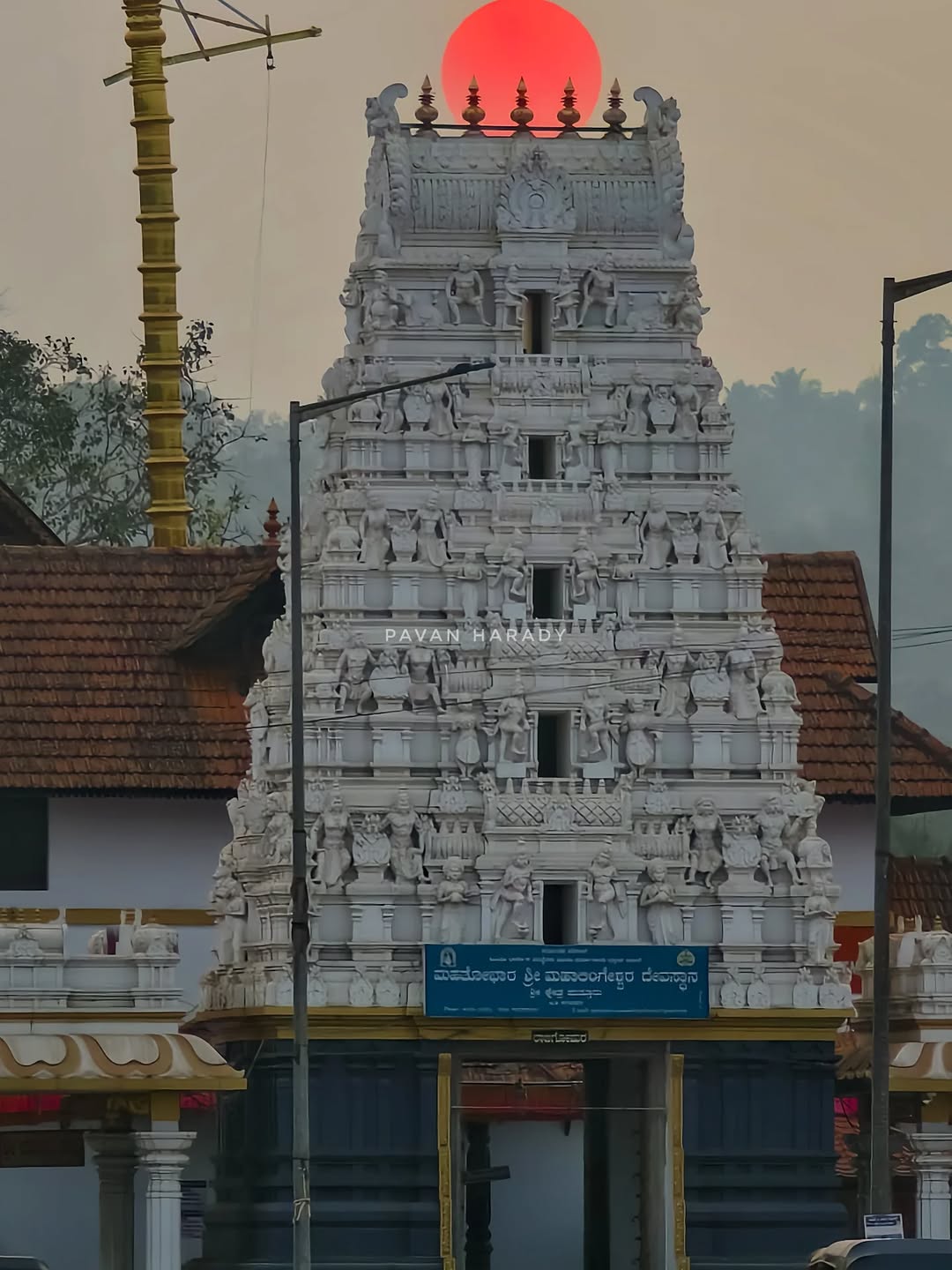
Puttur, Dakshina Kannada District, Karnataka, India
Sri Mahalingeshwara Temple
Also known as: Mahatobhara Shri Mahalingeshwara Temple, Puttur Mahalingeshwara Temple
ShaivismHistorical MonumentCoastal ArchitecturePilgrimagePuttur BediElephant CursePearl OriginBanga DynastyDakshina Kannada
The Sri Mahalingeshwara Temple in Puttur is a majestic 12th-century Shaivite shrine in coastal Karnataka. Known for its rich mythology involving ancient Brahmins and local kings, the temple is uniquely famous for its absolute ban on elephants within its premises and its spectacular annual firecracker festival.
Primary DeityLord Shiva (Mahalingeshwara)Form of Shiva Lingam
TraditionHinduism (Shaivism)
AdministrationKarnataka State HR&CE Department
Historical ManagementConstructed during the 11th-12th century, the temple was heavily patronized by the local Banga Kings. Today, it is recognized as a 'Historical Monument' under the 1961 act with preservation overseen by the Directorate of Archaeology and Museums, and managed by the Karnataka Hindu Religious and Charitable Endowments (HR&CE) department.
The History
Historical records and architecture firmly date the temple back to the 11th-12th centuries under the rule of the Banga Kings. It has served as the central spiritual and cultural anchor for the Dakshina Kannada region for nearly a millennium, surviving the shifting powers of coastal Karnataka.
Sacred Architecture
Coastal Dravidian Elegance
The temple showcases traditional coastal Karnataka architecture, utilizing locally sourced laterite stone. The structure features sloping roofs designed to withstand the region's heavy monsoons. On the western side of the temple complex lies a highly sacred and historically significant Pushkarini (temple pond).Legend of the Deity
According to the Sthala Purana, a Smartha Brahmin carrying a Shiva Linga from Kashi arrived in the region. He visited the local Banga King, who was deeply worried about his sister's difficult labor. The Brahmin prayed to the Linga, and the sister safely delivered a boy. The next day, the Brahmin placed the Linga on the bare ground to worship it. When he tried to lift it to leave, it was firmly rooted to the earth. The King's army tried to pull it out using sheer force but failed miserably.
When the King's army failed to lift the rooted Linga, they brought the royal elephant to pull it. The Linga suddenly grew to a massive size (becoming a 'Maha Linga'), and the sheer divine force shattered the elephant into pieces. The animal's body parts scattered, and the places they landed formed the names of surrounding towns (e.g., its horn 'Khombu' fell at Kombettu). Because the elephant fell dead into the temple pond, there is a strict, living ban on elephants entering the temple, and locals believe an elephant will die if it drinks the pond water. Additionally, the town's name 'Puttur' comes from 'Muthur' (pearl), as ancient locals supposedly found pearls mysteriously growing in this very pond.
When the King's army failed to lift the rooted Linga, they brought the royal elephant to pull it. The Linga suddenly grew to a massive size (becoming a 'Maha Linga'), and the sheer divine force shattered the elephant into pieces. The animal's body parts scattered, and the places they landed formed the names of surrounding towns (e.g., its horn 'Khombu' fell at Kombettu). Because the elephant fell dead into the temple pond, there is a strict, living ban on elephants entering the temple, and locals believe an elephant will die if it drinks the pond water. Additionally, the town's name 'Puttur' comes from 'Muthur' (pearl), as ancient locals supposedly found pearls mysteriously growing in this very pond.
Worship & Rituals
Daily rituals follow traditional Agamic principles. Devotees circumambulate the massive courtyard, seeking the blessings of Mahalingeshwara. The temple holds great importance for locals seeking remedies for ailments and the fulfillment of specific wishes, with Mondays being particularly crowded.
Festivals
The absolute pinnacle of the temple's year is the 10-day Car Festival (Rathotsava) held in April. The most anticipated event during this festival is the Puttur Bedi—a magnificent, grand-scale display of bursting firecrackers that illuminates the entire town and draws lakhs of ecstatic devotees.
⏳ Daily Schedule
Visiting Hours: Daily from 5:30 AM to 1:00 PM, and 4:00 PM to 8:00 PM.
Continue Journey
Associated Shrines
Kukke Subramanya Temple
Regional Powerhouse
A massively popular temple in the same district, famous globally for its Sarpa Dosha Nivarana poojas.
Sri Dharmasthala Manjunatha Temple
Coastal Circuit
One of the most unique temples in India, where the Shiva deity is worshipped by Madhwa Vaishnava priests and administered by a Jain family.