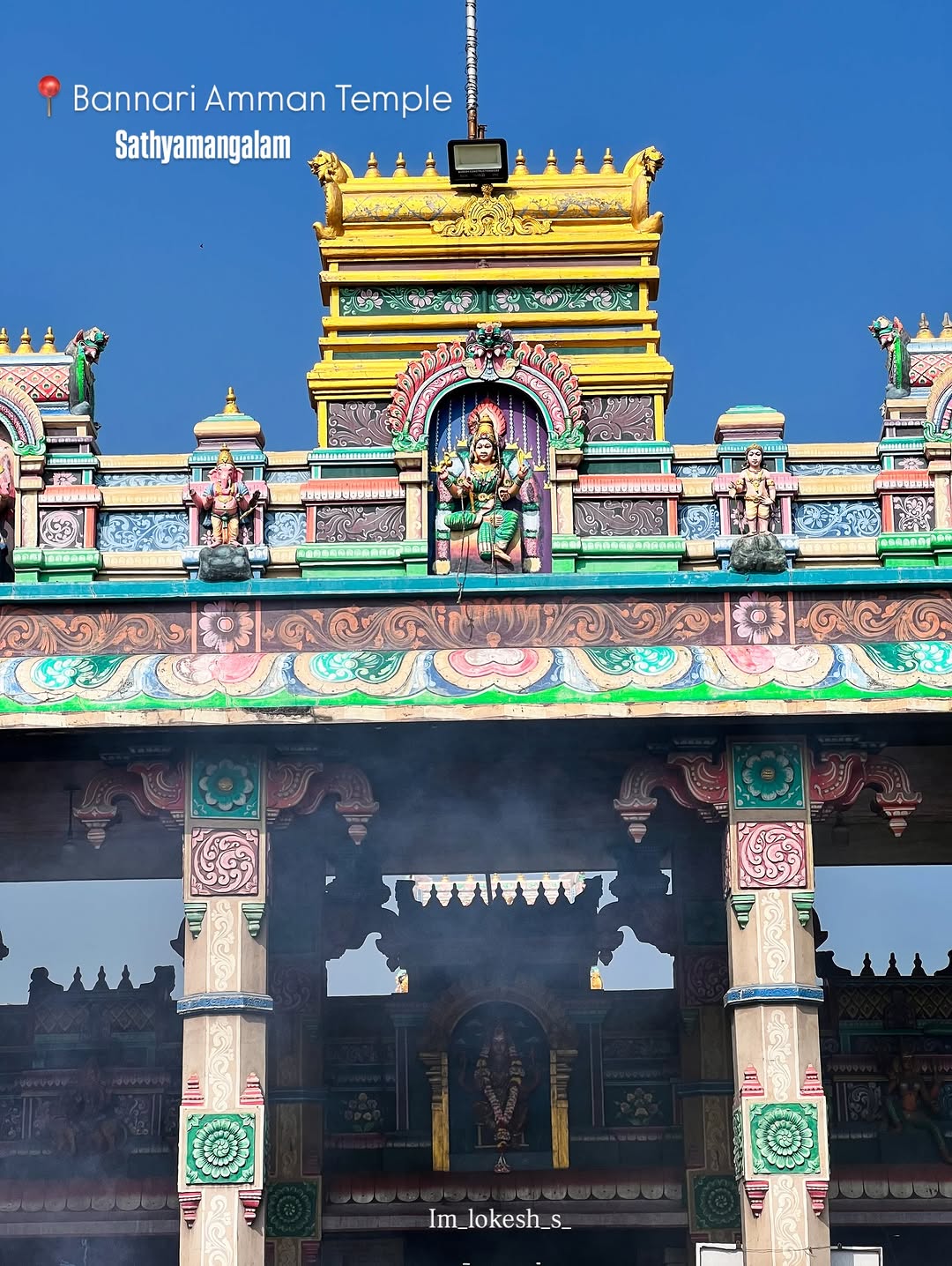
Bannari, Sathyamangalam (Erode District), Tamil Nadu, India
Bannari Mariamman Temple
Also known as: Sri Bannari Amman Temple, Bannari Kovil
ShaktismForest ShrineGrama Devata (Village Deity)PilgrimageKundam FestivalFire WalkingSathyamangalam Tiger ReserveSwayambhuWestern Ghats
Situated dramatically at the foothills of the dense Sathyamangalam Tiger Reserve in the Western Ghats, the Bannari Amman Temple is a fiercely powerful shrine. The Goddess here is worshipped as a Swayambhu (self-manifested) Grama Devata who protects the rural masses from diseases, droughts, and the wild dangers of the surrounding deep forests.
Primary DeityGoddess Bannari AmmanForm of Mariamman (Incarnation of Goddess Mahakali)
TraditionHinduism (Shaktism / Folk Tradition)
AdministrationTamil Nadu HR&CE Department
Historical ManagementHistorically patronized by local farming communities, tribal groups of the Sathyamangalam forests, and regional chieftains. Given its massive modern popularity and high revenue, it is now a major temple administered by the Tamil Nadu Hindu Religious and Charitable Endowments (HR&CE) department.
The History
The temple began as a very humble open-air forest shrine centuries ago. As the fame of the Goddess's miracles spread, local communities built a permanent structure. Over the last few decades, it has expanded massively to accommodate the millions of devotees who flock here, transforming from a remote forest altar to a sprawling, heavily fortified pilgrimage complex.
The modern folklore of this temple is uniquely tied to the infamous Indian bandit and sandalwood smuggler, Veerappan. The Sathyamangalam forests surrounding the temple were his stronghold for decades. It is a widely accepted local legend (and recorded by police intelligence) that Veerappan was a devout, almost fanatic follower of Bannari Amman. Locals believe that despite massive, multi-state police manhunts, Veerappan would frequently sneak into the temple incognito during major festivals to offer his prayers, protected by the dense crowds and the deep forest.
The modern folklore of this temple is uniquely tied to the infamous Indian bandit and sandalwood smuggler, Veerappan. The Sathyamangalam forests surrounding the temple were his stronghold for decades. It is a widely accepted local legend (and recorded by police intelligence) that Veerappan was a devout, almost fanatic follower of Bannari Amman. Locals believe that despite massive, multi-state police manhunts, Veerappan would frequently sneak into the temple incognito during major festivals to offer his prayers, protected by the dense crowds and the deep forest.
Sacred Architecture
A Fortress Against the Wild
The modern temple features classical Dravidian architecture with a brightly painted, towering Rajagopuram at its entrance. Because the temple is located right on the edge of an active wildlife reserve (frequented by elephants and leopards), the complex is heavily fortified with high walls and deep trenches. The main sanctum faces West, which is considered a fierce and powerful orientation in Hindu temple architecture.Legend of the Deity
According to local legend, a cowherd noticed that one of his cows was not giving any milk when brought back to the village. Suspicious, he secretly followed the cow into the dense forest. He was astonished to see the cow standing over a small mound of sand (or anthill) and voluntarily showering it with her milk from her udders. When the villagers carefully dug up the spot, they found the Swayambhu (self-manifested) idol of Goddess Bannari Amman.
Worship & Rituals
Worship heavily features rural Tamil traditions. A very unique offering here is the throwing of salt and black pepper into a designated fire pit, which devotees believe will cure them of physical ailments and skin diseases. Offering Mavilakku (a lamp made of sweet rice flour dough lit with ghee) is also a mandatory vow for many families visiting the Mother.
Festivals
The absolute pinnacle of the temple's calendar is the Panguni Kundam Festival (held in March/April). It attracts lakhs of devotees from Tamil Nadu and Karnataka. The highlight is the breathtaking 'Fire Walking' ceremony. A massive trench is filled with blazing red-hot coals, and thousands of devotees—in a state of deep trance and unwavering faith—walk barefoot across the fire without suffering any burns.
⏳ Daily Schedule
Visiting Hours: Daily from 5:30 AM to 9:00 PM.
(Note: The temple is extremely crowded on Tuesdays and Fridays, which are considered highly auspicious for Goddess Mariamman.)
(Note: The temple is extremely crowded on Tuesdays and Fridays, which are considered highly auspicious for Goddess Mariamman.)
Continue Journey
Associated Shrines
Pannari Ponnar Shankar Temple
Regional Folk Epic
Located in the broader region, tied to the local warrior-twin deities Ponnar and Shankar, highlighting the deep folk-religious roots of the Kongu Nadu area.