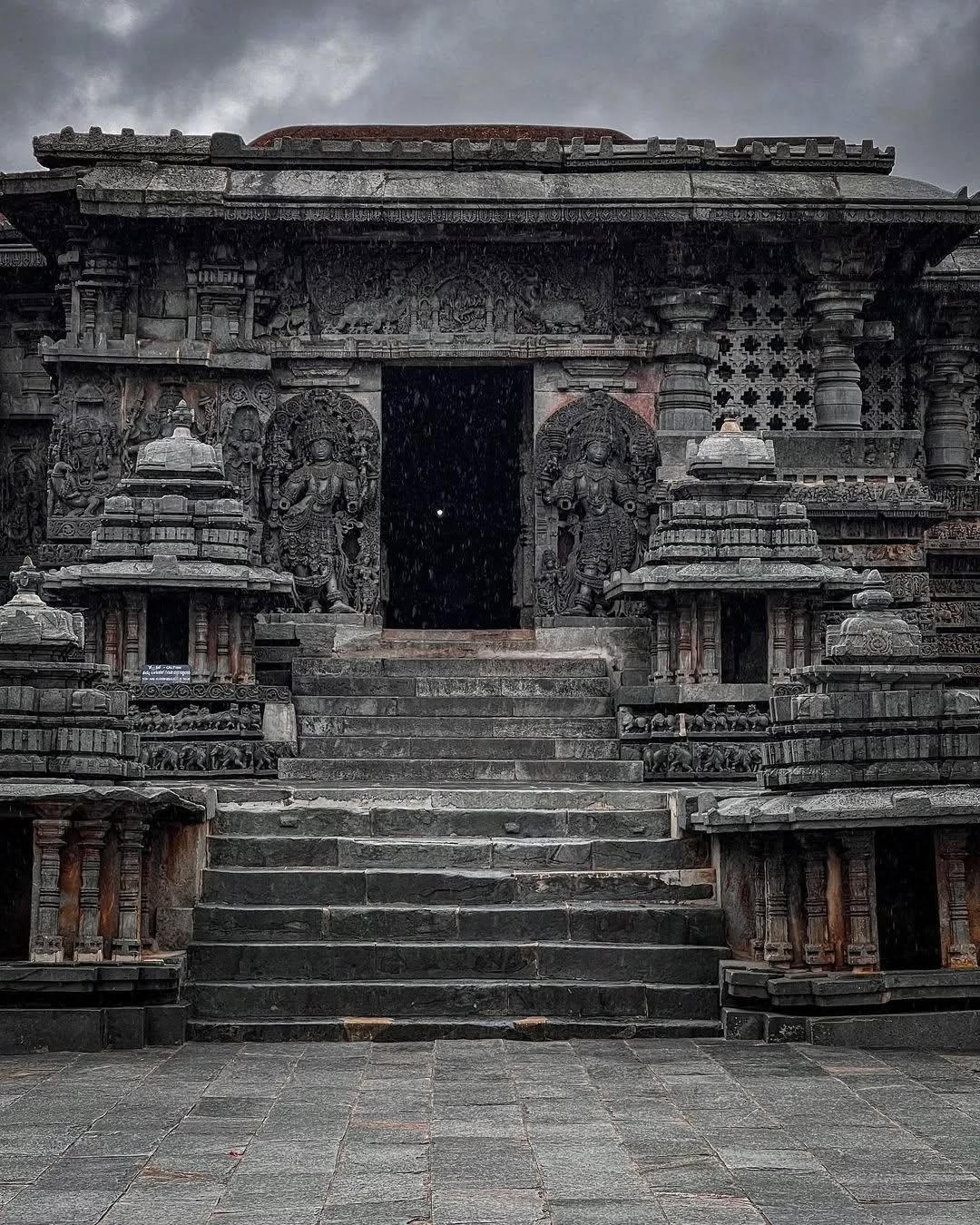
Halebidu, Hassan District, Karnataka, India
Hoysaleswara Temple
Also known as: Halebidu Temple, Dwarasamudra Temple, Halesabidu Shiva Temple
Located in the ancient Hoysala capital of Dwarasamudra (now Halebidu), the Hoysaleswara Temple is a supreme marvel of Indian rock architecture. It is a 'Dvikuta' (two-shrined) temple built on a star-shaped platform. Rather than towering heights, the temple is famous for its astonishingly intricate, jewelry-like soapstone carvings covering every inch of its exterior walls.
The History
Sacred Architecture
The Pinnacle of Soapstone Artistry
The temple is constructed from chloritic schist (soapstone), which is soft when quarried but hardens over time, allowing sculptors to carve it like wood or ivory. It stands on a Jagati (raised star-shaped platform). The outer walls feature horizontally running friezes containing over 240 exquisite large wall sculptures of Hindu epics, alongside thousands of intricately carved elephants, lions, horses, and mythical Makaras. Astonishingly, no two sculptures in the entire complex are identical.Legend of the Deity
Worship & Rituals
A popular local legend involves the 'Garuda Stambha' (Pillar) found in the complex. This pillar honors the 'Garudas'—the elite, fiercely loyal bodyguards of the Hoysala kings. Folklore states that these bodyguards took a blood oath to protect the king, and if the king died, the Garudas would ritualistically commit suicide to serve him in the afterlife. The carvings on the pillar vividly depict this intense, sacrificial loyalty.
Festivals
⏳ Daily Schedule
(Note: As an ASI-protected monument, sunset marks the closing of the main complex, though early morning visits offer the best lighting for photographing the intricate sculptures.)
Associated Shrines
Chennakeshava Temple, Belur
Sister Temple
Located just 16 km away, this is the Vaishnavite counterpart built by the same king. Together with the Somnathpura temple, they form the great Hoysala UNESCO triad.
Kedareshwara Temple
Adjacent Hoysala Shrine
Located a short walk from the main Hoysaleswara complex, this smaller but equally exquisite temple was built by King Veera Ballala II.