🕉️

Vishwaguru

Awakening Heritage...

Maa Chandrabadni Temple

Jamnikhal, Tehri Garhwal District, Uttarakhand, India

Maa Chandrabadni Temple

Also known as: Chandrabadani Siddhapeeth, Bhuvaneshwari Siddha Peeth

ShaktismMaha Shakti PeethHill TemplePilgrimageChandrakoot MountainShakti TrikonBlindfold RitualGarhwal HimalayasTrishuls

Perched at an elevation of 2,277 meters on the breathtaking Chandrakoot Mountain, the Maa Chandrabadni Temple is a revered Maha Shakti Peeth. Surrounded by panoramic 360-degree views of the Garhwal Himalayas (including the Kedarnath and Badrinath peaks), the temple is profoundly unique because it houses no idol. Instead, the cosmic feminine power is worshipped strictly through an ancient Shri Yantra carved directly into the mountain rock.

Primary DeityMaa Chandrabadni (Goddess Sati)Form of Shri Yantra (No Physical Idol)
TraditionHinduism (Shaktism)
AdministrationLocal Temple Trust & Traditional Priests (Semalty Brahmins)
Historical ManagementHistorically revered for millennia and mentioned in the Skanda and Devi Bhagavata Puranas. The priesthood traditionally belongs to the Semalty Brahmin community of the nearby Pujar Gaon village, who have guarded the shrine's unique rituals for generations.
Shakti Peeth SignificanceFallen Body Part: The Torso (Upper Body)

The History

While the mythological roots go back to the dawn of creation, the formal establishment of the current spiritual center is credited to the 8th-century philosopher Adi Guru Shankaracharya. Drawn by the immense magnetic and spiritual power emanating from the mountain, he established the temple over the Shri Yantra to centralize the Goddess's fierce energy.

Sacred Architecture

A Modest Shrine for Infinite Power

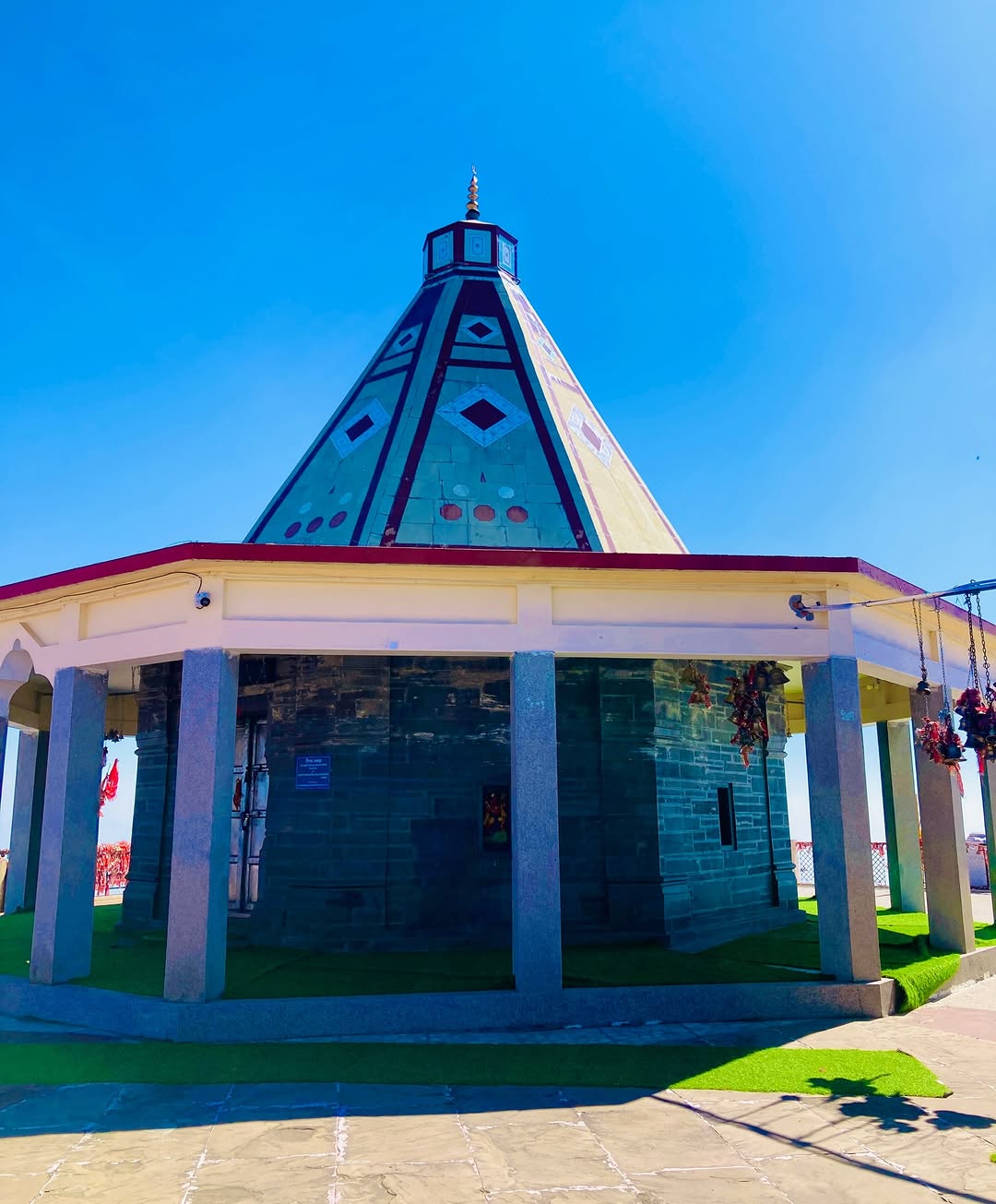
Unlike grand South Indian temples or massive forts, Himalayan shrines are often architecturally humble to withstand extreme weather. The Chandrabadni temple is a small, beautifully maintained structure adorned with white marble and tiles. Its true focal point is inside the sanctum sanctorum: a flat stone shaped like a tortoise's back, upon which the sacred Shri Yantra is carved. A grand silver umbrella is suspended over the Yantra, and it is perpetually covered by a sacred cloth canopy.

Legend of the Deity

According to the Shiva Purana, after Goddess Sati immolated herself in her father Daksha's sacrificial fire, a grief-stricken Lord Shiva wandered the universe carrying her burning body. To restore cosmic balance, Lord Vishnu used his Sudarshana Chakra to dismember her body. The Torso (badan) of the Goddess fell upon this very peak, giving it the name 'Chandrabadni' (the moon-faced body). Additionally, her celestial weapons scattered across the hilltop; hence, thousands of ancient iron and brass trishuls (tridents) can still be found surrounding the shrine.

Worship & Rituals

Worship here involves one of the most secretive and fascinating rituals in India. It is strictly forbidden to look directly at the Shri Yantra with the naked eye. Every year, when the sacred cloth canopy over the Yantra is changed, the Brahmin priest must perform the entire ritual—including bathing the deity—completely blindfolded.

The blindfold ritual is deeply rooted in local folklore. It is said that generations ago, an overly curious priest attempted to remove the cloth and look directly at the glowing Shri Yantra while alone in the sanctum. The sheer, concentrated cosmic energy of the Goddess instantly blinded him. Since then, the rule of the blindfold is never broken. Furthermore, locals and late-night trekkers firmly believe that after sunset, celestial beings (Gandharvas and Apsaras) descend upon Chandrakoot mountain to sing and dance in the court of the Mother Goddess.

Festivals

The temple witnesses massive congregations during Chaitra Navratri and Sharad Navratri, where the devotional atmosphere echoes with drums, cymbals, and traditional long copper horns called Bhankoras. An enormous annual fair is also held here in the month of April, drawing thousands of devotees from neighboring villages.

Daily Schedule

Visiting Hours: Daily from 6:00 AM to 7:00 PM.
(Note: Access requires a 1-kilometer uphill trek from the Jamnikhal/cab drop-off point. It is highly advised to avoid the trek during heavy monsoon rains due to landslides.)
Continue Journey

Associated Shrines

Surkanda Devi Temple

The Shakti Trikon (Triangle)

Located nearby, this is where the Head of Sati fell. Together with Chandrabadni and Kunjapuri Devi, it forms the sacred 'Shakti Trikon' pilgrimage circuit of the Tehri Garhwal region.

Kunjapuri Devi Temple

The Shakti Trikon (Triangle)

The third pillar of the local Shakti triangle, where the chest/heart of Goddess Sati is believed to have fallen.