Madurai, Tamil Nadu
Meenakshi Amman Temple
Also known as: Madurai Meenakshi Temple, Meenakshi Sundareshwarar Temple, Arulmigu Meenakshi Amman Thirukoil
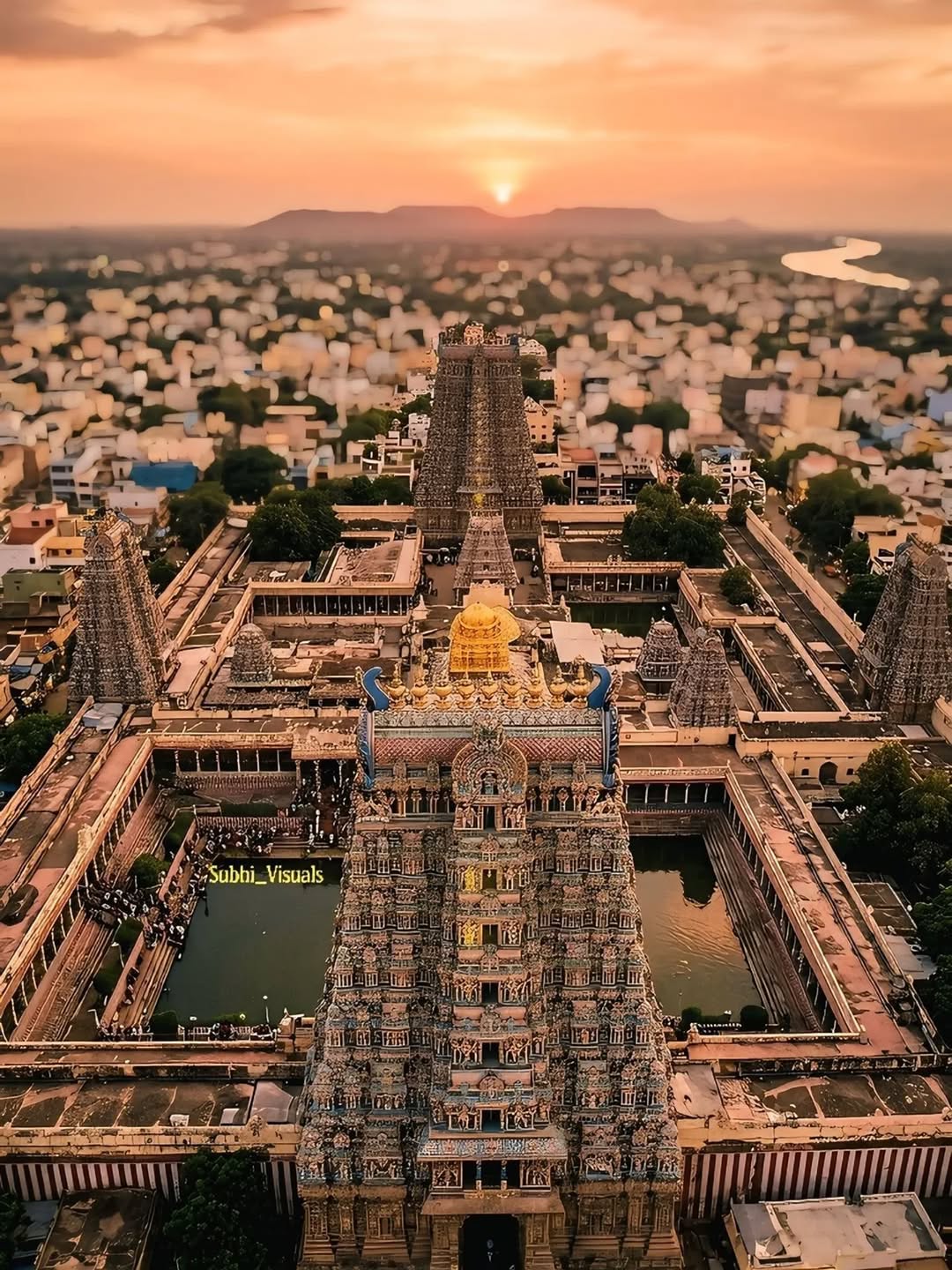
Located in the heart of the ancient city of Madurai, this spectacular architectural marvel is dedicated to Goddess Meenakshi. It is famous for its towering, colorful gopurams and the unique tradition where the Goddess holds primary importance over her consort, Lord Shiva.
The History
In the 14th century, the temple suffered severe destruction and looting during the invasion of the Delhi Sultanate led by Malik Kafur. For decades, the temple lay in ruins and its sacred rituals were suspended.
The temple was brilliantly resurrected and expanded to its current majestic scale during the 16th and 17th centuries by the Nayak rulers, most notably King Thirumalai Nayak. They fortified the complex, built the massive soaring gopurams (towers), and sponsored the exquisite stone carvings that the temple is famous for today.
Throughout history, the temple has served not just as a religious center, but as a hub for Tamil literature, art, music, and dance, embodying the soul of Tamil culture.
Sacred Architecture
Pinnacle of Dravidian Architecture
The temple complex covers a massive 14 acres and is a stunning showcase of Dravidian architecture. It is enclosed by high walls and accessed through 14 towering Gopurams (gateway towers). The tallest is the southern tower, rising to 170 feet. These gopurams are famous worldwide for being covered top-to-bottom with thousands of brightly painted, intricately carved stucco figures of gods, demons, and animals.
At the heart of the complex is the sacred Porthamarai Kulam (Golden Lotus Tank). According to tradition, this tank was used to judge the merit of Tamil literature; flawless works would float, while flawed ones would sink.
Another architectural marvel is the Aayiram Kaal Mandapam (Hall of Thousand Pillars). Carved out of a single rock, each of the 985 supporting pillars is a distinct, masterful sculpture. The hall also features 'musical pillars' that produce different musical notes when struck.
Legend of the Deity
A divine voice assured the king that she was an incarnation of Goddess Parvati, instructing him to raise her like a prince and that her third breast would disappear the moment she met her future husband. Named Tadaatagai (later Meenakshi, meaning 'fish-eyed'), she grew up to be a fierce, invincible warrior queen who conquered the three worlds.
During her campaign in the Himalayas, she reached Mount Kailash and challenged Lord Shiva. The moment she laid eyes on him, her third breast vanished, and she realized her true identity as Parvati. Shiva promised to come to Madurai to marry her.
Their spectacular wedding, the Meenakshi Tirukalyanam, was a cosmic event attended by all the gods, with Lord Vishnu (acting as Meenakshi's brother) giving the bride away to Lord Sundareshwarar (Shiva). They ruled Madurai together before merging into the divine forms worshipped in the temple today.
Worship & Rituals
The worship follows the traditional Shaiva Agamas, with elaborate rituals performed six times a day, involving music, chanting, and offerings of food and flowers.
The most captivating daily ritual is the Palliarai Puja (Bedchamber Ritual) at night. Amidst the beating of drums, the blowing of conches, and singing, a silver palanquin carries the silver slippers of Lord Sundareshwarar from his shrine to the Goddess's shrine. The deity is symbolically put to rest alongside Meenakshi in the Palliarai, and the temple doors are closed for the night, only to be awakened early the next morning.
Festivals
Navaratri (September/October) is celebrated grandly, focusing on the divine feminine. The Goddess is adorned in different spectacular alankarams (forms) on each of the nine nights, and the temple is filled with elaborate Kolu (doll displays).
The Teppotsavam (Float Festival) takes place in January/February on the full moon day. The deities are taken to the massive Vandiyur Mariamman Teppakulam (tank) and placed on a beautifully illuminated, flower-decked float that circles the central island pavilion.
⏳ Daily Schedule
06:30 AM - 07:15 AM: Vila Puja
10:30 AM - 11:15 AM: Kalasandhi Puja
12:30 PM - 12:45 PM: Uchikala Puja
12:45 PM - 04:00 PM: Temple Closed
04:00 PM - 08:30 PM: Evening Darshan
07:30 PM - 08:15 PM: Sayarakshai Puja
09:30 PM - 10:00 PM: Ardhajama Puja & Palliarai (Bedchamber) Ritual
Associated Shrines
Thiruparankundram Murugan Temple
Son of Meenakshi and Sundareshwarar (Lord Murugan)
One of the Six Abodes of Murugan; deeply connected to Madurai's festival traditions
Kallazhagar Temple
Brother of Goddess Meenakshi (Lord Vishnu as Azhagar)
Located in Alagar Koyil; his journey to Madurai is the central event of the Chithirai festival
Koodal Azhagar Temple
Form of Lord Vishnu
Ancient Vaishnavite temple in Madurai; historically significant to the region's spiritual geography
Vandiyur Mariamman Temple
Goddess Mariamman
Associated with the massive Teppakulam (temple tank) where the annual float festival takes place