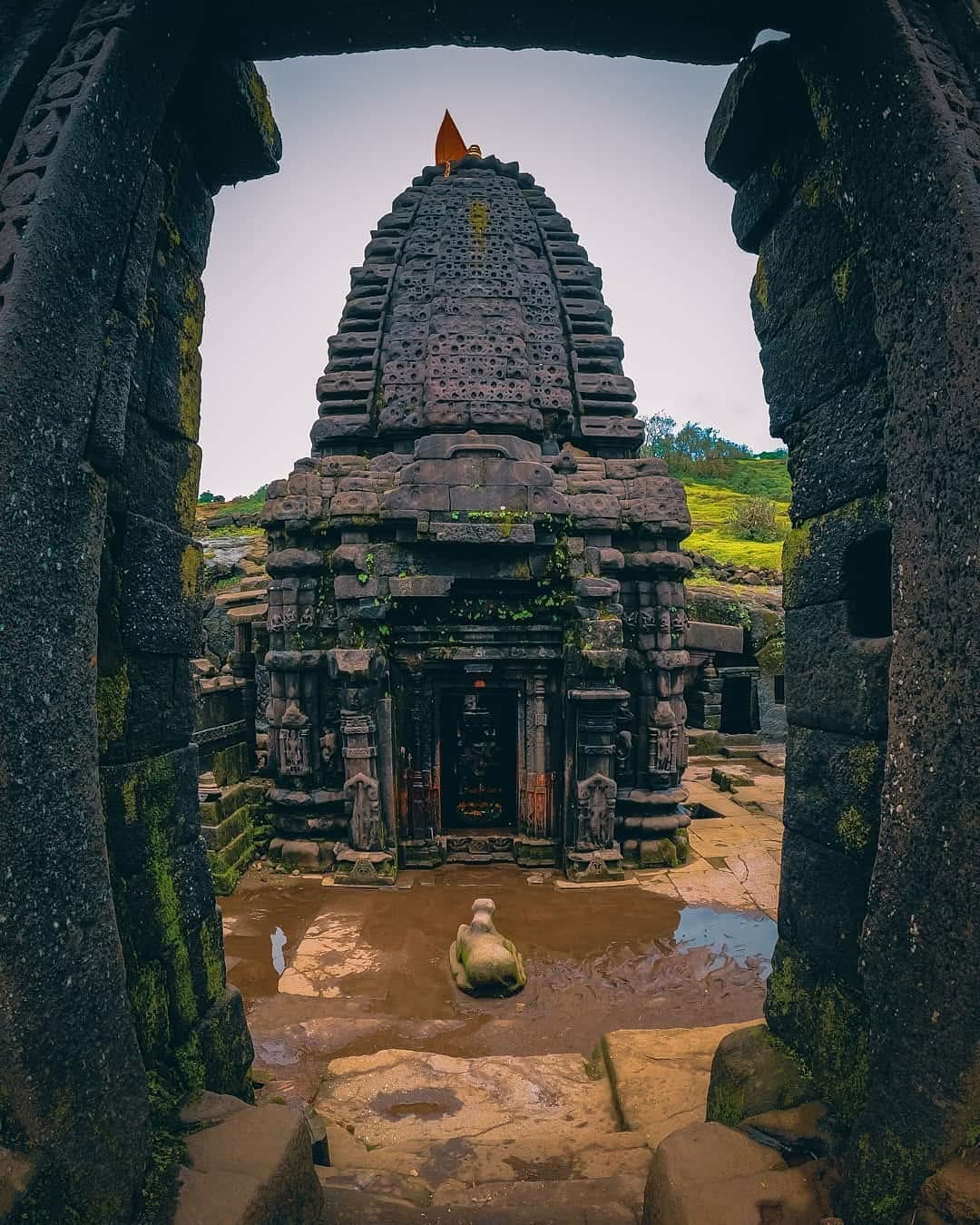
Ahmednagar District (Harishchandragad), Maharashtra, India
Harishchandreshwar Temple
Also known as: Harishchandra Temple, Harishchandragad Temple
ShaivismHistorical FortHemadpanti ArchitectureTrekking DestinationSahyadriHemadpantiKalachuri DynastyMangal GangaSaptatirtha Pushkarini
Situated on the vast, windswept plateau of the Harishchandragad fort in the Sahyadri mountains, the Harishchandreshwar Temple is a magnificent testament to ancient Indian rock architecture. Surrounded by mystical caves, ancient water cisterns, and dense forests, it serves as the spiritual anchor of this historic fort, standing in striking contrast to the raw nature of the adjacent Kedareshwar Cave.
Primary DeityLord Shiva (Harishchandreshwar)Form of Shiva Lingam
TraditionHinduism (Shaivism)
AdministrationArchaeological Survey of India (ASI) & Local Authorities
Historical ManagementConstructed during the medieval period, likely under the patronage of the Yadava or Silahara dynasties, following the earlier 6th-century fort foundations by the Kalachuris. Today, the ruins and the temple fall under the purview of the Archaeological Survey of India (ASI) alongside local trekking and conservation communities.
The History
The fort itself finds mention in ancient texts like the Matsya Purana, Agni Purana, and Skanda Purana. The temple was built around the 11th century and has survived centuries of harsh weathering and historic battles. In the 14th century, the great ascetic and yogi Changdev Maharaj meditated in the surrounding area and wrote the classic spiritual text, the 'Tatvasaar'.
Sacred Architecture
A Masterpiece of Hemadpanti Art
The temple is constructed in the classic Hemadpanti architectural style, characterized by its dry-masonry technique. It is built using perfectly interlocking black basalt stones without the use of any mortar. The exterior walls are adorned with incredibly fine carvings of deities, dancers, and mythical creatures. To the east of the temple lies a large, ancient water tank called the Saptatirtha Pushkarini, which features small, intricate, cave-like shrines carved into its inner walls.Legend of the Deity
While the primary deity is Lord Shiva, the region and the fort are heavily associated with the mythological King Harishchandra, renowned in Hindu epics for his absolute, unwavering adherence to truth (Satya). Furthermore, it is a localized geographical legend that the holy river Mangal Ganga originates directly from the temple's vicinity.
Worship & Rituals
Worship is largely informal and devotee-driven, deeply intertwined with the effort required to reach the site. Trekkers and pilgrims perform their own prayers. The serene, isolated environment encourages deep meditation, echoing the practices of the ancient sages who once sought refuge here.Local folklore suggests that the subterranean water networks connecting the Saptatirtha Pushkarini, the Kedareshwar Cave, and the origin point of the Mangal Ganga river are far more extensive and mysterious than modern mapping shows. Trekkers often share stories of the Pushkarini's water remaining startlingly ice-cold even during the peak of summer.
Festivals
The isolated plateau comes alive during Maha Shivaratri, when thousands of pilgrims and trekkers ascend the mountain at night to offer prayers. The monsoon season also attracts heavy crowds of nature lovers, though the primary religious fervor is centered around the Shivaratri festival.
⏳ Daily Schedule
Visiting Hours: The plateau and temple are accessible 24/7.
(Note: Access requires a challenging trek. The best time to visit is post-monsoon or winter, as heavy rains make the rocky paths extremely perilous and the winter nights on the plateau can be freezing.)
(Note: Access requires a challenging trek. The best time to visit is post-monsoon or winter, as heavy rains make the rocky paths extremely perilous and the winter nights on the plateau can be freezing.)
Continue Journey
Associated Shrines
Kedareshwar Cave Temple
Adjacent Submerged Shrine
Located nearby on the same plateau, famous for its submerged Lingam and the apocalyptic legend of the four pillars.