🕉️

Vishwaguru

Awakening Heritage...

Parvathamalai Temple

Polur, Tiruvannamalai District, Tamil Nadu, India

Parvathamalai Temple

Also known as: Mallikarjuna Swamy Temple, Parvathamalai, Siddhar Bhoomi, Parvatha Hills

ShaivismHill TempleTrekking DestinationPilgrimageSiddharsTrekkingKadapparai PathSanjeevani MountainSelf-Abhishekam

Rising to an altitude of over 4,500 feet in the Eastern Ghats, Parvathamalai is a sacred and thrilling pilgrimage destination. Known for its notoriously steep and challenging trekking route involving vertical rock faces, iron rods, and chains, the peak houses an ancient Shiva temple. It is heavily associated with Tamil Siddhars (mystics) and offers a rare tradition where devotees are allowed to personally perform pooja and abhishekam to the main deity.

Primary DeityLord Mallikarjuna Swamy (Shiva)Form of Shiva Lingam
TraditionHinduism (Shaivism)
AdministrationTamil Nadu HR&CE Department & Local Trusts
Historical ManagementUnlike massive structural temples built by kings, Parvathamalai has historically been a secluded spiritual retreat for ascetics. Today, it is maintained by a combination of local volunteer groups, Siddhar trusts, and the Tamil Nadu Hindu Religious and Charitable Endowments (HR&CE) department.

The History

The shrine is believed to be over 2,000 years old. It is widely revered in Tamil spiritual culture as 'Siddhar Bhoomi' (Land of the Siddhars). Legendary mystics like Agasthiyar and Bogar are believed to have meditated here. Even today, locals strongly believe that Siddhars visit the temple in the form of animals or invisibly at midnight to worship Lord Shiva.

Sacred Architecture

A Natural Fortress of Devotion

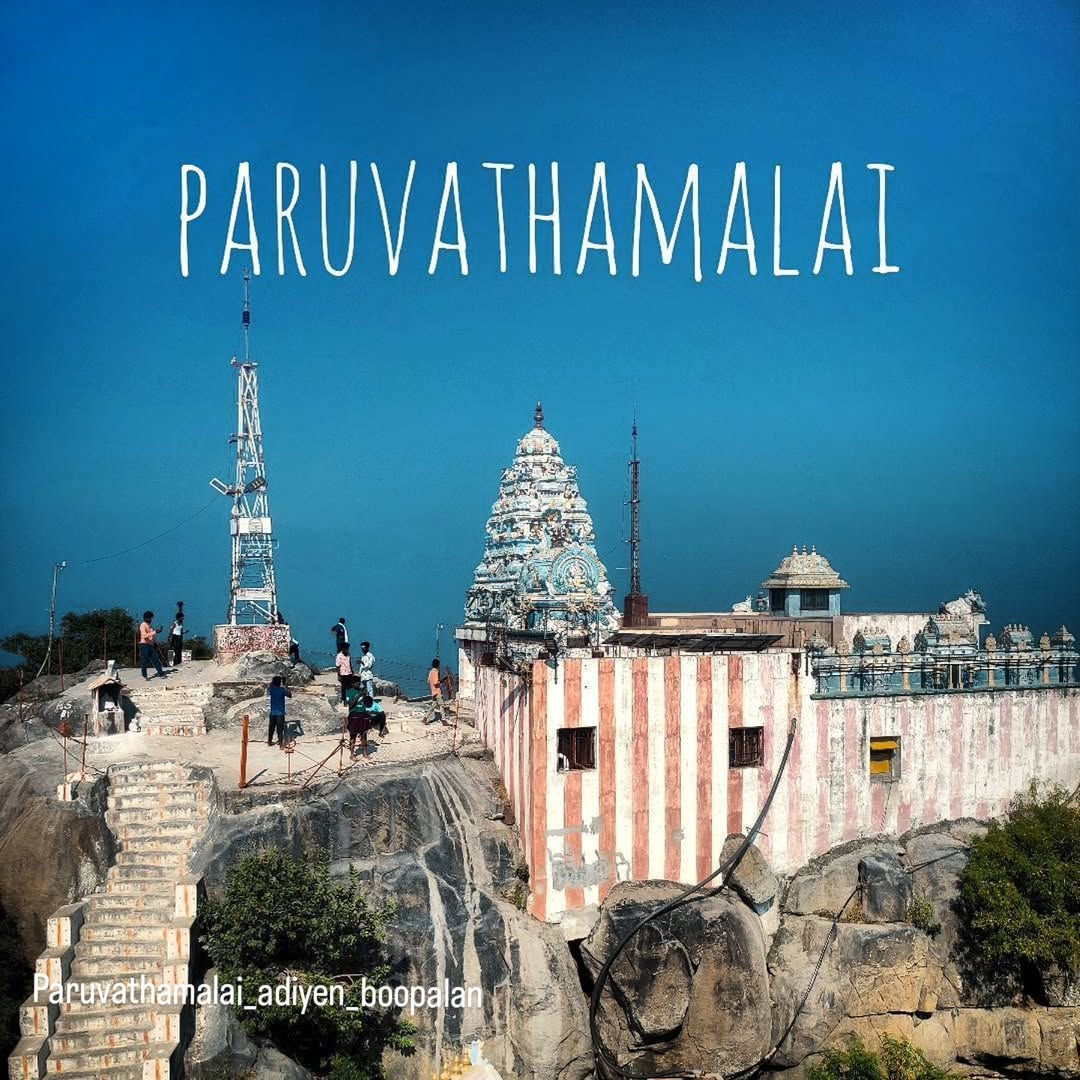
The temple structure at the peak is very modest—a small sanctum sanctorum built heavily enough to withstand high altitude winds and harsh weather. The true 'architecture' is the treacherous path itself. Devotees must navigate different sections: dirt paths, rocky terrain, the thrilling 'Kadapparai Malai' (where one climbs vertically by holding iron crowbars driven directly into the cliff face), and 'Agaya Padi' (steep steps that feel suspended in the sky).

Legend of the Deity

According to Hindu epic mythology, during the Ramayana, when Lord Hanuman was carrying the Sanjeevani mountain to Lanka to revive Lakshmana, a small fragment of the magical mountain fell to the earth at this location, creating Parvathamalai. This origin legend explains the hill's rich biodiversity and the abundance of rare medicinal herbs found along the trekking path.

It is a widely held belief among trekkers that one is never truly alone on Parvathamalai. Many climbers report smelling sweet fragrances (like holy ash or incense) in completely desolate areas of the cliff. Furthermore, there are countless stories of mysterious wild dogs appearing out of nowhere to safely guide lost or exhausted pilgrims along the correct path—these are widely believed to be Siddhars guiding devotees in animal form.

Worship & Rituals

Parvathamalai features a deeply democratic form of worship. Unlike most South Indian temples where only designated priests may enter the sanctum, here, any devotee can directly perform Abhishekam (ritual bathing with water, milk, or vibhuti) and offer flowers directly to the Shiva Lingam. This deeply personal connection makes the arduous trek highly rewarding.

Festivals

The most significant festival is Maha Shivaratri, during which tens of thousands of devotees undertake the perilous night trek to light lamps and perform abhishekam. Pournami (Full Moon) days are also incredibly crowded, as trekking under the moonlight is a popular and spiritually significant practice.

Daily Schedule

Visiting Hours: The hill is technically open 24/7 for trekking. Most devotees start their climb late at night or very early in the morning to avoid the brutal afternoon sun.
(Note: There are no traditional priests stationed at the peak full-time; devotees usually perform their own rituals upon reaching the top.)
Continue Journey

Associated Shrines

Arunachalesvara Temple, Tiruvannamalai

Regional Spiritual Center

Located in the same district, Tiruvannamalai is the major Shaivite center of the region, representing the fire element (Agni Lingam).