🕉️

Vishwaguru

Awakening Heritage...

Kedarnath Temple

Kedarnath, Rudraprayag District, Uttarakhand, India

Kedarnath Temple

Also known as: Shri Kedarnath Ji, Kedareshwar Jyotirlinga

ShaivismJyotirlingaPanch KedarChota Char DhamMost Visited TempleHimalayasMandakini RiverAdi ShankaraBhim Shila

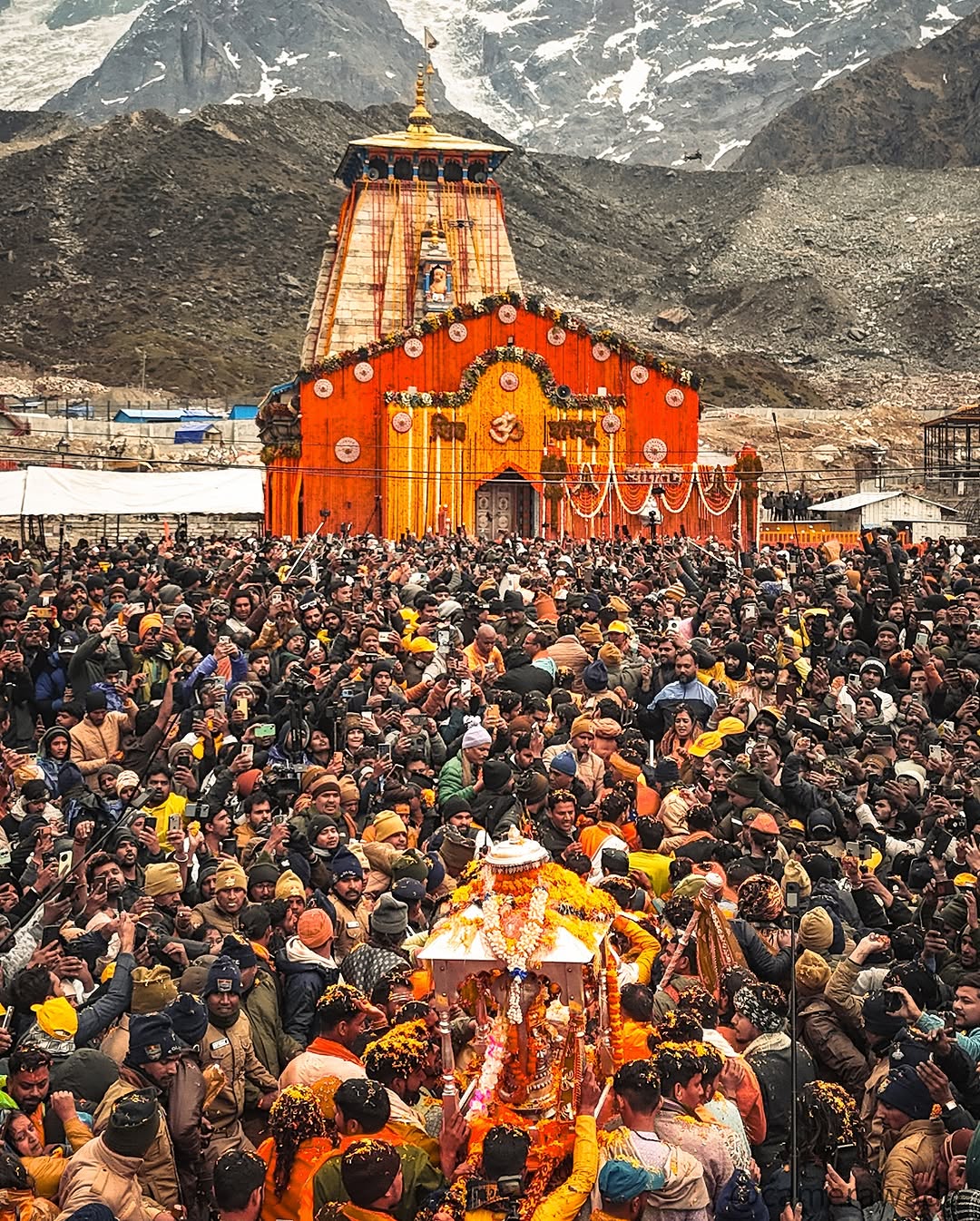
Located at a breathtaking altitude of 3,583 meters (11,755 ft) near the Chorabari Glacier and the roaring Mandakini river, Kedarnath is one of the holiest and most remote Shiva temples in the world. It is the highest of the 12 Jyotirlingas and stands as a formidable symbol of spiritual resilience amidst the unforgiving Himalayan terrain.

Primary DeityLord ShivaForm of Sadashiva (The Hump of the Divine Bull) / Jyotirlinga
TraditionHinduism (Shaivism)
AdministrationShri Badrinath-Kedarnath Temple Committee (BKTC)
Historical ManagementLegend attributes its original construction to the Pandavas, while the present monumental stone structure is credited to Adi Shankaracharya in the 8th century. It is administered by the Shri Badrinath-Kedarnath Temple Committee (BKTC), with the head priest (Rawal) traditionally belonging to the Veerashaiva community of Karnataka.

The History

The temple's resilience is legendary. Built with massive interlocking stone slabs, it has withstood centuries of severe weather, including the Little Ice Age where glaciological studies suggest it was buried under snow and ice for nearly 400 years. Most recently, it miraculously survived the catastrophic 2013 flash floods, largely protected by a massive boulder (now revered as 'Bhim Shila') that washed down and settled directly behind the temple, perfectly diverting the raging floodwaters around the ancient shrine.

Sacred Architecture

The Indestructible Himalayan Shrine

The temple is an imposing, austere structure built of massive, evenly cut grey stone slabs. These stones are joined using an ancient interlocking technique (without the use of mortar), allowing the structure to withstand extreme seismic activity and catastrophic weather events.

The sanctum sanctorum houses the primary idol: a naturally formed, irregular, triangular-shaped stone representing the hump of the divine bull. The assembly hall (Mandapa) contains ancient statues of the five Pandava brothers, Lord Krishna, Nandi, and Virabhadra. A prominent feature is the large statue of Nandi the bull, sitting outside the temple, faithfully guarding the entrance.

Legend of the Deity

According to the Mahabharata, the Pandavas sought Lord Shiva to absolve them of the sins of killing their kin in the Kurukshetra war. Displeased, Shiva eluded them and took the form of a bull at Kedarnath. When Bhima recognized and tried to catch the bull by its tail and hind legs, it dove into the ground. Only the hump remained on the surface, which is now worshipped as the Kedarnath Jyotirlinga. The remaining parts of the bull appeared at four other locations in the region, collectively forming the sacred Panch Kedar.

Worship & Rituals

Worship at Kedarnath requires a profound act of physical endurance, as reaching the temple traditionally involves a grueling 16 to 22 km trek from Gaurikund. Inside the sanctum, devotees are granted the rare privilege to touch the Jyotirlinga and personally perform Abhishekam by offering ghee, water, and bel leaves directly to the stone. The evening Aarti, accompanied by the echoing chants of 'Har Har Mahadev' and the roar of the freezing Mandakini river, creates a deeply moving spiritual atmosphere.

Festivals

The most significant and emotional events are the opening and closing ceremonies of the temple doors (Kapat). During the winter closure, the 'Utsava Murti' (processional idol) is carried down to Ukhimath in a grand, multi-day procession. Another major event is the Shravani Annakoot Mela, celebrated the day before Raksha Bandhan, where the Jyotirlinga is covered entirely with freshly cooked rice, which is later distributed as prasadam.

Daily Schedule

Darshan Season: Open from late April (Akshaya Tritiya) to November (Kartik Purnima/Bhai Dooj).
(Note: During the six months of extreme winter, the temple is completely inaccessible due to heavy snowfall. The deity's processional idol is moved to the Omkareshwar Temple in Ukhimath for winter worship.)
Continue Journey

Associated Shrines

Tungnath Temple

The Arms (Panch Kedar)

The highest Shiva temple in the world (3,680m), representing the arms (Bahu) of the divine bull.

Rudranath Temple

The Face (Panch Kedar)

A remote rock temple where the face (Mukh) of Lord Shiva is worshipped.

Omkareshwar Temple, Ukhimath

The Winter Seat

Located at a lower altitude, this temple serves as the winter home for the idols of Kedarnath and Madhyamaheshwar when the main shrines are snowbound.