🕉️

Vishwaguru

Awakening Heritage...

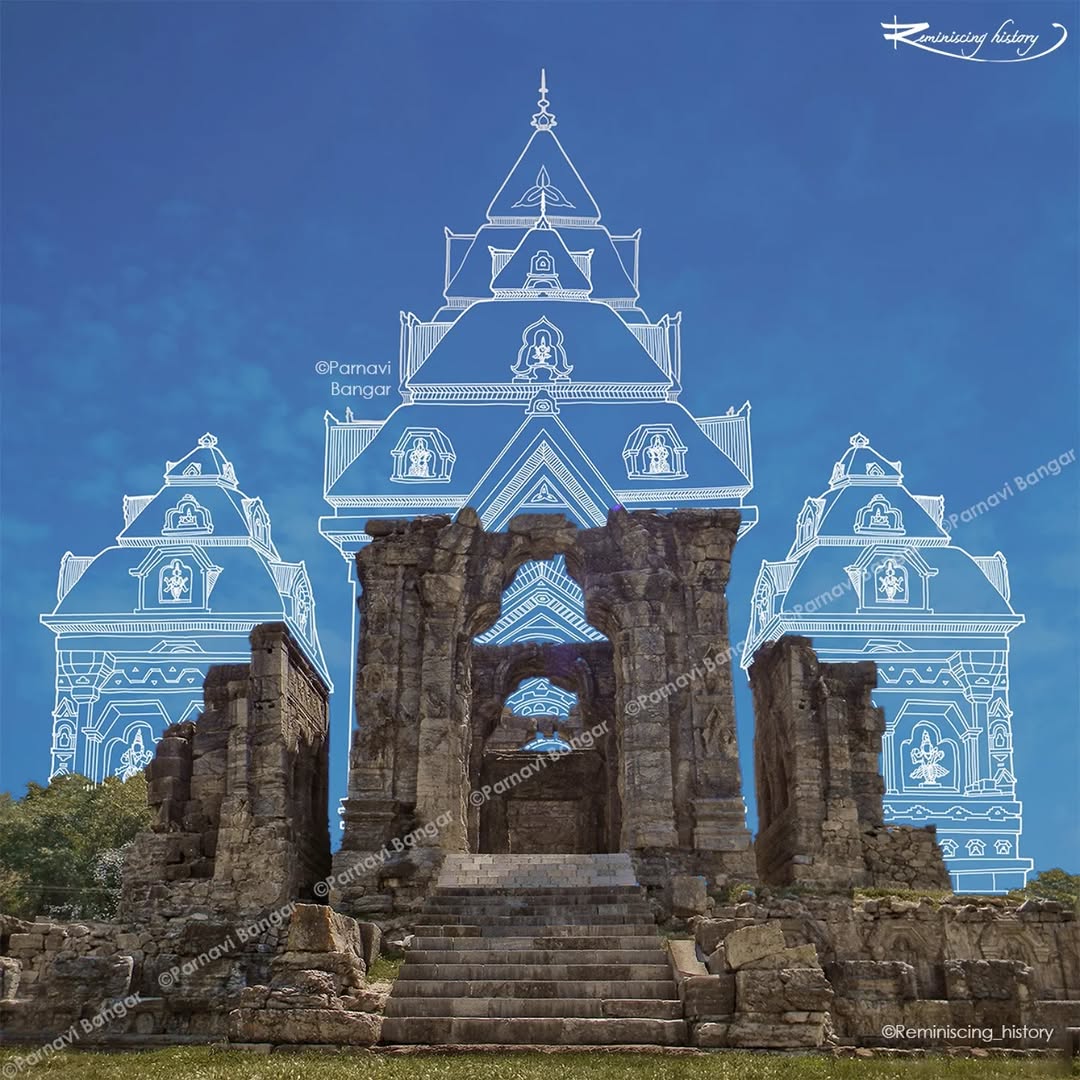
Martand Sun Temple

Anantnag (near Mattan), Jammu and Kashmir, India

Martand Sun Temple

Also known as: Martand Surya Mandir, Pandou Laidan

Saura (Sun Worship)Historical RuinKashmiri ArchitectureASI Protected MonumentLalitaditya MuktapidaKarkota Dynasty8th CenturyDestroyed Monument

Set against the breathtaking backdrop of the snow-capped Pir Panjal range in the Kashmir Valley, the ruins of the Martand Sun Temple stand as a melancholic yet magnificent testament to the architectural brilliance of ancient India. Before its destruction, it was one of the grandest and most imposing temples dedicated to the Sun God in the world.

Primary DeityLord Surya (The Sun God)Form of Martand (The Cosmic Sun / 8th Aditya)
TraditionHinduism (Saura)
AdministrationArchaeological Survey of India (ASI)
Historical ManagementBuilt in the 8th century by Emperor Lalitaditya Muktapida of the Karkota dynasty, marking the absolute zenith of Kashmiri Hindu architecture. Tragically, it was completely destroyed in the early 15th century on the orders of Sikandar Shah Miri (Sikandar Butshikan). It lay in ruins for centuries and is now protected by the Archaeological Survey of India (ASI) as a site of national importance.

The History

Constructed in the 8th century CE by the great warrior-king Lalitaditya Muktapida, the temple was the spiritual and architectural crown jewel of the Karkota Empire, drawing pilgrims from across the subcontinent. Its destruction in the 15th century was so massive and systematic that historical accounts claim it took the Sultan's army an entire year to dismantle the colossal stone structure using fire, timber, and immense physical force.

Sacred Architecture

A Global Architectural Synthesis

The temple is an unparalleled masterpiece of Kashmiri Hindu architecture, famous for heavily integrating global aesthetics due to Kashmir's position on the ancient Silk Road. The structure exhibits a unique synthesis of Gandharan, Gupta, Chinese, Roman, and Syrian-Byzantine architectural styles.

Built with massive, precisely cut blocks of limestone, the complex featured a towering central shrine positioned perfectly to receive the first rays of the rising sun. It was surrounded by a massive, pillared courtyard featuring exactly 84 smaller shrines (84 is a highly sacred number in Hindu cosmology). The ruins still display striking Hellenistic (Greek) influences, particularly in the grand trefoil (three-lobed) arches, triangular pediments, and fluted Greco-Roman style pillars.

Legend of the Deity

The temple is dedicated to 'Martand', a Sanskrit name for the Sun God. According to ancient Hindu cosmology, Aditi (the mother of the gods) gave birth to eight sons (the Adityas). The eighth son was initially born as a lifeless, formless egg. He was named Martand (from 'Mrita' meaning dead, and 'Anda' meaning egg) but was later infused with divine cosmic energy to become the brilliant Sun that illuminates and sustains the universe.

Worship & Rituals

Active, organized daily worship ceased over 500 years ago following the temple's destruction. Today, visitors walk through the massive limestone blocks scattered across the grassy courtyard, admiring the faded, yet exquisitely carved friezes of deities—including Vishnu, Surya, Ganga, and Yamuna—that remarkably survived the fires and the passage of centuries.

Festivals

Historically, Martand would have been the vibrant center for major solar festivals like Makar Sankranti, Ratha Saptami, and the Kashmiri New Year (Navreh). Today, as a ruined monument, it does not host regular calendar festivals, though in recent years, occasional special prayers (like the Navgrah Ashtamangala Puja) have been performed by pilgrims to honor the site's spiritual legacy.

Daily Schedule

Visiting Hours: Daily from Sunrise to Sunset.
(Note: As an ASI-protected archaeological ruin, regular daily ritual worship is not officially permitted, though tourists and pilgrims visit year-round to admire its history and architecture.)
Continue Journey

Associated Shrines

Konark Sun Temple

Eastern Sun Shrine

Located in Odisha, it is the most famous Sun temple in India. Together with Martand and Modhera, it forms the great historical triangle of monumental Indian Sun temples.

Modhera Sun Temple

Western Sun Shrine

An exquisite 11th-century Sun temple located in Gujarat, featuring a massive stepwell and precise solar alignments.

Shankaracharya Temple

Kashmiri Hindu Heritage

An ancient Shiva temple perched atop a hill in Srinagar, representing the surviving ancient Hindu architectural and spiritual legacy in the Kashmir valley.