🕉️

Vishwaguru

Awakening Heritage...

Daitya Sudan Temple

Lonar, Buldhana District, Maharashtra, India

Daitya Sudan Temple

Also known as: Daityasudan Mandir, Vishnu Temple of Lonar

VaishnavismHemadpanthi ArchitectureGeological PilgrimageHistorical LandmarkLonar CraterMeteorite LakeStar-shaped PlanLonasura Demon

Situated near the rim of the world-famous Lonar meteor crater, the Daitya Sudan Temple is a 13th-century architectural masterpiece. Dedicated to Lord Vishnu, the temple commemorates the divine slaying of the demon Lonasura, intertwining ancient religious mythology with one of Earth's rarest and most catastrophic geological phenomena.

Primary DeityLord VishnuForm of Daitya Sudan (The Giant-Slayer)
TraditionHinduism (Vaishnavism)
AdministrationArchaeological Survey of India (ASI)
Historical ManagementBuilt during the reign of the Yadavas of Devagiri (Seuna dynasty) around the late 12th or early 13th century. Historical analysis suggests its construction was abruptly halted—leaving its shikhara (tower) unfinished—due to the disruptive invasions by the Delhi Sultanate in the early 14th century.

The History

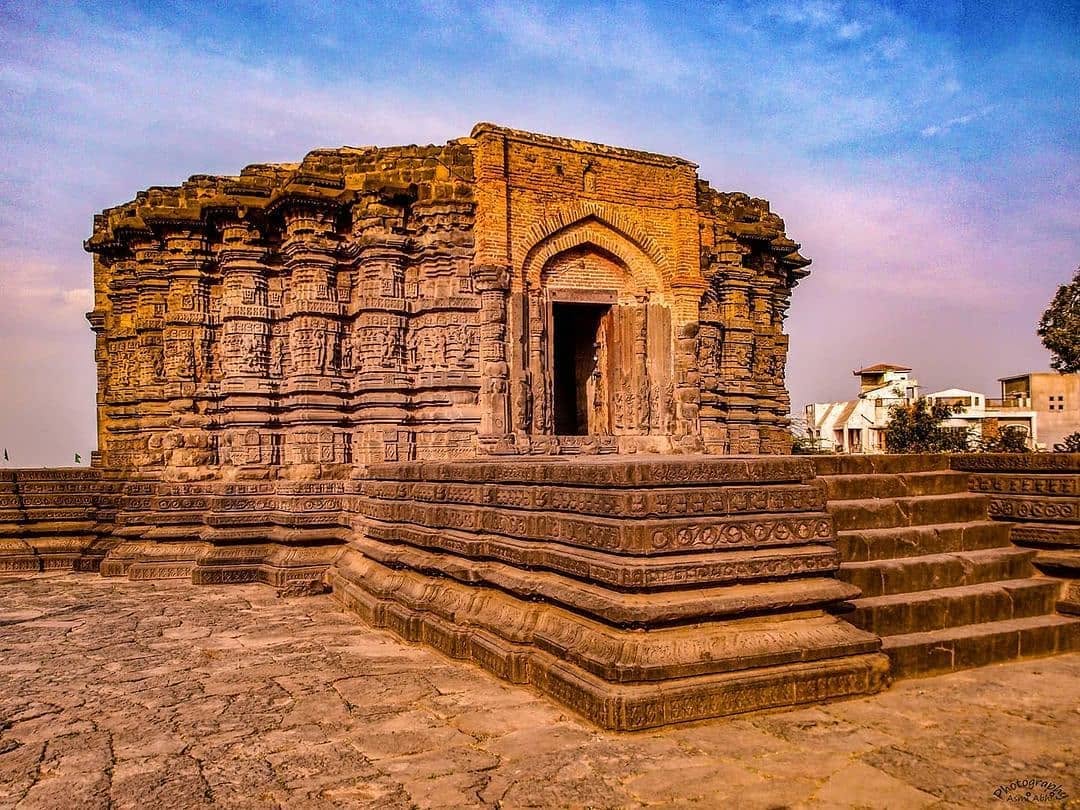
Constructed in the classic Hemadpanthi style, the temple relies on interlocking black basalt stones without the use of any mortar. It features highly intricate carvings reminiscent of the Khajuraho temples. Because of its location beside the Lonar Crater (the only known hyper-velocity meteorite crater in basaltic rock), it has attracted pilgrims, historians, and scientists alike for centuries.

Sacred Architecture

The Hemadpanthi Star

The temple is a pristine example of Hemadpanthi architecture. It stands on a raised platform (jagati) designed as an irregular, asymmetrical star. The structure is made entirely of locally sourced black basalt rock, utilizing an advanced interlocking mortise and tenon system without any cement or binding agent.

The exterior walls are completely covered in exquisite, hyper-detailed carvings depicting scenes from the Ramayana, Mahabharata, Puranas, celestial nymphs (surasundaris), and exotic animals. The temple features three primary niches housing idols of Surya (Sun God), Chamunda Devi, and Narasimha. Notably, the temple's roof remains visibly unfinished, lacking the soaring pyramidal spire it was designed to have.

Legend of the Deity

According to the Skanda Purana, a terrifying giant demon named Lonasura (or Lavanasura) resided in a massive subterranean pit, causing havoc on Earth. Lord Vishnu assumed the form of a handsome youth, 'Daitya Sudan', uncovered the demon's underground lair, and slew him. The Lonar crater is revered by devotees as the demon's pit, its uniquely highly saline and alkaline water is said to represent his blood, and a nearby hill represents the subterranean 'lid' that Vishnu cast aside.

Worship & Rituals

The main sanctum (garbhagriha) is profoundly dark, illuminated primarily by traditional oil lamps. It houses a mesmerizing idol of Lord Vishnu standing triumphantly over the demon Lavanasura. The idol presently worshipped is said to have been crafted and installed by the Bhonsle rulers of Nagpur after the original went missing centuries ago.

Festivals

The temple acts as the spiritual anchor for the town of Lonar. Major Vaishnavite festivals, especially Ekadashi and Kartik Purnima, see significant footfall. Pilgrims typically perform a Parikrama (circumambulation) of the massive Lonar crater lake before visiting the temple to seek the Lord's blessings.

Daily Schedule

Visiting Hours: Daily from 6:00 AM to 6:00 PM.
Continue Journey

Associated Shrines

Kamalja Devi Temple

Crater Edge Shrine

An ancient shrine located directly on the edge of the crater lake, admired for its serene setting and intricate designs.

Gomukh Temple (Dhar Tirth)

The Purifying Spring

Located near the crater rim, featuring a perennial freshwater spring where pilgrims traditionally bathe before visiting the main Daitya Sudan temple.

Sleeping Hanuman Temple (Jhopalela Maruti)

Magnetic Guardian

A unique temple nearby housing a life-size reclining idol of Lord Hanuman, with local legends suggesting the idol has magnetic properties due to meteorite fragments.