🕉️

Vishwaguru

Awakening Heritage...

Badrinath Temple (Badrinarayan Temple)

Badrinath, Uttarakhand, India

Badrinath Temple (Badrinarayan Temple)

Also known as: Badri Vishal, Badrinarayan Sansthan, Mukti-Prada

VaishnavismChar DhamChota Char DhamDivya DesamDivya DesamsAdi ShankaraAlaknanda RiverTapt KundNeelkanth Peak

Nestled in the lap of the Himalayas between the Nar and Narayana mountain ranges, Badrinath is the most revered of the four sites in India's Char Dham pilgrimage. The temple is dedicated to Lord Vishnu, who is depicted here in a rare meditative posture (Padmasana), representing a state of absolute self-realization and eternal peace amidst the freezing heights of the Alaknanda valley.

Primary DeityLord VishnuForm of Badrinarayan (Meditation Form)
TraditionHinduism (Sri Vaishnavism / Vaikhanasa Agama)
AdministrationShri Badrinath-Kedarnath Temple Committee (BKTC)
Historical ManagementThe temple was established as a major pilgrimage center by Adi Shankara in the 8th century. It has been patronized by the Garhwal kings and local chieftains for centuries. Despite being damaged multiple times by avalanches and earthquakes, it has been rebuilt repeatedly, with the current facade and structure being largely from the 16th-century renovations.

The History

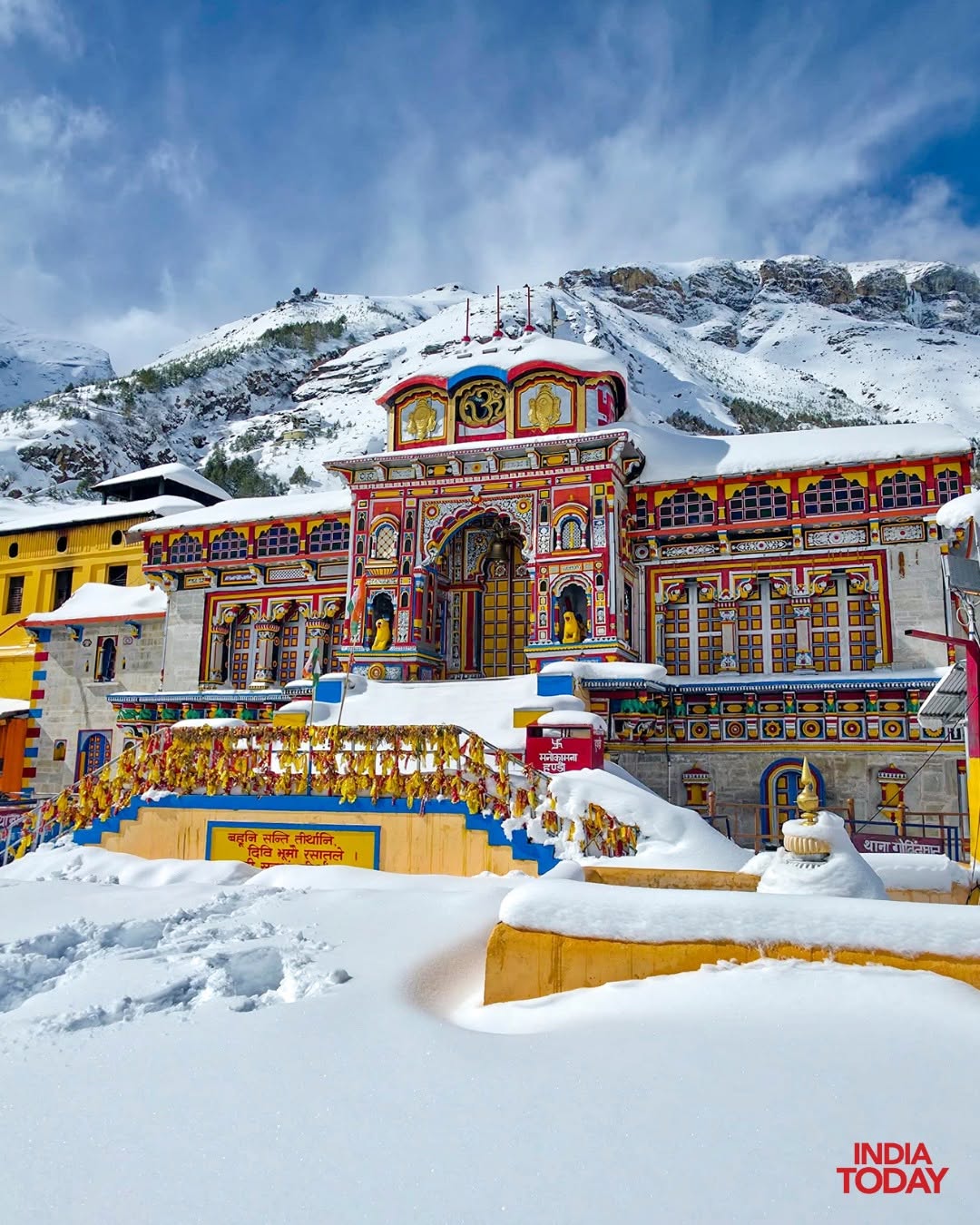
While the site is mentioned in Vedic texts, the temple's structural history is a saga of resilience. After Adi Shankara recovered the idol of Badrinarayan from the Narad Kund, he established the first formal temple. The temple has been renovated and expanded over centuries, notably by the Kings of Garhwal. Because of its location, it remains closed for six months each year (winter), during which time the deity is symbolically moved to Joshimath for worship.

Sacred Architecture

The Garhwali Masterpiece

The temple architecture reflects a blend of local Garhwali and traditional North Indian styles. It features a brightly colored, arched facade that stands in stark contrast to the white snow-capped peaks behind it. The main structure is a 15-meter tall stone building with a gilded small cupola and a conical roof.

The Tapt Kund: Just below the temple entrance are the sacred hot sulfur springs. Despite the sub-zero temperatures and the freezing Alaknanda river flowing adjacent, the water in these pools remains naturally hot (around 45°C), allowing pilgrims to take a purifying bath before entering the sanctum.

Legend of the Deity

The primary legend states that Lord Vishnu performed severe penance at this location. His consort, Goddess Lakshmi, observed him meditating in the open, exposed to the harsh elements. To protect him, she transformed herself into a massive **Badri** (Jujube) tree, providing him shade and shelter. Pleased by her devotion, Vishnu named the spot Badrikashrama.

Another legend links it to the sages **Nar and Narayana**, incarnations of Vishnu, who sought a spot for their penance and chose this valley. The two peaks standing behind the temple today are said to be the physical forms of these sages, eternally guarding the Lord.

Worship & Rituals

The worship protocols are unique: the Chief Priest (Rawal) must be a Nambudiri Brahmin from Kerala, a tradition established to ensure national integration. The daily rituals begin with Nirmalya Darshan and Abhishek. The deity is worshipped with forest flowers, specifically Tulsi and Sandalwood. One of the most emotional moments for devotees is the evening Shringara Aarti, performed as the sun sets behind the Neelkanth peak.

Festivals

The most significant event is the Kapat Opening and Closing ceremonies. On the day the temple closes for winter, a heavy woolen blanket (Ghee-smeared) is placed over the idol, and an 'Akhand Jyoti' (eternal lamp) is lit, which miraculously remains burning until the temple re-opens six months later. Mata Murti Ka Mela is another major festival celebrated in September.

Daily Schedule

Darshan Season: Late April/Early May to November (Closing date determined on Vijayadashami).
(Note: During the six months of winter, the temple is buried in snow and worship is shifted to the Narsimha Temple in Joshimath.)
Continue Journey

Associated Shrines

Kedarnath Temple

Shiva-Vishnu Balance

The most important Shiva temple in the Himalayas, forming the Chota Char Dham circuit alongside Badrinath.

Pancha Badri Shrines

The Five Badris

A group of five temples (Vishnu Badri, Yogadhyan Badri, Bhavishya Badri, Vriddha Badri, and Adi Badri) located in the Garhwal region dedicated to Lord Vishnu.

Yogadhyan Badri

The Winter Abode

Located at Pandukeshwar, this is where the processional idol of Badrinath is worshipped when the main temple is closed for winter.