🕉️

Vishwaguru

Awakening Heritage...

Dakshineswar Kali Mandir

Dakshineswar, Kolkata, West Bengal, India

Dakshineswar Kali Mandir

Also known as: Bhavatarini Temple, Rani Rashmoni's Kali Temple

ShaktismShaivismHistorical LandmarkNavaratna ArchitectureHooghly RiverSri Ramakrishna12 Shiva TemplesRani Rashmoni

Situated on the eastern bank of the Hooghly River, Dakshineswar Kali Mandir is a magnificent 19th-century temple complex. It is a symbol of spiritual liberation and was the site where Sri Ramakrishna experienced profound divine visions, making it a cornerstone of modern Indian spiritual history.

Primary DeityGoddess Bhavatarini (Kali)Form of The Savior of the Universe
TraditionBengali Shaktism
AdministrationDakshineswar Kali Temple Board of Trustees
Historical ManagementFounded by Rani Rashmoni in 1855, a visionary Shudra businesswoman and philanthropist. She faced significant opposition from orthodox Brahmins of the time but successfully established the temple. It became world-famous as the workplace of the mystic saint Sri Ramakrishna Paramahansa.

The History

Rani Rashmoni intended to go on a pilgrimage to Kashi (Varanasi), but according to legend, the Divine Mother appeared in her dream and instructed her to build a temple on the banks of the Ganges in Bengal instead. The land, which was originally a 'Saheb's' garden and a Muslim burial ground, was purchased and transformed into this sacred site. The temple was consecrated on May 31, 1855.

Sacred Architecture

The Navaratna Style

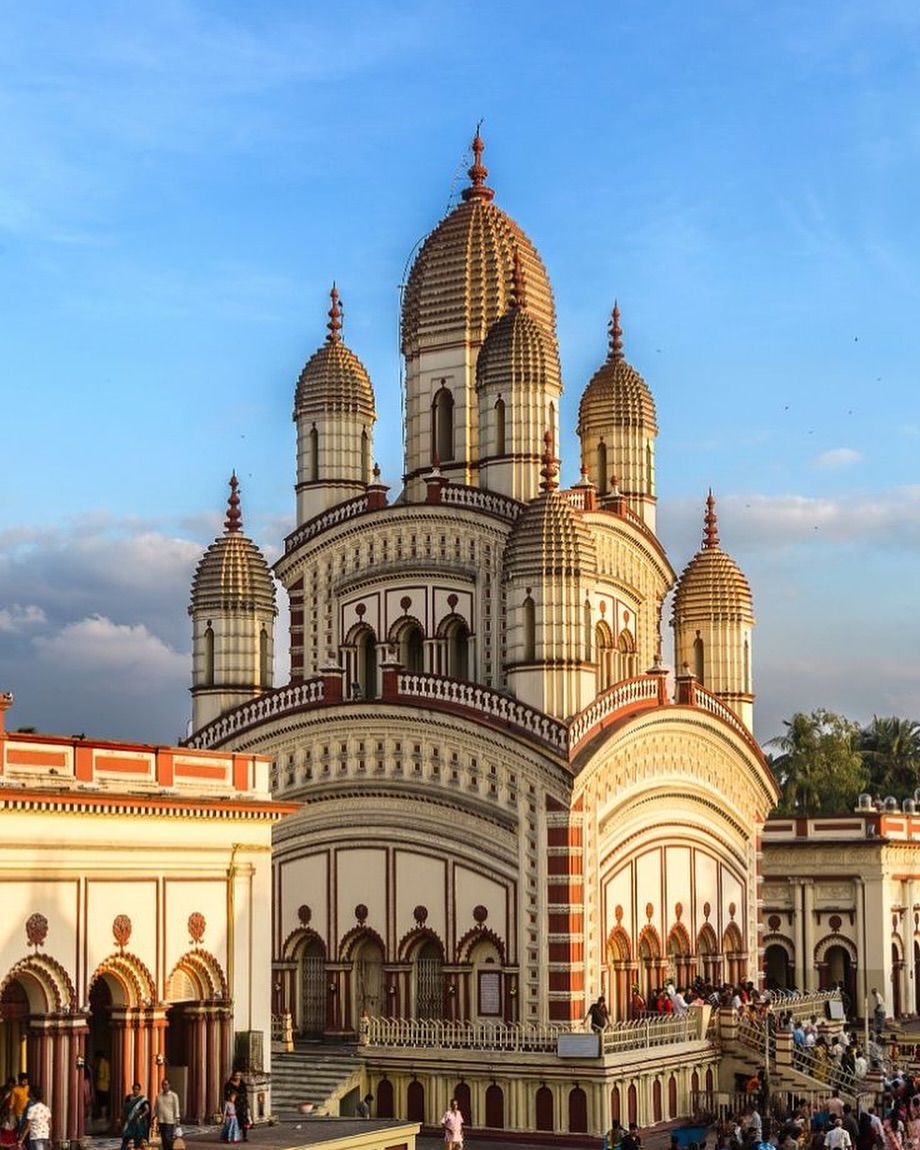
The temple is built in the classic Bengali Navaratna (nine-spired) style. The main three-storeyed temple rises to a height of over 100 feet. It features nine spires (Ratnas) distributed across the upper two levels.

The complex is known for its vast courtyard (Natmandir) and the 12 Shiva Temples (Aat-chala style) that line the riverbank in a row. The architecture reflects a unique blend of traditional Bengali terracotta aesthetics with grander structural proportions, symbolizing the 'ghats' of the Ganges.

Legend of the Deity

The presiding deity is Maa Bhavatarini, an aspect of Goddess Kali who 'carries her devotees across the ocean of existence.' She stands on the prostrate chest of Lord Shiva, depicting the dynamic energy (Shakti) over consciousness (Shiva). The complex also houses 12 identical shrines dedicated to Lord Shiva, representing the cycle of time and the 12 Jyotirlingas.

Worship & Rituals

Daily worship follows the Tantric and Vedantic traditions practiced by Sri Ramakrishna. The Sandhya Aarti (evening lamp ceremony) with the backdrop of the river is a deeply spiritual experience. Devotees often visit the 'Panchavati' (a grove of five sacred trees) and Sri Ramakrishna's room within the complex to meditate in the atmosphere of his lived spirituality.

Festivals

The temple is the center of massive celebrations during Kali Puja and Diwali. Another major event is Snana Yatra (the anniversary of the temple's consecration). Thousands of devotees gather on Kalpataru Utsav (January 1st), commemorating the day Sri Ramakrishna revealed his divine nature to his disciples.

Daily Schedule

Summer: 6:00 AM to 12:30 PM and 3:30 PM to 9:00 PM.
Winter: 6:00 AM to 12:30 PM and 3:00 PM to 8:30 PM.
Continue Journey

Associated Shrines

Belur Math

The Spiritual Successor

Located directly across the river, it is the headquarters of the Ramakrishna Math and Mission, founded by Swami Vivekananda to carry forward the teachings of Sri Ramakrishna.

Adyapith Temple

Proximity Shrine

A nearby temple dedicated to 'Adya Shakti', built based on a dream vision and closely associated with the Dakshineswar pilgrimage circuit.

Dhakeshwari Mata Temple (Kumartuli)

The Historical Link

Located in Kolkata, this temple houses the original idol from Dhaka (Bangladesh), creating a symbolic bridge between the 'Mother of Kolkata' (Dakshineswar) and the 'Mother of Dhaka'.