🕉️

Vishwaguru

Awakening Heritage...

Kanaka Durga Temple

Vijayawada, Andhra Pradesh, India

Kanaka Durga Temple

Also known as: Sri Durga Malleswara Swamyvarla Devasthanam, Indrakeeladri Temple

ShaktismHill TemplePilgrimageDravidian ArchitectureIndrakeeladriKrishna RiverNavaratri AlankaramsSwayambhuBezwadaPowerful Shakti PeethPashupatastra

Perched majestically atop the Indrakeeladri hill overlooking the sacred Krishna River, the Kanaka Durga Temple is the spiritual heart of Vijayawada. The 4-foot idol of the Goddess is revered as Swayambhu (self-manifested) and is worshipped in her eight-armed Mahishasuramardini form. Although not officially listed in the 18 Maha Shakti Peethas regarding Sati's fallen body parts, it is universally revered as a highly powerful Shakti Peeth due to its intense divine feminine energy. Local myths also suggest a deep, undiscovered cave exists beneath the current temple structure, containing a more ancient form of the goddess.

Primary DeityGoddess Kanaka DurgaForm of Divine Mother / Mahishasuramardini
TraditionHinduism (Shaktism)
AdministrationAndhra Pradesh Endowments Department
Historical ManagementHistorically patronized by ancient dynasties including the Vishnukundinas, Chalukyas, and later the Vijayanagara Empire. A Telugu inscription dated 1229 CE from the Chola era records a donation to the temple, highlighting its long-standing significance. Today, it is administered by the Andhra Pradesh Endowments Department.

The History

The origins of the temple are steeped in profound antiquity. According to myth, the Indrakeeladri mountain originally obstructed the flow of the Krishna River but gave way at the behest of the gods, creating a space 'between' the mountains known as 'Bezwada'. Furthermore, during the Mahabharata era, Arjuna performed intense penance here to please Lord Shiva, who granted him the Pashupatastra weapon. Because this ensured his victory, the area became known as 'Vijayawada' (The Place of Victory). Adi Shankaracharya is also said to have visited and installed a Sri Chakra here to calm the Goddess's fierce nature.

Sacred Architecture

The Hilltop Fortress of Faith

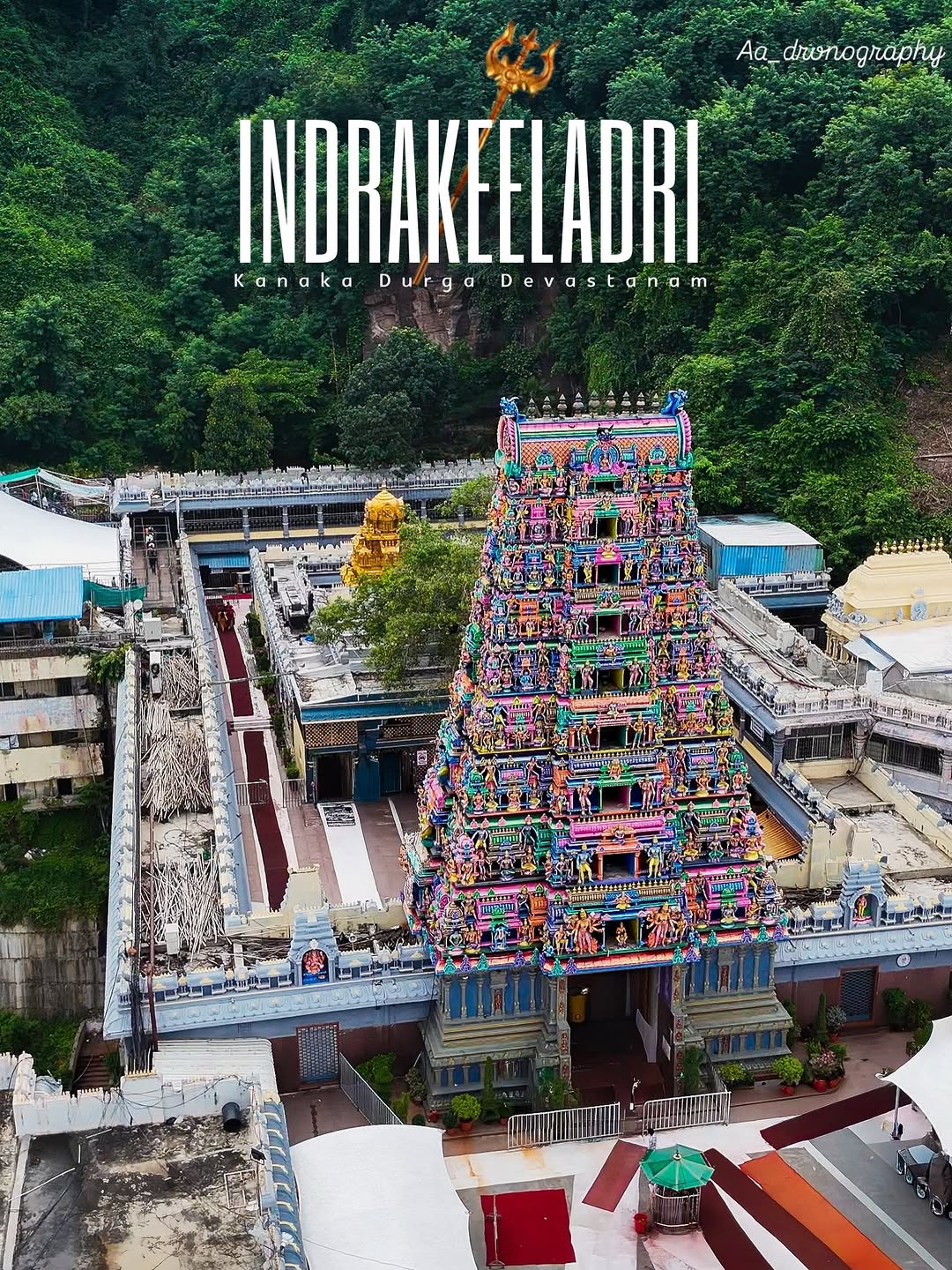
The temple complex is a beautiful example of Dravidian architecture adapted to the steep terrain. A towering Rajagopuram greets devotees at the main entrance. The sanctum sanctorum houses the breathtaking four-foot-tall idol of Goddess Kanaka Durga. Depicted with eight arms, she holds various celestial weapons and stands triumphantly over the slain demon Mahishasura.

Legend of the Deity

According to the Kalika Purana, a Yaksha named Keela performed severe penance, requesting the Goddess to reside in his heart. She granted his wish by turning him into the Indrakeeladri mountain, making him her permanent abode to watch over the wicked demons. After the Goddess destroyed the buffalo-demon Mahishasura in the Kritha Yuga, she manifested upon this very hill radiant as gold—hence the name 'Kanaka' (gold) Durga.

A popular local 'true incident' from 1955 tells the story of a devoted rickshaw driver named Van Kana working late near Indrakeeladri hill. He gave a ride to a mysterious woman in a red sari who asked if he was afraid of Durga Maa. He replied he wasn't, as she is everyone's mother. Upon reaching the destination, the woman vanished, leaving behind two gold bracelets on the seat—a direct blessing from Kanaka Durga herself.

Worship & Rituals

Traditional worship begins with a purifying holy dip in the Krishna River at the Durga Ghat. A mesmerizing highlight of Dasara is the Teppotsavam (Boat Festival), where processional idols are placed on a beautifully illuminated swan-shaped boat (Hamsa Vahanam) on the Krishna River.

Festivals

The temple is globally renowned for its Dasara (Navaratri) celebrations. Over 10 days, the Goddess is decorated in 10 different divine avatars (Alankarams), starting with Swarna Kavachalankrita Durga and concluding with Raja Rajeswari Devi. Other major festivals include the Sakambhari Festival in the Ashadha month (where the Goddess is decorated entirely with vegetables to bless agriculture) and Varalakshmi Vratam, which draws massive crowds on Sraavana Masam Fridays.

Daily Schedule

Visiting Hours: Daily from 4:00 AM to 9:00 PM.
(Note: Darshan times vary during major festivals, particularly Dasara, when the temple is open almost round the clock.)
Continue Journey

Associated Shrines

Malleswara Swamy Temple

The Consort Shrine

Located adjacent to the Goddess on the same hill, this shrine is dedicated to Lord Shiva. According to tradition, Lord Brahma worshipped Shiva here with jasmine (Malle) flowers.

Undavalli Caves

Ancient Rock-cut Shrines

Located just across the Krishna river, these 7th-century monolithic rock-cut cave temples showcase the ancient architectural heritage of the Vijayawada region.