Hampi, Karnataka, India
Shree Vijaya Vitthala Temple
Also known as: Vittala Temple, Vijaya Vittala Mandir
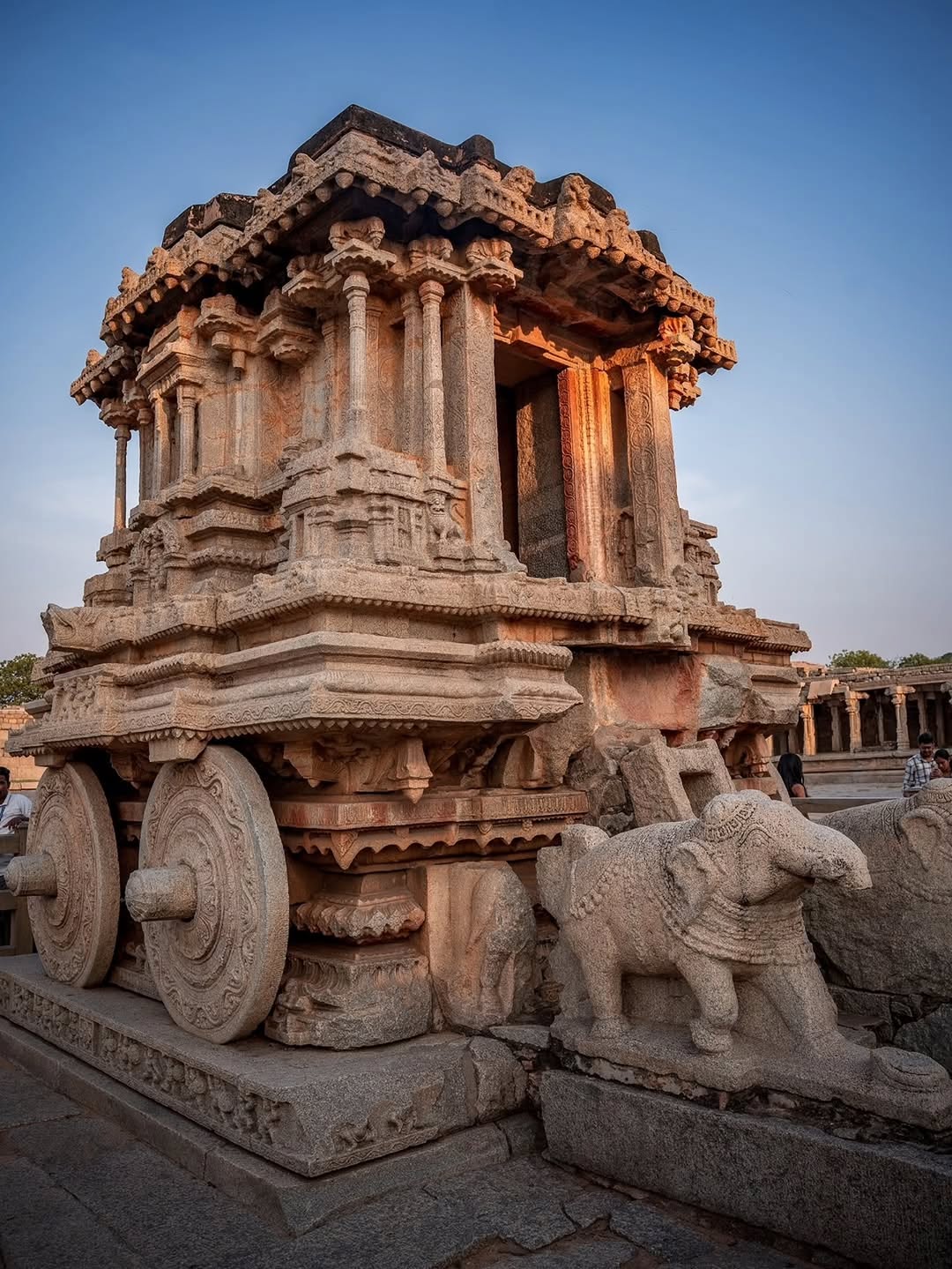
Located among the boulder-strewn ruins of Hampi, the Vijaya Vitthala Temple is the undisputed masterpiece of Vijayanagara architecture. It is not just a temple, but a sprawling complex of pavilions, halls, and shrines, most famous for its extraordinary iconic Stone Chariot and the mystical pillars that emit musical notes when struck.
The History
Sacred Architecture
The Symphony in Stone
The Vitthala Temple is the ultimate display of Dravidian architecture, characterized by its sprawling courtyards, towering gopurams, and exquisitely carved mandapas (pavilions).The Stone Chariot (Garuda Shrine): Sitting perfectly aligned in the main courtyard is the iconic Stone Chariot, which is actually a shrine dedicated to Garuda (the eagle mount of Vishnu). Though it appears to be carved from a single massive rock, it is built from several slabs of granite seamlessly fitted together. It once featured a brick superstructure and rotating stone wheels.
The Maha Mantapa (Great Hall) & Musical Pillars: The most astounding feature is the Maha Mantapa, resting on an ornately carved platform. Its roof is supported by 56 intricately carved 'SaReGaMa' pillars. Each main pillar is surrounded by a cluster of smaller, slender pillars carved from a single block of resonant granite. When struck gently with the thumb, these stone pillars emit distinct musical notes representing different traditional Indian instruments (bells, string instruments, percussion). This acoustic marvel remains a subject of intense study regarding the precise cutting and geo-polymer techniques used by the ancient artisans.
Legend of the Deity
Worship & Rituals
Festivals
⏳ Daily Schedule
(Note: Battery-operated carts are available from the parking area to the temple complex to protect the fragile ruins from vehicular vibrations.)
Associated Shrines
Virupaksha Temple
The Living Shrine of Hampi
The oldest and most sacred functional temple in Hampi, dedicated to Lord Shiva. It predates the Vijayanagara Empire and survived the 1565 destruction, continuing as an active center of worship to this day.
Hazara Rama Temple
The Royal Chapel
Located in the royal enclosure, this temple was meant for the private use of the royal family. It is famous for its elaborate bas-reliefs depicting the entire story of the Ramayana on its outer walls.
Vitthal Rukmini Mandir, Pandharpur
The Humble Abode
Located in Maharashtra, this is the main center of worship for Lord Vitthala, where the deity is said to have returned, finding Hampi too grand.