Kathmandu, Bagmati Province, Nepal
Pashupatinath Temple
Also known as: Shri Pashupatinath Mandir, Lord of the Animals Shrine
Situated on both banks of the sacred Bagmati River on the eastern outskirts of Kathmandu, Pashupatinath is one of the holiest, oldest, and most prominent Shiva temples in the world. It is the seat of Nepal's national deity and represents an intense, raw convergence of life, death, and liberation, where continuous cremation pyres burn just outside the sanctuary of the eternal Lord.
The History
Sacred Architecture
The Golden Pagoda
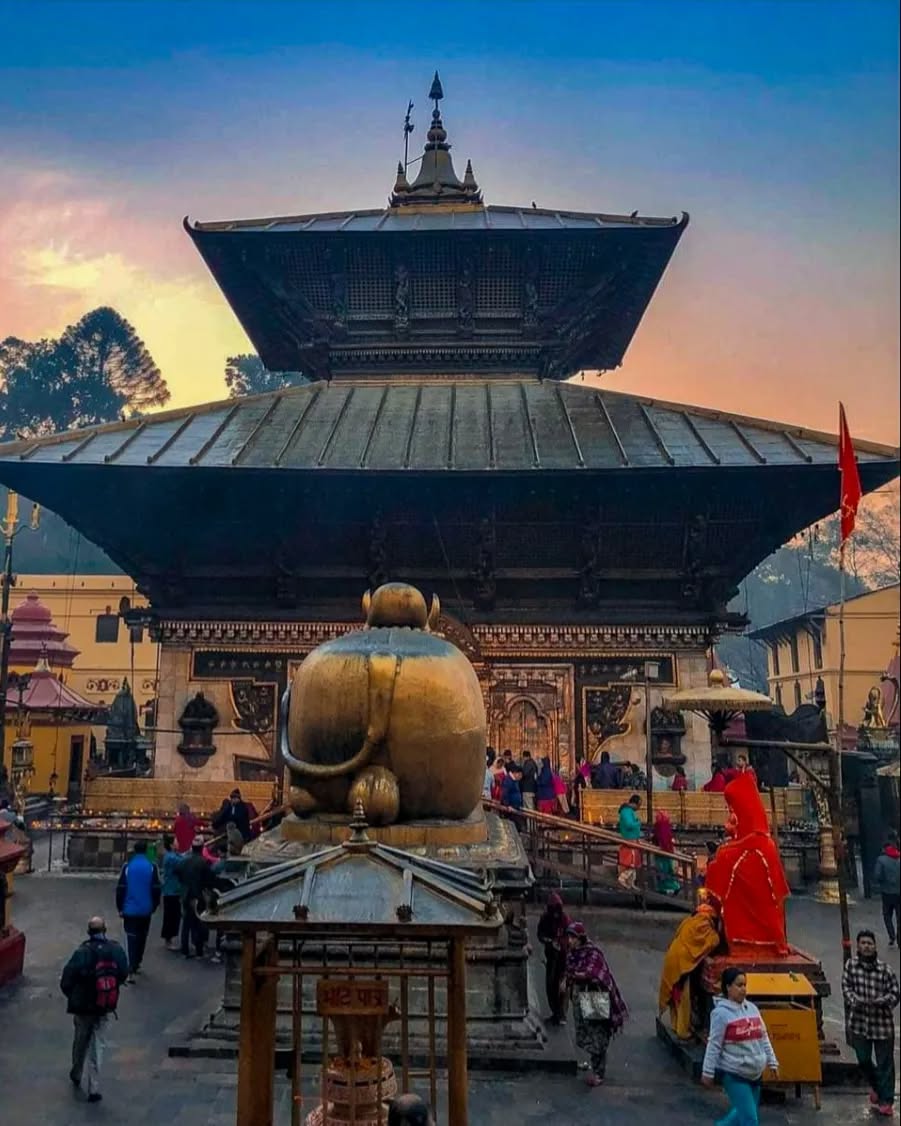
The main temple is a masterpiece of traditional Nepalese Pagoda architecture. It is a cubic structure built on a single-tier plinth, featuring four monumental doors covered in solid silver sheets. The majestic two-tiered roof is crafted from copper and heavily gilded with gold, topped with a golden pinnacle (Gajur).Inside the sanctum sanctorum resides the supreme idol: a one-meter-high, black stone Mukhalinga (a lingam with faces). It features four visible faces projecting in the cardinal directions—representing Shiva's aspects of Sadyojata, Vamadeva, Tatpurusha, and Aghora—with a fifth, invisible, formless aspect (Ishan) pointing towards the zenith.
Legend of the Deity
Another profound legend connects it directly to the Kedarnath Temple in India. It is believed that when the Pandavas were chasing Lord Shiva (who was disguised as a bull), Bhima grabbed the bull's tail. The bull dove into the earth at Kedarnath, leaving its hump behind, while its head re-emerged in Kathmandu as the divine Pashupatinath.
Worship & Rituals
On the eastern banks of the Bagmati River, directly facing the main temple, the spectacular Bagmati Ganga Aarti takes place every evening. Accompanied by classical music, chanting, and the rhythmic swaying of massive oil lamps by priests, it is a mesmerizing, deeply moving public display of devotion.
Festivals
Other major festivals include Teej (a fasting festival observed primarily by Hindu women for marital bliss and well-being) and Bala Chaturdashi, where devotees sow seeds in the temple forest in memory of departed ancestors.
⏳ Daily Schedule
(Note: Entrance to the inner courtyard is strictly restricted to practicing Hindus. However, the sprawling complex, the riverbanks, and the evening Aarti are accessible to all visitors.)
Associated Shrines
Guhyeshwari Temple
The Consort Shrine / Shakti Peeth
Located roughly a kilometer away, this is one of the most revered Maha Shakti Peethas where Goddess Sati's knees are believed to have fallen. It completes the Shiva-Shakti cosmic balance for pilgrims visiting Pashupatinath.
Kedarnath Temple
The Bull's Body
Located in the Indian Himalayas, it forms a complete spiritual circuit with Pashupatinath, representing the body of the divine bull whose head appeared in Nepal.
Muktinath
Himalayan Shrine of Salvation
A sacred site in the Mustang region of Nepal, deeply revered by both Hindus and Buddhists, often visited by pilgrims completing a broader Nepal spiritual circuit.