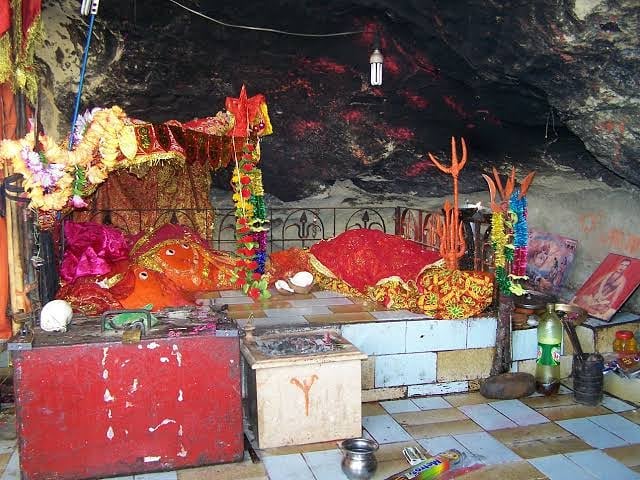
Hingol National Park, Lasbela District, Balochistan, Pakistan
Hinglaj Mata Mandir
Also known as: Nani Mandir, Hingula Peeth, Hingalaja, Kottari
Hidden within a mountain cave in the remote, rugged, and breathtakingly arid Hingol National Park along the Makran coast, Hinglaj Mata Mandir is one of the most powerful and ancient Shakti Peethas in the world. Despite being located deep in an Islamic republic, it draws tens of thousands of Hindu pilgrims annually and stands as a profound symbol of primal spirituality and interfaith harmony.
The History
For millennia, the journey to Hinglaj was considered one of the most perilous and arduous pilgrimages on Earth, requiring weeks of trekking through unforgiving, waterless deserts and bandit-controlled territories. Today, the Makran Coastal Highway has made access significantly easier, though the raw, elemental aura of the site remains entirely intact.
Sacred Architecture
The Natural Cave Sanctum
Unlike grand structural temples in India, Hinglaj Mata has no towering spires, golden domes, or elaborately carved pillars. The architecture is entirely the work of nature—a low, deep, and dark cave set into a rugged sandstone cliff face within a narrow gorge.The sanctum sanctorum (Garbhagriha) is a low cavern where devotees must bow deeply or crawl to enter. There is no man-made idol. The deity herself is an uncarved, natural, semi-circular rock formation (a Pindi) continuously anointed with thick layers of deep red sindoor (vermilion) and saffron. The raw, elemental nature of the cave perfectly mirrors the primal, unvarnished energy of the Mother Goddess.
Legend of the Deity
The Goddess is worshipped here as 'Kottari', and her guardian Bhairava is 'Bhimalochana'. She is deeply revered as the Kuldevi (family patron deity) by many communities originating from western India, including the Brahmakshatriyas, Charans, and Khatris. To the local Muslim Baloch tribes, she is 'Nani Pir', an ancient maternal saint of miraculous power.
Worship & Rituals
Upon reaching the cave, devotees enter barefoot, often weeping with devotion, to offer a red chunari (scarf), coconuts, incense, and sindoor to the stone manifestation of the Goddess. The pilgrimage is seen as a profound journey of suffering, purification, and ultimate maternal embrace, granting spiritual rebirth to those who complete it.
Festivals
⏳ Daily Schedule
(Note: The cave can be visited year-round, though the extreme summer heat of the Balochistan desert makes the April festival the optimal and traditional time to visit.)
Associated Shrines
Chandragup Mud Volcano
The Guardian of the Pilgrimage
A massive, active mud volcano located on the pilgrimage route. Pilgrims must first climb to the rim of this bubbling mud crater, throw in coconuts as offerings, confess their sins, and ask 'Babaji' (a manifestation of Lord Shiva) for permission to proceed to the Mother's cave.
Hingol River
The Sacred Purifier
The life-giving river that flows through the arid gorge near the temple. Pilgrims take a mandatory holy dip in its waters to purify themselves before approaching the cave.
Chaurasi Mountain
The Mount of Penance
The sacred mountain range surrounding the cave where specific rituals, including prostrations and crawling through narrow rock formations, are performed.