Dhaka, Dhaka Division, Bangladesh
Dhakeshwari Temple (Dhakeshwari Jatiya Mandir)
Also known as: Dhakeshwari National Temple, Sri Sri Dhakeshwari Temple
Located in the heart of the capital, the Dhakeshwari Jatiya Mandir is the most important and prominent Hindu place of worship in Bangladesh. The name 'Dhakeshwari' literally translates to 'Goddess of Dhaka,' and it is widely believed that the city itself was named after this powerful presiding deity.
The History
Over its 800-year history, the temple has suffered damage from natural decay and periods of conflict, undergoing numerous massive restorations. Consequently, much of its original 12th-century architecture has been lost or altered. Today, as the National Temple, it stands as the resilient spiritual and cultural epicenter for the Hindu minority in Bangladesh.
Sacred Architecture
Bengali and Mughal Synthesis
The temple complex is a fascinating amalgamation of architectural styles, reflecting the various eras of its renovation.The main temple housing the Goddess is a modern, renovated structure featuring a curved roof typical of traditional Bengali architecture (Dochala/Chauchala style).
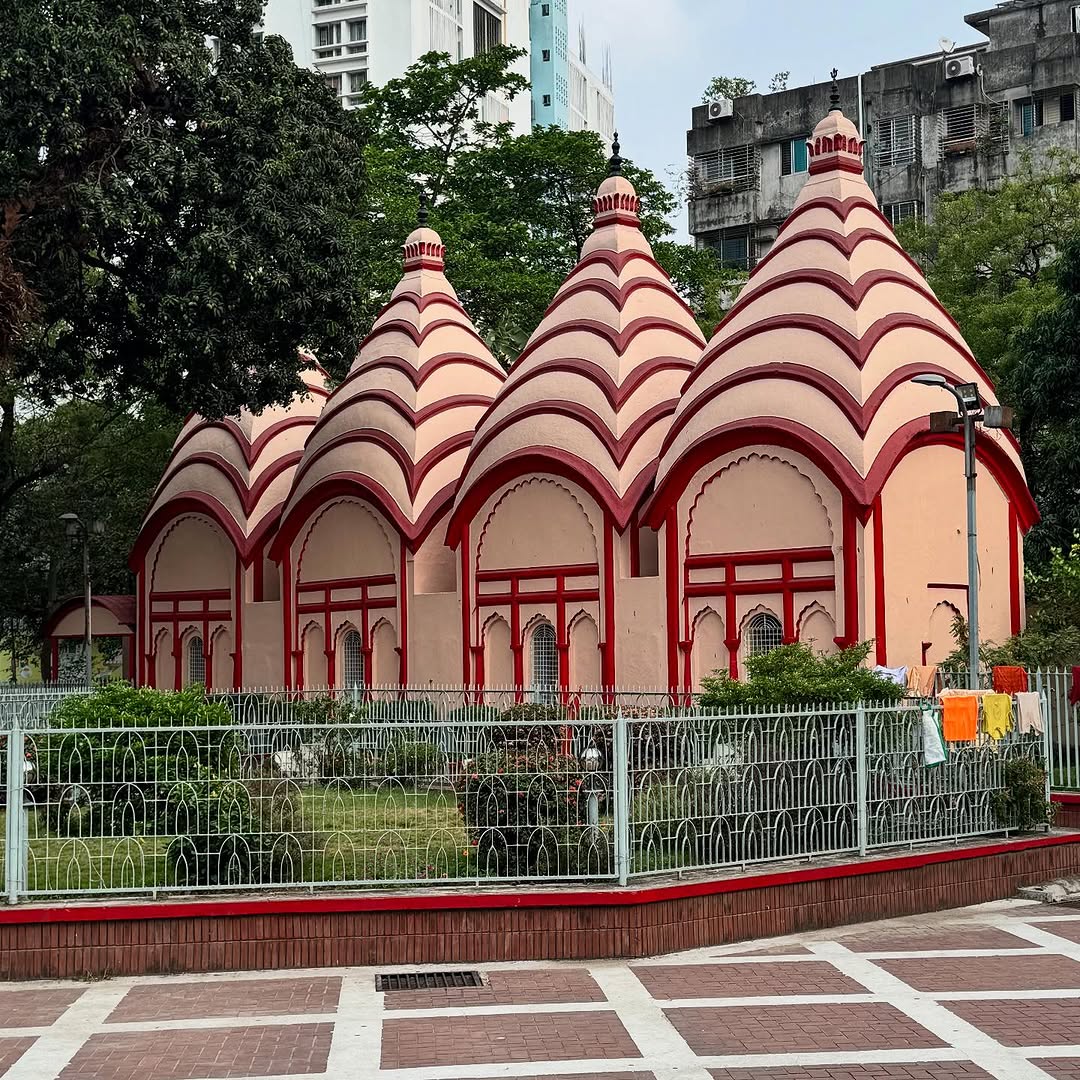
The most striking architectural feature of the complex lies in its eastern courtyard: a perfectly aligned row of four identical Shiva temples. Built in the 16th century, these shrines are designed in the traditional Pancharatna (five-jewel) style, where a central spire is surrounded by four smaller spires. However, their slightly bulbous domes and arched entryways show a distinct architectural influence from the Mughal era, making them a unique blend of Hindu and Islamic architectural aesthetics.
Legend of the Deity
The Secret Relocation: During the tumultuous period of the Partition of India in 1948, the original 800-year-old idol of the Goddess was secretly and safely smuggled out of Dhaka on an airplane and brought to Kolkata to protect it from desecration. The idol currently worshipped in the Dhaka temple is a meticulously crafted replica, yet it holds the exact same immense spiritual resonance and devotion for the local community.
Worship & Rituals
Festivals
Janmashtami, the birth of Lord Krishna, is another major event. The temple serves as the starting point for a massive, colorful, and historic procession that winds through the historic streets of Dhaka.
⏳ Daily Schedule
Associated Shrines
Dhakeshwari Mata Temple (Kolkata)
The Original Idol's Home
Located in Kumartuli, Kolkata, India, this temple houses the original 12th-century idol of Goddess Dhakeshwari that was brought over from Dhaka in 1948 by Rajendra Kishore Tiwari. It is worshipped there to this day.
Ramna Kali Mandir
Historic Sister Temple
Another highly prominent and historic Hindu temple in Dhaka, acting as a secondary spiritual hub for the city's Hindu community.
Joy Kali Temple
Ancient City Shrine
An ancient temple in old Dhaka dedicated to Goddess Kali, heavily visited during major Shakti festivals alongside Dhakeshwari.