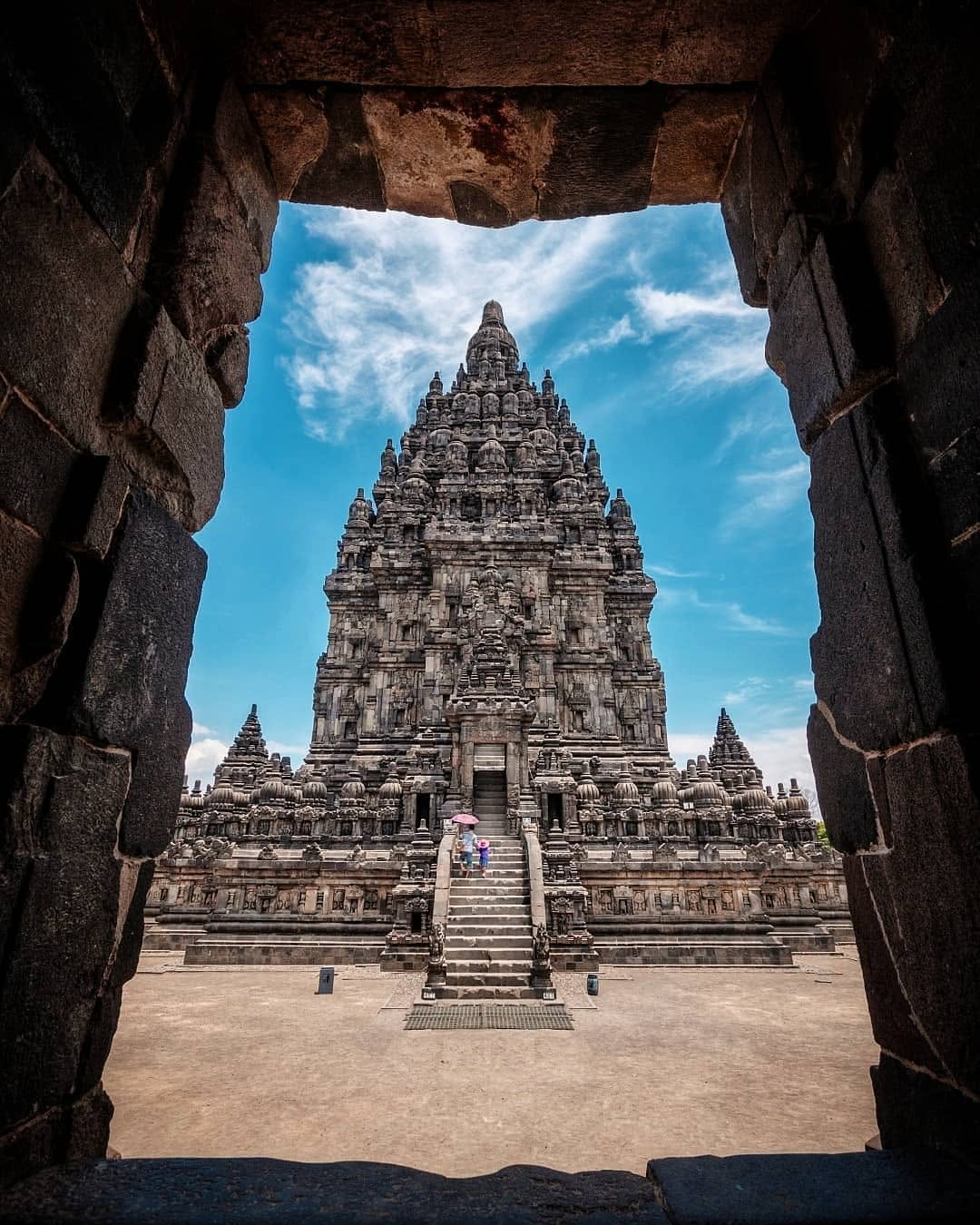
Bokoharjo, Sleman Regency, Special Region of Yogyakarta, Indonesia
Prambanan Temple (Candi Prambanan)
Also known as: Rara Jonggrang, Candi Rara Jonggrang
Soaring 47 meters into the sky, Prambanan is a masterpiece of 9th-century Hindu architecture and the largest Hindu temple site in Indonesia. Characterized by its tall, pointed spires, the complex is a magnificent, symmetrical tribute to the Trimurti—the expression of God as the Creator (Brahma), the Preserver (Vishnu), and the Destroyer (Shiva).
The History
The temple complex was mysterious abandoned around the 930s. Historians believe the capital of the kingdom was shifted to East Java due to a massive, devastating eruption of the nearby Mount Merapi. Over centuries, violent earthquakes and jungle growth reduced the majestic complex to scattered rubble.
It wasn't until 1918 that a painstaking reconstruction effort began. Rebuilding just one temple required finding and fitting together thousands of scattered stone blocks. The restoration of the main Shiva temple took decades and was finally inaugurated by Indonesia's first president, Sukarno, in 1953. Restoration of the smaller shrines continues to this day.
Sacred Architecture
The Cosmic Mountain
The architecture of Prambanan perfectly follows traditional Hindu Vastu Shastra principles, designed as a mandala to mimic Mount Meru, the holy mountain abode of the gods. The complex is divided into three distinct zones representing Hindu cosmology:- Bhurloka: The lowest realm of mortals (the outer courtyard).
- Bhuvarloka: The middle realm of ascetics and lesser gods (the middle courtyard, containing ruins of 224 smaller Pervara shrines).
- Svarloka: The holiest realm of the supreme gods (the elevated central courtyard).
Legend of the Deity
Bondowoso summoned an army of demons and nearly completed the task. To stop him, the princess tricked the roosters into crowing early by ordering the villagers to pound rice and light fires in the east, making the demons flee as they believed the sun was rising.
Furious at her deception, Bondowoso cursed Rara Jonggrang, turning her to stone. She became the final, 1,000th temple, and her petrified form is believed to be the statue of Durga Mahisasuramardini (Shiva's consort) standing in the northern chamber of the main Shiva temple.
Worship & Rituals
Festivals
⏳ Daily Schedule
(Note: The renowned Ramayana Ballet is performed at an open-air theater across the river from the temple on scheduled evenings, combining Javanese dance, drama, and music against the illuminated backdrop of Prambanan.)
Associated Shrines
Sewu Temple
The Buddhist Neighbor
Located just 800 meters north within the same archaeological park, this massive 8th-century Mahayana Buddhist temple complex vividly demonstrates the religious harmony that existed between Hindus and Buddhists in ancient Java.
Candi Lumbung & Candi Bubrah
The Pathway Shrines
Smaller Buddhist temples located between Prambanan and Sewu, representing the fluid transition and shared sacred geography of the Mataram Kingdom.
Ratu Boko
The Royal Palace
An archaeological site situated on a limestone plateau overlooking the Prambanan plain. It is believed to be the fortified palace compound of the Javanese kings who commissioned the temples below.