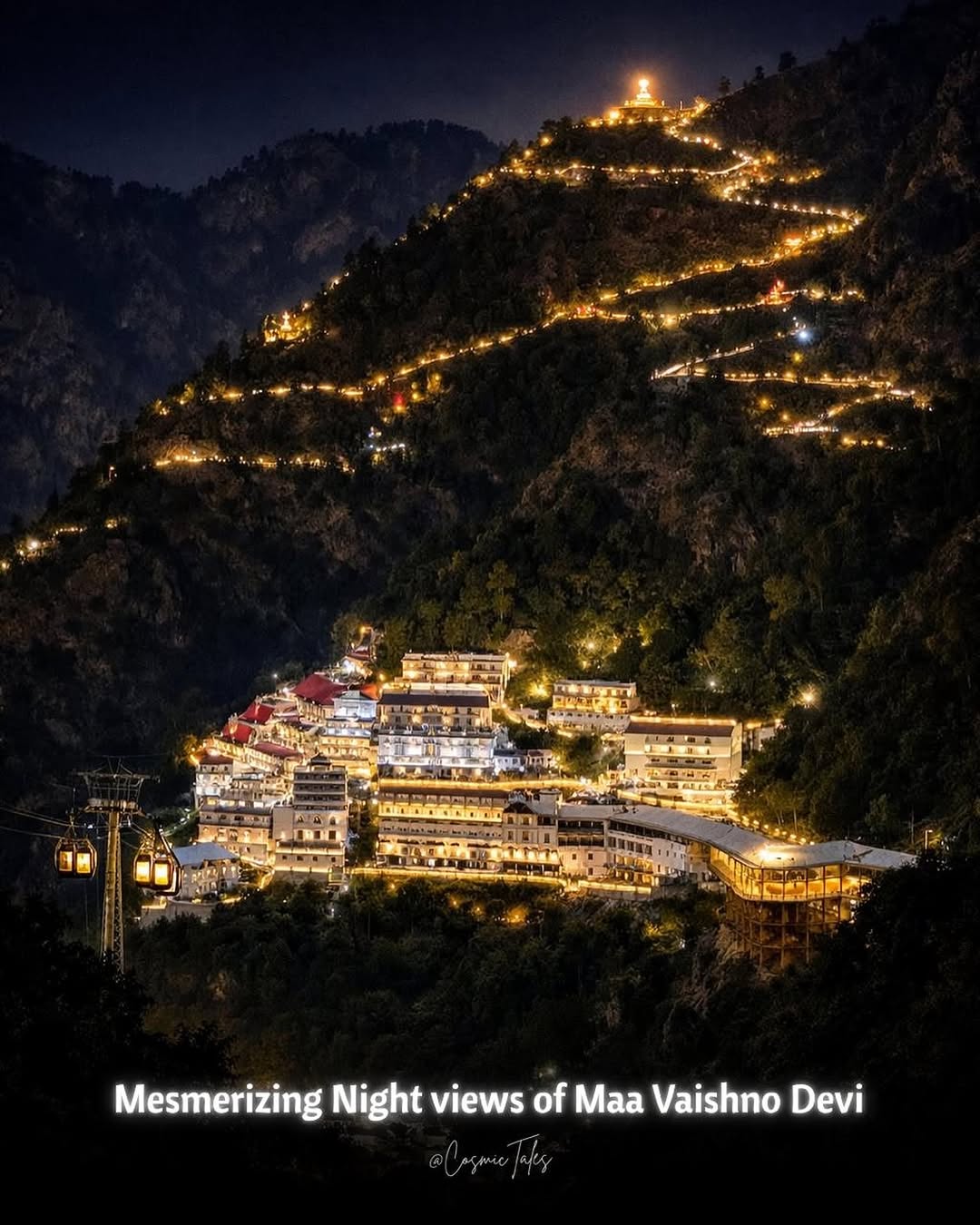
Katra | Trikuta Mountains, Jammu and Kashmir
Vaishno Devi Temple
Also known as: Mata Vaishno Devi, Vaishnavi Temple, Trikuta Cave Temple
ShaktismMost Visited TempleSwayambhu KshetraShakti PeethCave TempleMountain Pilgrimage
One of the most revered Shakti shrines in India, located in a sacred cave in the Trikuta Mountains, attracting millions of pilgrims every year.
Primary DeityMata Vaishno DeviForm of Shakti (Durga)
TraditionShaktism
AdministrationShri Mata Vaishno Devi Shrine Board
Historical ManagementManaged by local priests historically; later formalized under Shri Mata Vaishno Devi Shrine Board (1986)
Shakti Peeth SignificanceFallen Body Part: Right Hand/Arm (Trikuta)
🔱The History
The Vaishno Devi Temple is situated in the Trikuta Mountains near Katra in Jammu and Kashmir. It is one of the most important pilgrimage sites dedicated to the Divine Mother.
The temple is unique as it is located inside a natural cave, where the deity is worshipped in the form of three sacred pindis representing Maha Kali, Maha Lakshmi, and Maha Saraswati.
The shrine gained prominence over centuries through oral traditions and later royal patronage. In modern times, it has become one of the most visited pilgrimage sites in India, with well-developed infrastructure for devotees trekking the 12 km path to the shrine.
The pilgrimage itself is considered a spiritual journey, symbolizing devotion, endurance, and surrender to the Divine Mother.
The temple is unique as it is located inside a natural cave, where the deity is worshipped in the form of three sacred pindis representing Maha Kali, Maha Lakshmi, and Maha Saraswati.
The shrine gained prominence over centuries through oral traditions and later royal patronage. In modern times, it has become one of the most visited pilgrimage sites in India, with well-developed infrastructure for devotees trekking the 12 km path to the shrine.
The pilgrimage itself is considered a spiritual journey, symbolizing devotion, endurance, and surrender to the Divine Mother.
Sacred Architecture
Natural Cave Shrine
Unlike conventional temples built with intricate masonry or towering gopurams, the Vaishno Devi Temple is a naturally occurring holy cave (Gufa) situated at an altitude of 5,200 feet in the Trikuta Mountains.The primary sanctum does not house man-made idols or statues. Instead, the Goddess manifests as three naturally formed rock protrusions known as Pindis. These Pindis represent the three supreme energies: Maha Saraswati (white), Maha Lakshmi (yellow/red), and Maha Kali (black).
Over the years, the Shri Mata Vaishno Devi Shrine Board has significantly developed the surrounding infrastructure. The original narrow cave is now supplemented by modern, wider tunnels to accommodate the massive influx of pilgrims. The entire 12 km trek from Katra to the Bhawan is paved, covered in many sections, and equipped with modern amenities, blending spiritual ruggedness with contemporary safety and crowd management.
Legend of the Deity
According to legend, Mata Vaishno Devi was born as Vaishnavi, an incarnation of the Divine Mother, to uphold dharma in Kali Yuga.
She performed intense penance and meditation in the mountains. A tantric demon named Bhairavnath, intrigued by her spiritual power, pursued her. To escape, she entered the Trikuta hills and meditated inside a cave for nine months.
Eventually, she revealed her divine form and beheaded Bhairavnath. However, upon his repentance, she granted him liberation and declared that no pilgrimage to her shrine would be complete without visiting his temple.
She then manifested as three pindis inside the cave, symbolizing the combined energy of Kali, Lakshmi, and Saraswati.
She performed intense penance and meditation in the mountains. A tantric demon named Bhairavnath, intrigued by her spiritual power, pursued her. To escape, she entered the Trikuta hills and meditated inside a cave for nine months.
Eventually, she revealed her divine form and beheaded Bhairavnath. However, upon his repentance, she granted him liberation and declared that no pilgrimage to her shrine would be complete without visiting his temple.
She then manifested as three pindis inside the cave, symbolizing the combined energy of Kali, Lakshmi, and Saraswati.
Worship & Rituals
Worship at Vaishno Devi is centered around deep personal devotion and the arduous 12 km trek (Yatra) from Katra, which devotees undertake while continuously chanting 'Jai Mata Di'.
Inside the sanctum, worship revolves around the continuous Darshan of the holy Pindis. The most important daily ritual is the Aarti, performed twice a day—once right before sunrise and once immediately after sunset. This sacred, elaborate process takes nearly two hours. During the Aarti, the sanctum is temporarily closed to the public, the Pindis are bathed with sacred water, milk, ghee, honey, and sugar, and then dressed in exquisite Cholas (garments) and ornaments.
Devotees traditionally offer Bheta—which includes a red Chunri (veil), dry fruits, silver or gold ornaments, and flowers. Modern regulations ensure that these offerings are systematically collected rather than directly thrown onto the Pindis, maintaining the cave's pristine sanctity and cleanliness.
Inside the sanctum, worship revolves around the continuous Darshan of the holy Pindis. The most important daily ritual is the Aarti, performed twice a day—once right before sunrise and once immediately after sunset. This sacred, elaborate process takes nearly two hours. During the Aarti, the sanctum is temporarily closed to the public, the Pindis are bathed with sacred water, milk, ghee, honey, and sugar, and then dressed in exquisite Cholas (garments) and ornaments.
Devotees traditionally offer Bheta—which includes a red Chunri (veil), dry fruits, silver or gold ornaments, and flowers. Modern regulations ensure that these offerings are systematically collected rather than directly thrown onto the Pindis, maintaining the cave's pristine sanctity and cleanliness.
Festivals
The most significant and grandest celebrations at the shrine occur during the biannual Navaratri festivals (Chaitra Navaratri in spring and Sharad Navaratri in autumn). During these nine holy days, the entire Bhawan is lavishly decorated with exotic flowers brought from across the globe and illuminated with brilliant lights.
A major highlight during Navaratri is the Shat Chandi Maha Yagya, organized by the Shrine Board to invoke peace, prosperity, and the blessings of the Divine Mother. The chanting of Vedic mantras echoes throughout the mountains.
Diwali is another major festival celebrated with immense fervor, drawing lakhs of devotees who wish to witness the extraordinary lighting and seek the Goddess's blessings on the auspicious night.
A major highlight during Navaratri is the Shat Chandi Maha Yagya, organized by the Shrine Board to invoke peace, prosperity, and the blessings of the Divine Mother. The chanting of Vedic mantras echoes throughout the mountains.
Diwali is another major festival celebrated with immense fervor, drawing lakhs of devotees who wish to witness the extraordinary lighting and seek the Goddess's blessings on the auspicious night.
⏳ Daily Schedule
Open 24 Hours: Darshan Available
Morning & Evening: Aarti (requires advance booking)
Morning & Evening: Aarti (requires advance booking)
Continue Journey
Associated Shrines
Bhairavnath Temple
Associated with Bhairavnath (final part of pilgrimage)
Pilgrimage is considered complete only after visiting this temple
Ardhkuwari Cave Temple
Meditation site of Vaishno Devi
Believed to be the cave where the Goddess meditated for 9 months
Charan Paduka Temple
Footprints of the Goddess
Marks the spot where the Goddess is believed to have rested during her journey