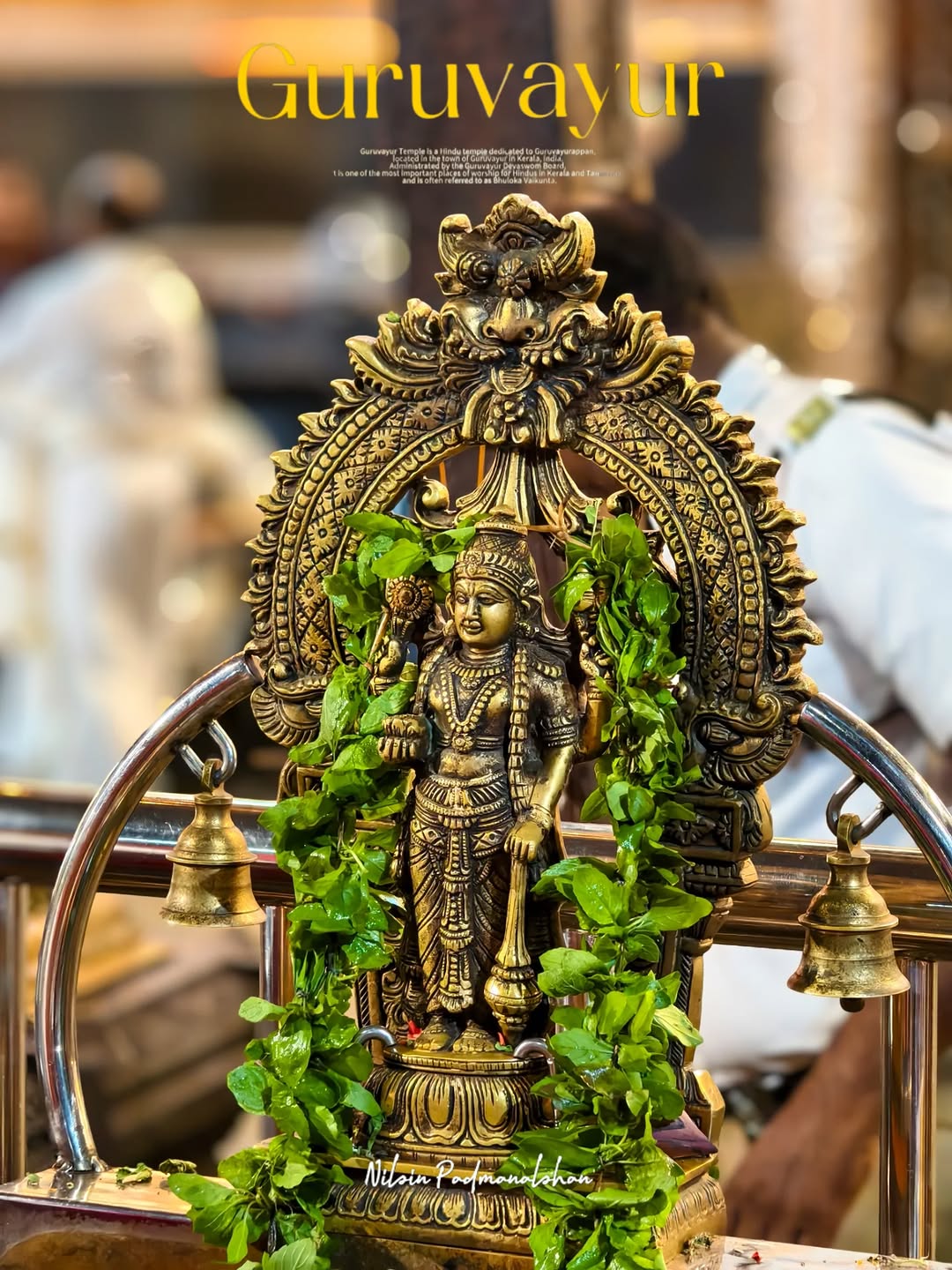
Guruvayur (Thrissur District), Kerala
Guruvayur Sri Krishna Temple
Also known as: Guruvayoorappan Temple, Bhuloka Vaikuntham, Dwarka of the South
Revered globally as 'Bhuloka Vaikuntham' (Heaven on Earth), Guruvayur is the spiritual heart of Kerala. It houses a mesmerizing, 4-armed idol of Lord Vishnu, but He is universally worshipped here with the intense maternal love reserved for a playful baby—Unnikrishnan. It is a supreme center of healing, devotion, and monumental elephant culture.
The History
It is famous for the miracles of two great saints. In the 16th century, the great Sanskrit scholar Melpathur Narayana Bhattathiri arrived crippled by severe paralysis. Sitting before the Lord, he composed the Narayaneeyam, an epic poem of 1,036 verses. Legend says the Lord Himself physically nodded his head in approval at the end of each chapter. By the 100th chapter, Bhattathiri was miraculously and completely cured.
Simultaneously, a humble poet named Poonthanam worshipped the Lord in simple Malayalam. When Bhattathiri mocked Poonthanam's grammar, Lord Guruvayurappan intervened, stating: 'I prefer Poonthanam's pure devotion over your perfect grammar.' This established Guruvayur as a place where pure love reigns supreme over rigid scholarship.
Sacred Architecture
Traditional Kerala Architecture & The Patalanjana Stone
Unlike the towering stone gopurams of Tamil Nadu, Guruvayur is built in the exquisite, understated Kerala architectural style. It features sloping red-tiled roofs, intricate wooden carvings, and a magnificent 33-meter tall gold-plated Dhwajasthambham (flagpole). At the entrance stands the stunning Deepastambham (Pillar of Lights), which looks absolutely magical when its 24 tiers of oil lamps are lit at dusk.The Healing Idol: The main idol is not made of standard granite. It is carved out of a highly rare, sacred, and naturally magnetic stone called Patalanjana Stone. Ancient Ayurvedic texts claim this stone possesses miraculous medicinal and healing properties. The water used to bathe the idol (Theertham) absorbs these properties and is revered for curing incurable diseases.
Legend of the Deity
At the end of the Dvapara Yuga, as the great ocean rose to swallow the city of Dwarka, Krishna instructed his devotee Uddhava to save the idol. Brihaspati (Guru, the preceptor of the gods) and Vayu (the God of Wind) found the idol tossing in the torrential waves. They carried it across the skies to the lush lands of Kerala.
They arrived at a beautiful lotus lake where Lord Shiva and Goddess Parvati were meditating. Seeing the divine idol, Lord Shiva magnanimously stepped aside, relocating himself to the nearby forest (Mammiyoor), so that Guru and Vayu could install the idol. Because it was installed by Guru and Vayu, the place became known forever as Guru-Vayur.
Worship & Rituals
The temple is universally famous for specific rituals:
• Thulabharam: A deeply personal vow where devotees are weighed on a massive physical scale against items like bananas, sugar, butter, or even silver and gold, which are then donated to the temple.
• Annaprasanam (Choroonu): Thousands of parents bring their babies here every year for their very first bite of solid food (rice), fed directly in front of the Lord to ensure a life of health and devotion.
• Krishnanattam: A unique, vibrant classical dance-drama performed exclusively in this temple at night, depicting the life of Lord Krishna.
Festivals
Ashtami Rohini (Krishna Janmashtami) sees the temple flooded with millions celebrating the birth of the Lord.
Chembai Sangeetholsavam is a spectacular classical music festival where thousands of musicians sing day and night in the temple courtyard, offering their art as pure devotion to the Lord.
⏳ Daily Schedule
03:30 AM - 01:30 PM: Continuous Poojas, Abhishekams & Darshan
01:30 PM - 04:30 PM: Temple Closed
04:30 PM - 08:30 PM: Evening Darshanam & Deeparadhana
08:30 PM - 09:15 PM: Athazha Pooja & Krishnanattam
Associated Shrines
Mammiyoor Mahadeva Temple
The Lord who stepped aside
Located just a kilometer away. It is a strict cosmic rule that a pilgrimage to Guruvayur is incomplete unless the devotee also visits Mammiyoor to thank Lord Shiva for giving up his space for Lord Krishna.
Punnathur Kotta (Elephant Sanctuary)
The Lord's Devotees
A massive, lush sanctuary housing over 50 majestic elephants offered to the Lord by devotees. It was home to the legendary 'Guruvayur Keshavan', an elephant so devoted he would never harm a human and fasted on Ekadasi.