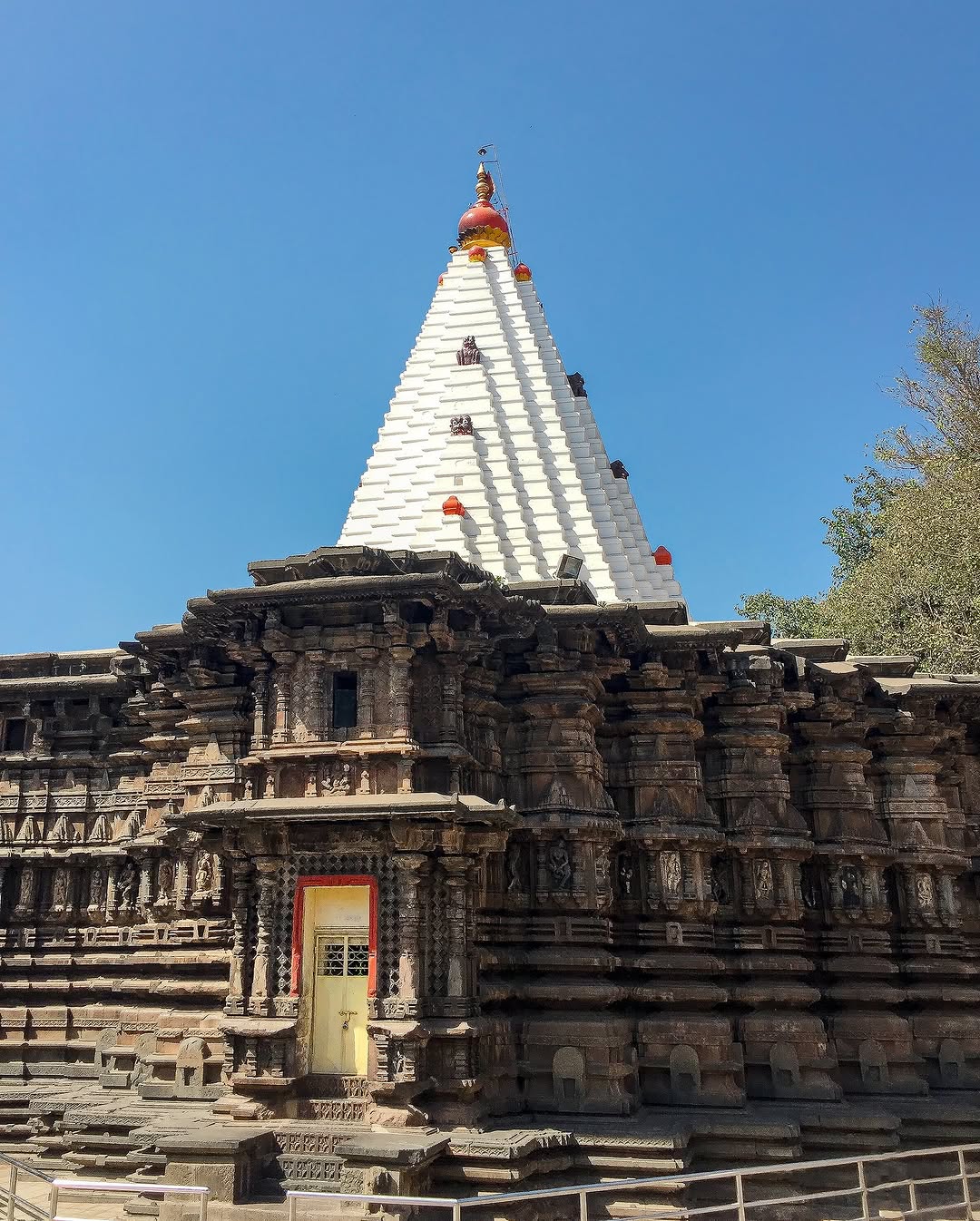
Kolhapur, Maharashtra
Shri Ambabai Mahalakshmi Temple
Also known as: Ambabai Mandir, Karvir Peeth, Dakshin Kashi
Revered as 'Dakshin Kashi', Kolhapur is the ultimate, independent spiritual seat of Goddess Lakshmi. As one of the 18 Maha Shakti Peethas, it is an architectural and astronomical marvel, globally famous for the 'Kiranotsav'—where the setting sun bows down to touch the feet of the Mother of the Universe.
The History
During the era of the Maratha Empire, the temple became a powerful symbol of Hindu resurgence. Great Maratha warriors, including Chhatrapati Shivaji Maharaj and his descendants, sought the blessings of Ambabai before embarking on their legendary military campaigns.
Sacred Architecture
Hemadpanthi Style & The Kiranotsav Miracle
The temple is built in the magnificent Hemadpanthi style of architecture, utilizing interlocking black basalt stones without the use of mortar. The intricate carvings on the pillars feature celestial dancers, gods, and sacred geometry.Unlike most Hindu temples that face East, the Mahalakshmi Temple faces West. This was a deliberate, genius stroke of Archaeoastronomy by the ancient architects, designed specifically for the Kiranotsav (Festival of Rays).
The Astronomical Miracle: Twice a year (in January/February and November), the setting sun aligns perfectly with a small window on the western wall of the temple.
• On the first day, the sun's rays fall exactly on the Goddess's feet.
• On the second day, the rays illuminate her chest.
• On the third and final day, the golden rays bathe the Goddess's entire face in radiant light before the sun sets. It is believed that the Sun God himself comes to pay homage to Ambabai.
Legend of the Deity
Simultaneously, this region was being terrorized by a formidable demon named Kolhasur. The Goddess manifested as an incredibly fierce, multi-armed warrior and waged a colossal battle against him. Before the demon took his last breath, he begged for forgiveness. Showing her infinite maternal compassion, the Goddess granted his dying wish: the city would forever be named after him—Kolhapur.
Furthermore, the temple is one of the supreme Maha Shakti Peethas. According to the Shiva Purana, when Lord Shiva carried the burning body of Sati Devi, her Three Eyes (Trinetra) fell exactly at this spot.
Worship & Rituals
She is depicted with four arms, holding a Matulinga (a citrus fruit representing fertility and life), a Kaumodaki (mace representing power), a Khetaka (shield), and a Panpatra (drinking bowl). Behind her stands a stone lion, her divine mount.
As one of the 'Sade-Teen' (Three and a Half) Shakti Peethas of Maharashtra, the worship here is a beautiful blend of Vedic rituals, royal Maratha traditions, and deep, unconditional maternal devotion.
Festivals
Kiranotsav is highly anticipated, with thousands gathering in absolute silence inside the temple courtyard to witness the sun rays physically touch the deity.
Rathotsavam (Chariot Festival) is held during Chaitra Purnima, where the silver image of the Goddess is taken out in a grand procession through the historic streets of Kolhapur.
⏳ Daily Schedule
08:00 AM - 09:30 AM: Morning Mahapuja & Abhishekam
09:30 AM - 11:30 AM: General Darshanam
11:30 AM - 01:30 PM: Alankar Pooja (Goddess dressed in royal attire)
01:30 PM - 08:00 PM: Continuous Darshanam
08:00 PM: Dhup Aarti
10:00 PM: Shej Aarti & Temple Closure
Associated Shrines
Jyotiba Temple
Guardian Deity
Located on a nearby hill, Lord Jyotiba (an incarnation of Shiva, Vishnu, and Brahma) helped Mahalakshmi in her battle against the demons. Devotees visit here covered in pink 'Gulal'.
Bhavani Mandap
Royal Connection
The historical court and palace of the Chhatrapatis of Kolhapur, featuring a smaller, deeply revered shrine of Goddess Tulja Bhavani.
Mahakali Temple
Fierce Aspect
A powerful shrine dedicated to Goddess Mahakali, located within the main temple complex itself.