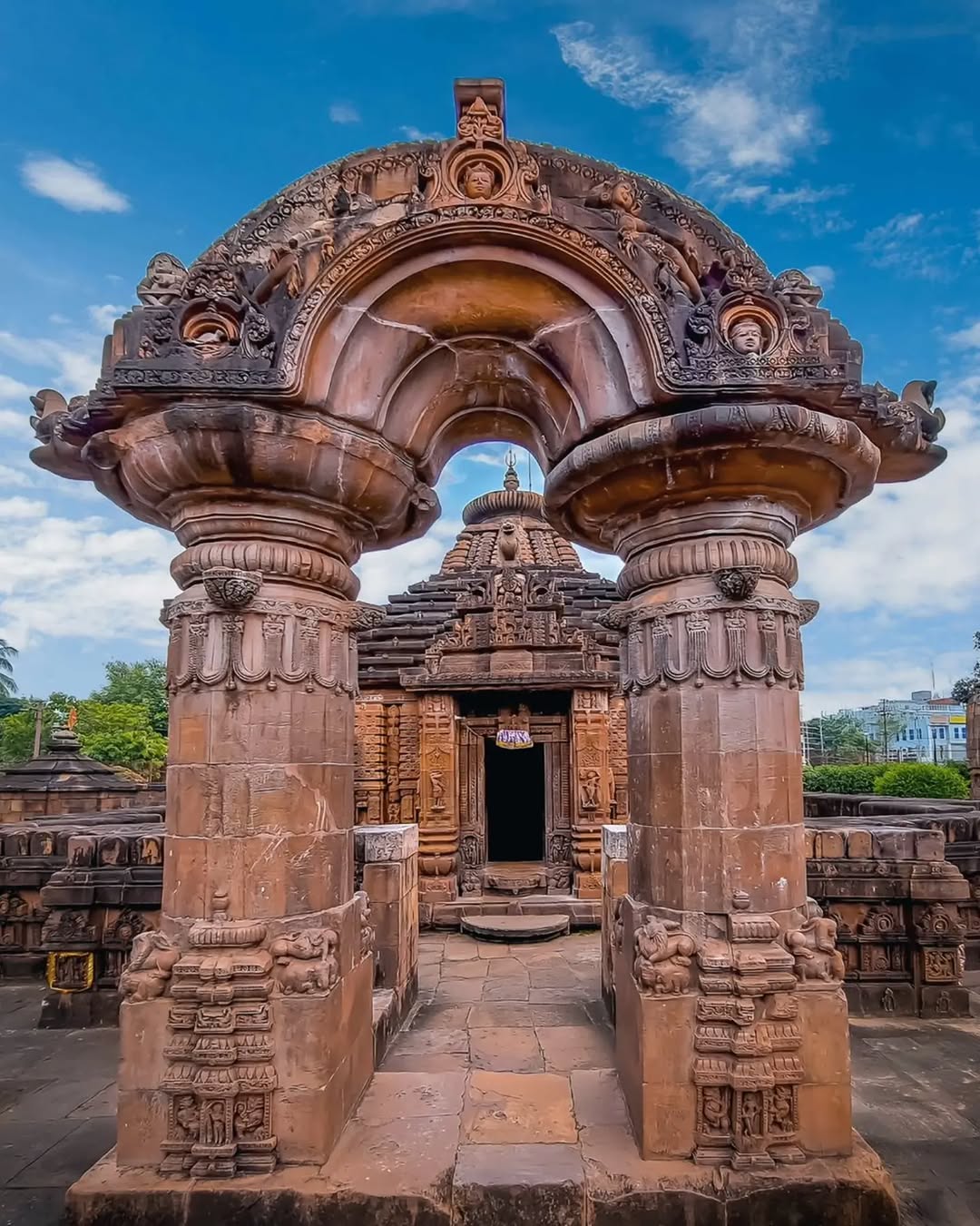
Bhubaneswar, Odisha
Sri Mukteswara–Siddheswara Temple Complex
Also known as: Gem of Kalinga Architecture, Mukteswar Temple
Hailed universally as the 'Gem of Odisha Architecture', the Mukteswara temple is a breathtaking 10th-century masterpiece. Sitting in the same serene compound as the taller Siddheswara temple, it is world-renowned for its spectacular arched gateway (Torana) and a sacred well believed to grant children to barren women.
The History
Right next to it in the same complex stands the Siddheswara Temple, a later and taller structure that provides a striking visual contrast. While Mukteswara is heavily adorned with delicate, almost jewel-like miniature carvings, Siddheswara is more austere and commanding, featuring a classic soaring Vimana and housing a beautiful standing idol of Lord Ganesha.
Sacred Architecture
The Iconic Torana & The Lotus Ceiling
The defining feature of Mukteswara is its magnificent, freestanding Torana (Arched Gateway). Showing traces of Buddhist architectural influence, this thick stone arch is intricately carved with smiling women, peacocks, and monkeys, serving as a majestic entrance to the divine realm.The Jagamohana (assembly hall) is equally famous for its awe-inspiring interior ceiling. Unlike most flat ceilings of the era, it features a deeply recessed, exquisitely carved eight-petaled lotus. The inner walls are adorned with the Sapta Matrikas (Seven Mother Goddesses) alongside Lord Virabhadra and Lord Ganesha, carved with a level of delicacy that resembles goldsmithing rather than stone masonry.
Legend of the Deity
However, the most deeply emotional and enduring legend of this complex surrounds the Marichi Kunda, an ancient sacred stepwell located just behind the temple. It is firmly believed that the holy waters of this well possess miraculous fertility powers. Even today, barren women from across the country travel here on the night before the Ashokashtami festival to take a holy dip, praying with absolute surrender to Lord Shiva to bless their empty wombs with a child.
Worship & Rituals
Devotees offer simple Bilva leaves, water, and silent prayers to the Swayambhu Lingams. The focus here is on quiet contemplation, soaking in the architectural perfection of the 'Gem of Kalinga' and experiencing the peaceful, liberating energy of the Lord of Moksha.
Festivals
Ashokashtami is the most spiritually charged time at the complex, particularly for the thousands of women who gather at the Marichi Kunda seeking the ultimate blessing of motherhood.
⏳ Daily Schedule
(Note: Being heavily protected by the ASI, large-scale commercial rituals are restricted to preserve the ancient stone, but personal devotion, meditation, and silent prayers continue uninterrupted.)
Associated Shrines
Parsurameswara Temple
Architectural Predecessor
Located barely 200 meters away, it is one of the oldest temples in Bhubaneswar (7th century), beautifully showing the earlier style that Mukteswara evolved from.
Lingaraj Temple
The Supreme Sthalam
The ultimate destination in the Ekamra Kshetra pilgrimage, representing the final, gargantuan evolution of the architecture pioneered by Mukteswara.