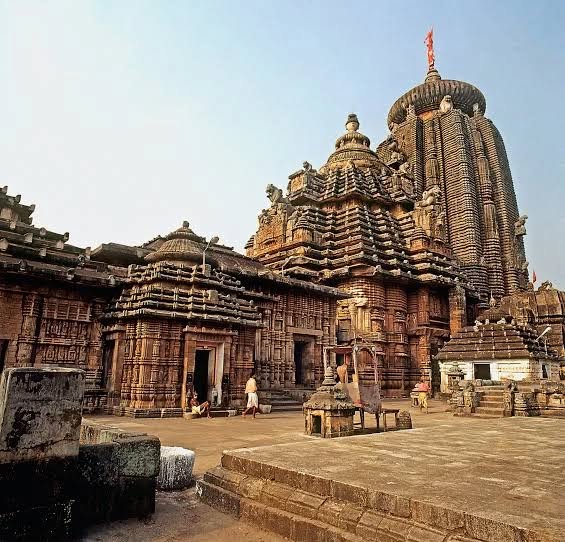
Bhubaneswar, Odisha
Sri Lingaraj Temple
Also known as: Tribhuvaneswara Temple, Ekamra Kshetra, Harihara Sthalam
Standing as the crowning glory of Bhubaneswar—the 'City of Temples'—Lingaraj is a breathtaking 11th-century architectural masterpiece. It is one of the rarest and most powerful temples in India because the Swayambhu (self-manifested) deity is worshipped not just as Lord Shiva, but as Harihara—the supreme, seamless merging of Shiva and Vishnu.
The History
The monumental temple we see today was constructed by the Somavamsi King Jajati Keshari in the 11th century when he shifted his capital to Bhubaneswar. Interestingly, when the Ganga dynasty took over the region a century later, they were staunch Vaishnavas (who built the Jagannath Temple in Puri). Instead of destroying the Shaivite traditions, they beautifully integrated them, resulting in the presiding deity of Lingaraj being worshipped equally as Vishnu and Shiva, symbolizing absolute cosmic unity.
Sacred Architecture
The Pinnacle of Kalinga Architecture
The Lingaraj Temple is the absolute zenith of the Kalinga architectural style. The complex is surrounded by massive laterite walls and contains over 150 smaller shrines.The main temple consists of four beautifully aligned structures: the Vimana (the main sanctum tower standing a staggering 180 feet tall, dominating the city skyline), the Jagamohana (assembly hall), the Natamandira (festival/dance hall), and the Bhogamandapa (hall of offerings). Every inch of the 180-foot tower is intricately carved with celestial nymphs, rampant lions, and mesmerizing geometric patterns.
Legend of the Deity
The Goddess playfully agreed, but on one condition: they had to carry her on their shoulders. When the demons lifted her, she expanded her cosmic weight, crushing them deep into the earth. Exhausted and thirsty after the encounter, she called out to Lord Shiva. Shiva instantly appeared and struck the ground with his trident (Trishula), summoning the waters of all the holy rivers in India to quench her thirst. This massive, sacred water body became the legendary Bindu Sagar (Ocean of Drops) lake, which still sits beside the temple today.
The deity inside the sanctum is a massive, unshaped granite stone (Swayambhu Lingam). Because it is Harihara, a natural line running down the center of the Lingam is said to separate the Shiva and Vishnu aspects.
Worship & Rituals
Unlike traditional Shiva temples where only Bilva (Bael) leaves are offered, or Vishnu temples where only Tulsi (Basil) leaves are offered, the deity at Lingaraj is worshipped simultaneously with both Bilva and Tulsi leaves.
Furthermore, the temple strictly follows ancient Kalinga traditions, and the complex is accessible only to practicing Hindus. A special viewing platform was constructed outside the temple walls during the colonial era (famously used by Lord Curzon) so that non-Hindu visitors could still marvel at the architectural grandeur of the complex.
Festivals
Ashokashtami features the magnificent Rukuna Rath Yatra. Lord Lingaraj is brought out in a colossal wooden chariot. Unique to this festival, the chariot does not turn around for the return journey; instead, the horses are attached to the opposite side, earning it the name 'The Chariot that Never Turns Back.'
⏳ Daily Schedule
12:30 PM - 03:30 PM: Temple Closed (Maha Suara / Food Offering)
03:30 PM - 09:00 PM: Evening Darshanam
09:00 PM: Bada Singara Vesha & Closure
Associated Shrines
Ananta Vasudeva Temple
Vaishnava Anchor
Located on the banks of Bindu Sagar, this 13th-century temple is dedicated to Lord Krishna, Balarama, and Subhadra. The Prasad for Lingaraj is traditionally cooked here.
Kedar Gouri Temple
Goddess Shrine
An ancient temple dedicated to Lord Shiva (Kedareswar) and Goddess Parvati (Gouri), famous for its sacred medicinal spring.
Bindu Sagar Lake
Sacred Cosmic Pool
The gargantuan sacred lake that contains a 'drop' of every holy river in India. Pilgrims take a holy dip here before entering the Lingaraj temple.