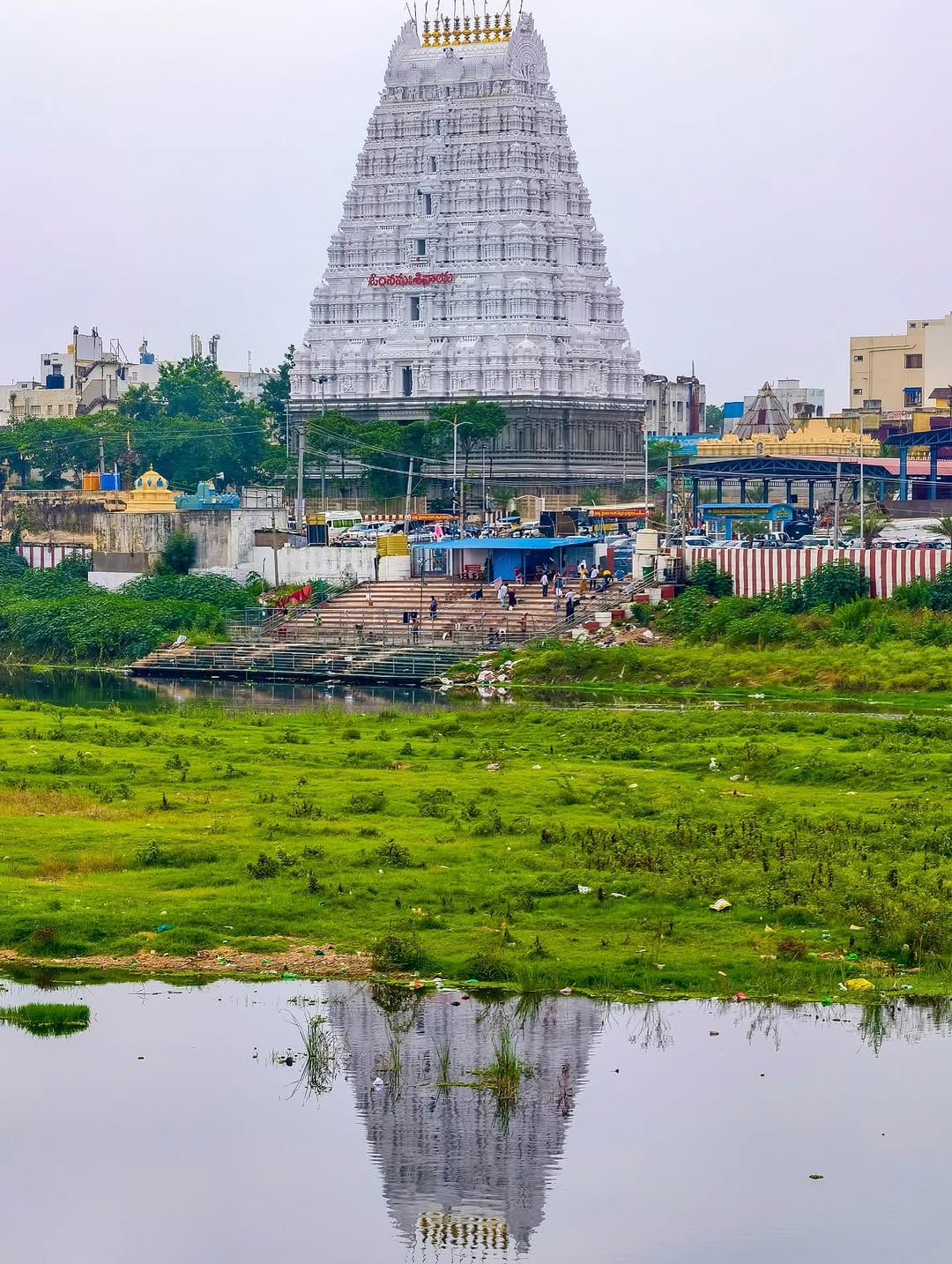
Srikalahasti (Tirupati District), Andhra Pradesh
Sri Kalahasteeswara Temple
Also known as: Srikalahasti Temple, Dakshina Kailasam, Rahu-Ketu Kshetram
Known as the 'Kailash of the South', Srikalahasti is a deeply mystical temple housing the Vayu Lingam (the elemental manifestation of wind). It is world-renowned for its powerful Rahu-Ketu dosha nivarana poojas and the awe-inspiring, visceral devotion of the tribal hunter, Bhakta Kannappa.
The History
Historically, the inner temple was constructed around the 5th century by the Pallavas, but the grand outer structures, including the spectacular 100-pillared mandapam, were commissioned by the great Emperor Krishnadevaraya of the Vijayanagara Empire in 1516 AD to commemorate his military victories.
Unlike most temples where the deity is moved for daily rituals, the Vayu Lingam here is considered so sacred and powerful that the priests never touch it directly with their hands, even during Abhishekam.
Sacred Architecture
The Phenomenon of the Vayu Lingam
Srikalahasti represents the element of Wind (Vayu) among the Pancha Bhoota Stalas.The Living Miracle: Inside the deep, dark Garbhagriha (inner sanctum), there are no windows, and the massive stone doors restrict any air movement. Yet, despite the complete lack of a breeze, a single oil lamp placed directly beside the Vayu Lingam constantly flickers, day and night, while all other lamps in the room remain perfectly still. It is a breathtaking visual representation of the Lord breathing as the element of wind.
Architecturally, the temple is carved directly out of the monolithic Kailasagiri hill. Goddess Jnanaprasunambika (the Flower of Knowledge) has her own magnificent shrine, renowned for the intricate Sri Chakra installed by Adi Shankaracharya.
Legend of the Deity
The spider wove a web over the Lingam to protect it from the sun and dust. The snake placed a precious gem (Nagamani) on the Lingam every day. The elephant bathed the Lingam with river water and offered flowers. Misunderstanding each other's devotion, the snake and the elephant fought to the death. Witnessing their ultimate sacrifice, Lord Shiva appeared, resurrected them, and granted them eternal liberation, merging their names to form Srikalahasti.
However, the most emotional legend is that of Bhakta Kannappa, a tribal hunter. Unaware of Vedic rituals, he worshipped the Lingam by offering meat from his hunts and carrying river water in his mouth to bathe the Lord. To test him, Shiva caused one of the Lingam's eyes to bleed. Without hesitation, Kannappa gouged out his own eye with an arrow and placed it on the Lingam. When the second eye began to bleed, he raised his arrow to gouge out his remaining eye, placing his toe on the Lingam to mark the spot in his blindness. Moved to tears by this raw, unimaginable devotion, Shiva physically manifested, stopped him by crying out "Stop, Kannappa!", restored his sight, and granted him instant salvation.
Worship & Rituals
Thousands of devotees flock here daily to perform this specialized pooja to ward off astrological afflictions, delays in marriage, and financial ruin. It is one of the very few temples in India that remains completely open even during Solar and Lunar Eclipses (Grahanam), as the Lord here is believed to control the planets themselves.
Festivals
Another unique festival here is the celebration of the Nayanmars, particularly honoring Bhakta Kannappa, integrating ancient Tamil devotional traditions into the Telugu-speaking region.
⏳ Daily Schedule
06:30 AM - 09:00 PM: Continuous Sarva Darshanam & Rahu-Ketu Poojas
09:00 PM: Ekantha Seva & Temple Closure
Associated Shrines
Bhakta Kannappa Temple
Supreme Devotee
Located on a hill adjacent to the main temple. Devotees often look up at this shrine to pay homage to the ultimate symbol of selfless devotion before entering the main temple.
Patala Ganapati
Underground Shrine
A deeply mystical, subterranean shrine dedicated to Lord Ganesha, located 20 feet below the ground level of the temple complex.
Swarnamukhi River Ghats
Sacred River
The north-flowing river where pilgrims take a holy dip. It is believed to have been created by Lord Brahma.
Bharadwaja Ashram
Ancient Hermitage
A serene, scenic spot surrounded by streams and hills where Sage Bharadwaja is said to have meditated.