Konark (Puri District), Odisha
Konark Surya Mandir
Also known as: Sun Temple of Konark, Black Pagoda, Arka Kshetra, Padma Kshetra
Designed as a gargantuan celestial chariot pulled by seven horses, the Sun Temple of Konark is a 13th-century UNESCO World Heritage site and a pinnacle of human engineering. Built entirely without cement using interlocking stones and iron clamps, it is shrouded in mysteries—from its precise 24 sundial wheels to the legendary 52-ton magnet that once made its main idol levitate in mid-air within its now-collapsed 200-foot tower.
The History
The construction involved 1,200 master architects and artisans, led by the chief architect Bishu Maharana, and took 12 years. As the deadline approached, the crown of the temple could not be completed, and the King threatened to execute all 1,200 craftsmen by morning. Bishu's 12-year-old son, Dharmapada, arrived and single-handedly completed the pinnacle in one night. However, fearing the King would still execute the artisans for letting a child finish the impossible task, the heroic boy jumped from the temple's peak into the ocean, sacrificing his own life to save the 1,200 craftsmen.
Despite this sacrifice, the temple was never fully consecrated or completed, and it was suddenly abandoned. Today, the massive 200-foot main sanctum (Garbhagriha) has completely collapsed—with theories blaming the removal of a crucial magnetic keystone, sea-level changes, or earthquakes.
Sacred Architecture
Iron Clamps & High-Precision Sundials
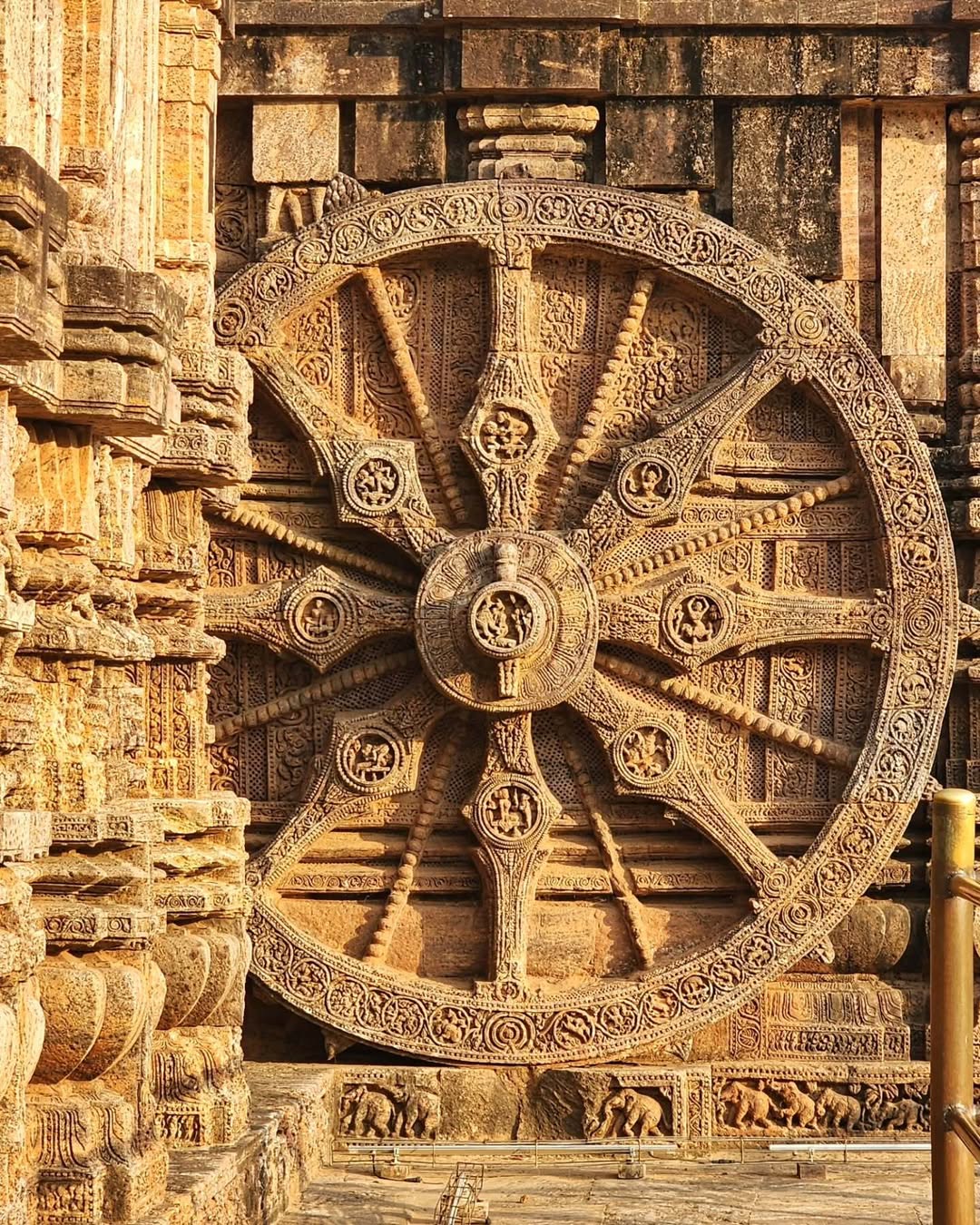
The Konark temple is the grandest example of Kalinga architecture. Shockingly, this colossal monument was built using zero cement. Instead, the architects used interlocking stones held together by massive iron clamps. The passion for detail was so profound that even the 800-year-old drainage system is carved into the shape of a perfect, realistic crocodile—an aesthetic flex that modern architecture struggles to match.The entire temple is conceived as a giant chariot with 24 wheels (representing the 12 zodiac signs or 12 months) and pulled by 7 horses. These 12 pairs of wheels are not just decorative; they are precision-engineered sundials that can calculate time to the exact minute. The temple was also perfectly aligned so that the first rays of the rising sun would pass through the main entrance, cross the Nata Mandira, and illuminate the floating idol in the sanctum.
Legend of the Deity
During the colonial era, sailors called the massive, dark structure the 'Black Pagoda'. It was a legendary navigational curse for mariners; a massive 52-ton magnetic lodestone was supposedly embedded in the temple's summit. This created a magnetic field so powerful it pulled ships off course and interfered with compasses. Inside the temple, this same magnetic field—interacting with a magnet at the base—allowed the heavy Surya idol to literally float in mid-air, defying gravity. Legend says the Portuguese or British removed the top magnet, destabilizing the entire structure and causing the main tower to eventually collapse.
Worship & Rituals
The Sundial Miracle: The shadow of the central axle falls on the spokes of the wheel, indicating the time. Each wheel has 8 major spokes representing the 8 prahars (3-hour intervals) of the day. By observing where the shadow falls between the intricate carvings of the spokes, one can calculate the exact time today.
Furthermore, the temple is famous for its Navagraha Slab, a massive stone featuring the nine planetary deities, which remains a site of active prayer for those seeking to balance their astrological influences.
Festivals
Magha Saptami (Chandrabhaga Mela) is the most significant religious event. Thousands of devotees gather at the Chandrabhaga beach before dawn to take a holy dip in the sea and watch the sun rise, echoing the penance of Samba.
⏳ Daily Schedule
(Note: No active worship or 'Nitya Puja' is performed in the main sanctum as it is currently sealed with sand for preservation, but a Sound and Light show is conducted every evening.)
Associated Shrines
Jagannath Temple, Puri
Sister Shrine
Part of the 'Golden Triangle' of Odisha. Pilgrims traditionally visit Puri, Konark, and Bhubaneswar together.
Ramachandi Temple
Local Guardian Goddess
Located nearby on the banks of the Kushabhadra River, she is the presiding deity of the Konark region.
Chhaya Devi Temple
Consort of Surya
A smaller temple within the Konark complex dedicated to the wife of the Sun God.