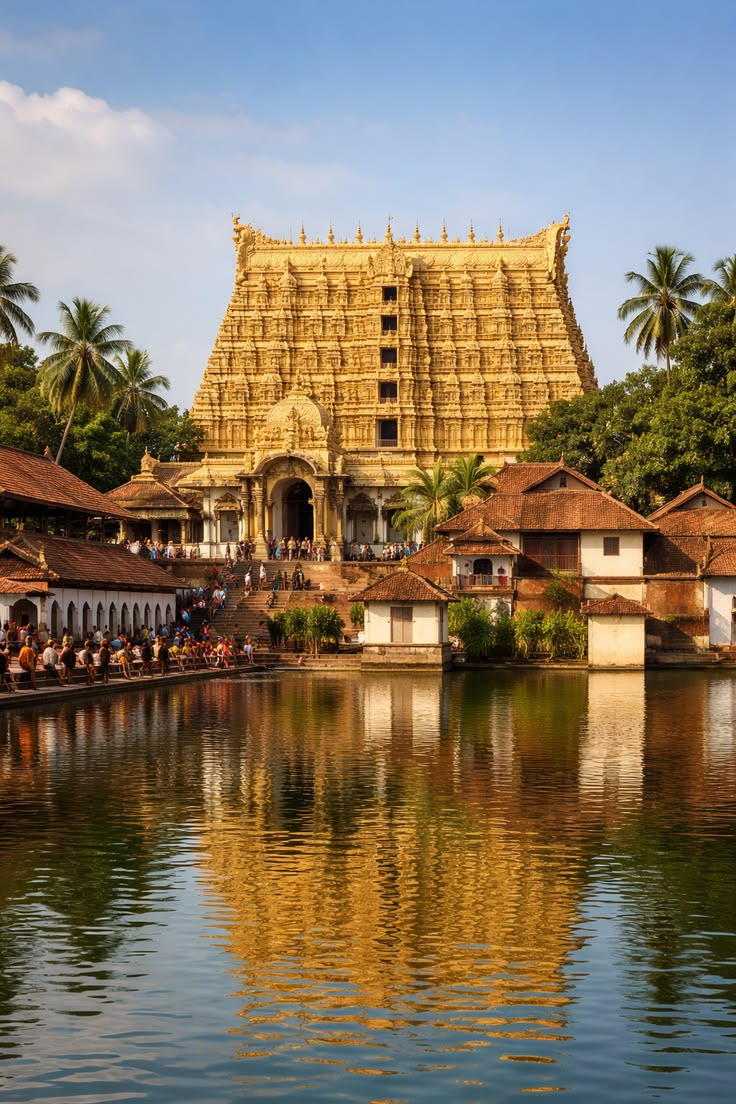
Thiruvananthapuram | Ananthapuri | Trivandrum, Kerala
Padmanabhaswamy Temple
Also known as: Moolasthanam, Ananta Padmanabha Swamy Temple, Ananthapura Lake Temple, The Golden Temple of Kerala
A world-renowned temple dedicated to Lord Vishnu in reclining form, famous for its immense hidden wealth and spiritual significance.
The History
The temple's origins date back to ancient times, with references found in Sangam literature and Puranas. It gained prominence under the rule of the Travancore kings, especially Maharaja Marthanda Varma, who dedicated his kingdom to Lord Padmanabha in the 18th century and ruled as the deity’s servant (Padmanabha Dasa).
The temple is built in a unique blend of Dravidian and Kerala architectural styles, featuring a massive gopuram and intricate carvings. The sanctum houses a majestic idol of Lord Vishnu reclining on Ananta (Adisesha), with Brahma emerging from his navel—symbolizing creation.
The temple gained global attention due to the discovery of hidden vaults containing vast treasures of gold, jewels, and artifacts, making it one of the richest temples in the world.
Entry into the temple is strictly regulated, allowing only Hindus, and follows traditional dress codes, preserving its sanctity and customs.
Sacred Architecture
Dravidian and Kerala Architecture Blend
The temple architecture stands out for its unique blend of the traditional Kerala style and the Dravidian style (kovil) associated with Tamil Nadu. Its most prominent feature is the majestic seven-tier gopuram facing the east, adorned with intricate sculptures.The main sanctum, or Garbhagriha, is uniquely designed so that the colossal reclining deity of Lord Padmanabha can only be viewed through three distinct doors: the face and a Shiva Linga under his right hand through the first door, Lord Brahma emerging from his navel through the central door, and his lotus feet through the third door.
The deity itself is uniquely composed of a sacred mixture called Katusarkara yogam, which includes 12,008 Saligramams brought from the Gandaki River in Nepal. Another architectural marvel is the Kulasekhara Mandapam, known for its fascinating stone carvings, and a spectacular corridor featuring 365 and one-quarter meticulously sculpted granite pillars.
Legend of the Deity
The sage searched and found the Lord in a massive cosmic form reclining on the serpent Ananta. Unable to view the entire form, he requested the Lord to reduce his size. The Lord then manifested in a smaller form, which is now worshipped as Padmanabha.
The idol represents the infinite nature of the universe, with Vishnu resting on the cosmic serpent, symbolizing preservation and eternal balance.
Worship & Rituals
A defining aspect of worship at this temple is its extremely strict adherence to customs and dress codes. Entry is restricted exclusively to followers of the Hindu faith. Men are required to wear a white dhoti (mundu) bare-chested or with an angavastram, while women must wear sarees, half-sarees, or a skirt and blouse. Modern clothing like trousers or shirts is strictly prohibited inside the sanctum premises.
Offerings to the deity vary, but Palpayasam (a sweet milk porridge) and Kadalipalam (a specific variety of banana) are highly significant. The Thulabharam ritual, where a devotee is weighed against offerings like gold, silver, sugar, or bananas to be donated to the temple, is another popular form of worship and surrender.
Festivals
A truly unique and massive festival is the Lakshadeepam (lighting of one hundred thousand lamps), which occurs once every six years. This event is preceded by Murajapam, a 56-day continuous chanting of Vedic mantras meant for the prosperity of the state.
Navaratri is also celebrated with immense devotion, featuring classical music performances in the Navaratri Mandapam that draw musicians and devotees from all over the country.
⏳ Daily Schedule
06:30 AM - 07:00 AM: Usha Pooja
08:30 AM - 10:00 AM: Morning Darshan
10:30 AM - 11:10 AM: Ucha Pooja
05:00 PM - 06:15 PM: Evening Darshan
06:30 PM - 07:00 PM: Deeparadhana
07:30 PM - 08:15 PM: Athazha Pooja
Associated Shrines
Attukal Bhagavathy Temple
Goddess worship (Shakti)
Famous for Attukal Pongala festival
Thrivikramangalam Mahavishnu Temple
Form of Lord Vishnu (Vamana/Trivikrama avatar)
Associated with the Trivikrama incarnation of Vishnu; located near Thiruvananthapuram and connected through Vaishnavite worship traditions
Janardanaswamy Temple
Form of Vishnu
Ancient temple near Varkala associated with liberation rituals
Thiruvallam Sree Parasurama Swami Temple
Associated with Parashurama (avatar of Vishnu)
Believed to be established by Parashurama, the creator of Kerala; important for ancestral rituals (Bali Tharpanam) performed on riverbanks