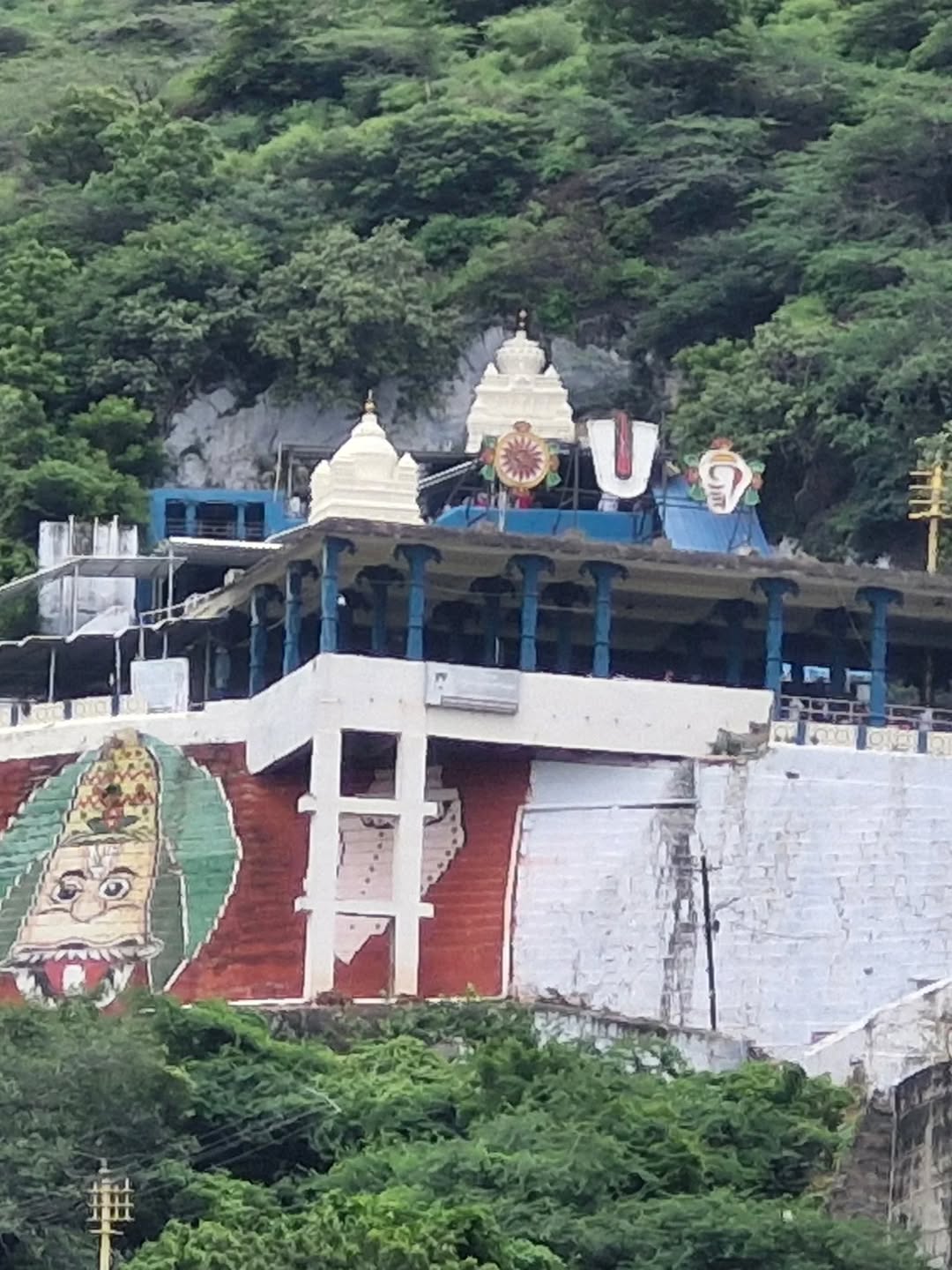
Mangalagiri (Guntur District), Andhra Pradesh
Panakala Narasimha Temple
Also known as: Mangalagiri Lakshmi Narasimha Swamy Temple, Totadri, Dharmadri
Located on an auspicious elephant-shaped hill, Mangalagiri is one of the eight sacred Mahakshetrams of Lord Vishnu in India. It is world-famous for its living miracle—the hilltop deity of Panakala Narasimha, who literally 'drinks' jaggery water offered by devotees, echoing with a distinct gurgling sound that defies scientific explanation.
The History
In 1788, the region was handed over to the British East India Company. Despite the British takeover, the stunning 11-story, 153-foot Gali Gopuram (Tower of Wind) at the lower temple was constructed between 1807 and 1809 by Raja Vasireddy Venkatadri Nayudu, a local Zamindar.
It was also during this colonial era that a chilling legend was born. A skeptical British official, refusing to believe the 'living miracle' of the deity drinking Panakam, arrogantly thrust his hand into the stone mouth of the Lord to uncover the 'trick.' According to powerful local lore, the fierce deity clamped down, taking half of the official's hand—a terrifying and permanent reminder of the divine power residing in the hill.
Sacred Architecture
The Towering Gali Gopuram & Cave Shrine
The Mangalagiri temple complex consists of three distinct temples: one at the base, one on the hill, and one at the peak. It is a masterpiece of Dravidian architecture, most famous for its colossal Gali Gopuram at the lower temple. Standing at 153 feet with 11 stories, its foundation is incredibly narrow compared to its immense height, making it an architectural marvel of the 19th century.The hill temple is an ancient rock-cut cave shrine where the primary deity, Panakala Narasimha Swamy, is not a full-bodied idol but a roughly 15-centimeter-wide stone mouth, vividly adorned with a striking brass Kavacham (armor) of the Lord's face.
Legend of the Deity
Interestingly, alongside the Puranic legends, a fascinating geological myth exists. Locals believe the mountain was once an active volcano. They believe the continuous daily offering of Panakam (sweet, slightly acidic jaggery water) chemically neutralizes the sulfur compounds deep within the earth, keeping the volcano peacefully dormant.
Worship & Rituals
The Living Miracle: The Lord accepts exactly half of whatever quantity is offered—whether it is a small cup or a massive barrel—and returns the other half to the devotee as Prasadam. The sound of the Lord 'gargling' and drinking the Panakam is clearly audible. Astonishingly, despite massive amounts of sticky, sweet jaggery water being poured daily, not a single ant or fly can be found anywhere near the sanctum!
Furthermore, the hilltop temple is strictly closed to humans by 3:30 PM every single day. Local tradition firmly dictates that as dusk falls, the Devas (celestial beings) arrive to perform their own private worship of the Lord.
Festivals
Narasimha Jayanti is celebrated with immense fervor, specifically focusing on special Abhishekams and offerings to cool the Lord's fierce form.
⏳ Daily Schedule
06:00 AM - 07:00 AM: Thomala Seva & Archana
07:00 AM - 03:00 PM: Panakam Offering & Darshanam (Hill Temple)
03:30 PM: Hill Temple Closed (Reserved for Devas' worship)
05:00 PM - 08:30 PM: Evening Darshanam (Lower Temple)
Associated Shrines
Lower Temple (Lakshmi Narasimha Swamy)
The Utsava Murthy Shrine
Located at the base of the hill. It houses the processional deities which, according to legend, were personally installed by Yudhishthira (the eldest Pandava).
Panakala Swamy Temple
The Main Swayambhu Deity
The hilltop shrine where the Lord miraculously drinks the Panakam offering. It is a cave shrine featuring the Lord's wide-open mouth covered by a metal face.
Gandala Narasimha Swamy
Peak Shrine
Located at the absolute top of the hill. There is no idol here; instead, devotees light a lamp using cow ghee to overcome severe hardships and 'Gandalas' (life-threatening problems).
Ksheera Vruksham
The Sacred Milk Tree
An ancient, sacred tree on the hill. Women who desire children tie a cradle to its branches, and it is believed the Goddess grants their wish.