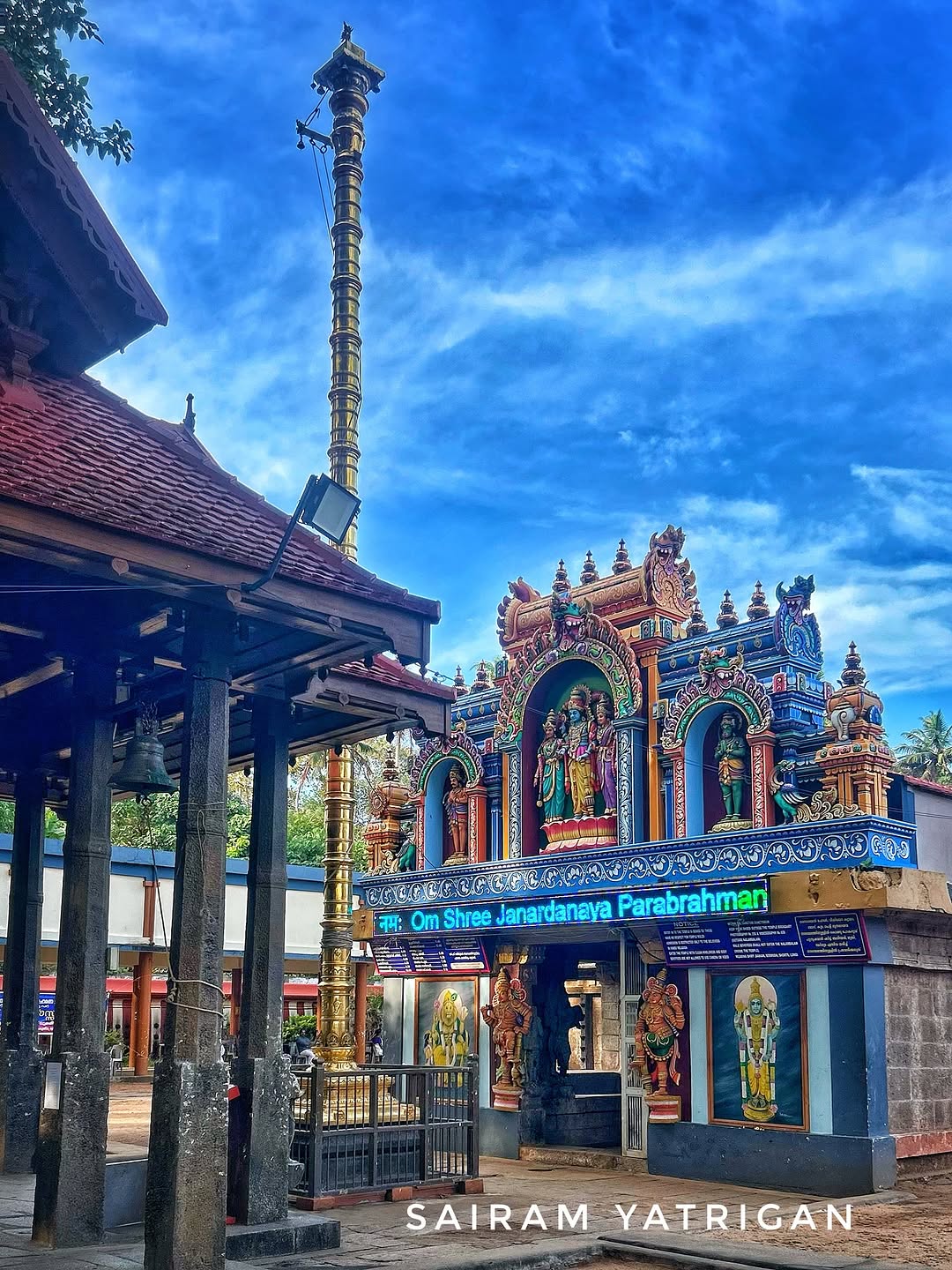
Varkala | Thiruvananthapuram, Kerala
Sree Janardhana Swamy Temple
Also known as: Varkala Temple, Dakshin Kashi, Janardhanaswamy Temple
An ancient 2,000-year-old hilltop shrine situated near the picturesque Papanasam Beach in Kerala. Known as the 'Varanasi of the South' (Dakshin Kashi), it is globally renowned for ancestral rites and spiritual purification.
The History
Historically, the temple was significantly renovated by a Pandyan King who had been cursed. After praying to Lord Brahma, he was instructed to travel to Varkala and rebuild this ruined Vishnu temple to lift his curse. Fascinatingly, the temple also has colonial historical ties; the massive temple bell was gifted by a Dutch ship captain in the 17th century after his ship, caught in a deadly storm, was miraculously saved upon his desperate prayers to the temple's deity.
Sacred Architecture
Traditional Kerala Architecture
The temple is a classic and magnificent example of Kerala architectural style, built with intricate woodwork, laterite stones, and a prominent circular sanctum sanctorum (Sreekovil) topped with a conical copper-plated roof.
The main idol of Lord Janardhana is highly unique: the Lord is depicted standing with four arms, holding the conch (Shankha), discus (Chakra), mace (Gada), and a sacred pot containing the nectar of immortality (Amrita) in his lower right hand. According to fascinating local folklore, the hand holding the Amrita pot is slowly rising towards his mouth, and it is prophesied that when he finally drinks it, the Kali Yuga will end.
The temple complex also features beautifully carved wooden pillars, a striking Kodimaram (flagpole), and auxiliary shrines for Lord Shiva, Hanuman, and Naga deities.
Legend of the Deity
Another prominent legend relates to the origin of the name 'Varkala'. Sage Narada threw his Valkalam (garment made of tree bark) into the air to guide some wandering sages. The place where it landed became known as Varkala. Narada then struck the ground with his trident, creating a sacred spring (Papanasam) that possesses immense purifying properties.
Worship & Rituals
The daily rituals follow strict Kerala Tantric traditions. Devotees regularly offer Palpayasam (sweet milk porridge) and lotus flowers. The presence of both Lord Vishnu (Janardhana) and Lord Shiva within the same complex makes it a highly inclusive, peaceful, and powerful spiritual destination.
Festivals
The main temple festival is the Arattu festival, celebrated grandly over ten days in the Malayalam month of Meenam (March-April). It concludes with a spectacular procession where the processional deity is taken to the Arabian Sea for a holy bath, accompanied by caparisoned elephants and traditional Kerala percussion (Panchavadyam).
⏳ Daily Schedule
12:00 PM - 05:00 PM: Temple Closed
05:00 PM - 08:00 PM: Evening Darshan & Deeparadhana
Associated Shrines
Sivagiri Mutt
Spiritual Hub
Located very close to the temple, this is the headquarters of the Sree Narayana Dharma Paripalana Yogam, founded by the great social reformer Sree Narayana Guru.
Padmanabhaswamy Temple
Form of Lord Vishnu
The incredibly famous and wealthy Vishnu temple in nearby Thiruvananthapuram, deeply connected to Kerala's Vaishnavite circuit.
Kappil Bhagavathy Temple
Goddess Temple
A powerful local shrine dedicated to the Mother Goddess, frequently visited by pilgrims on the Varkala circuit.