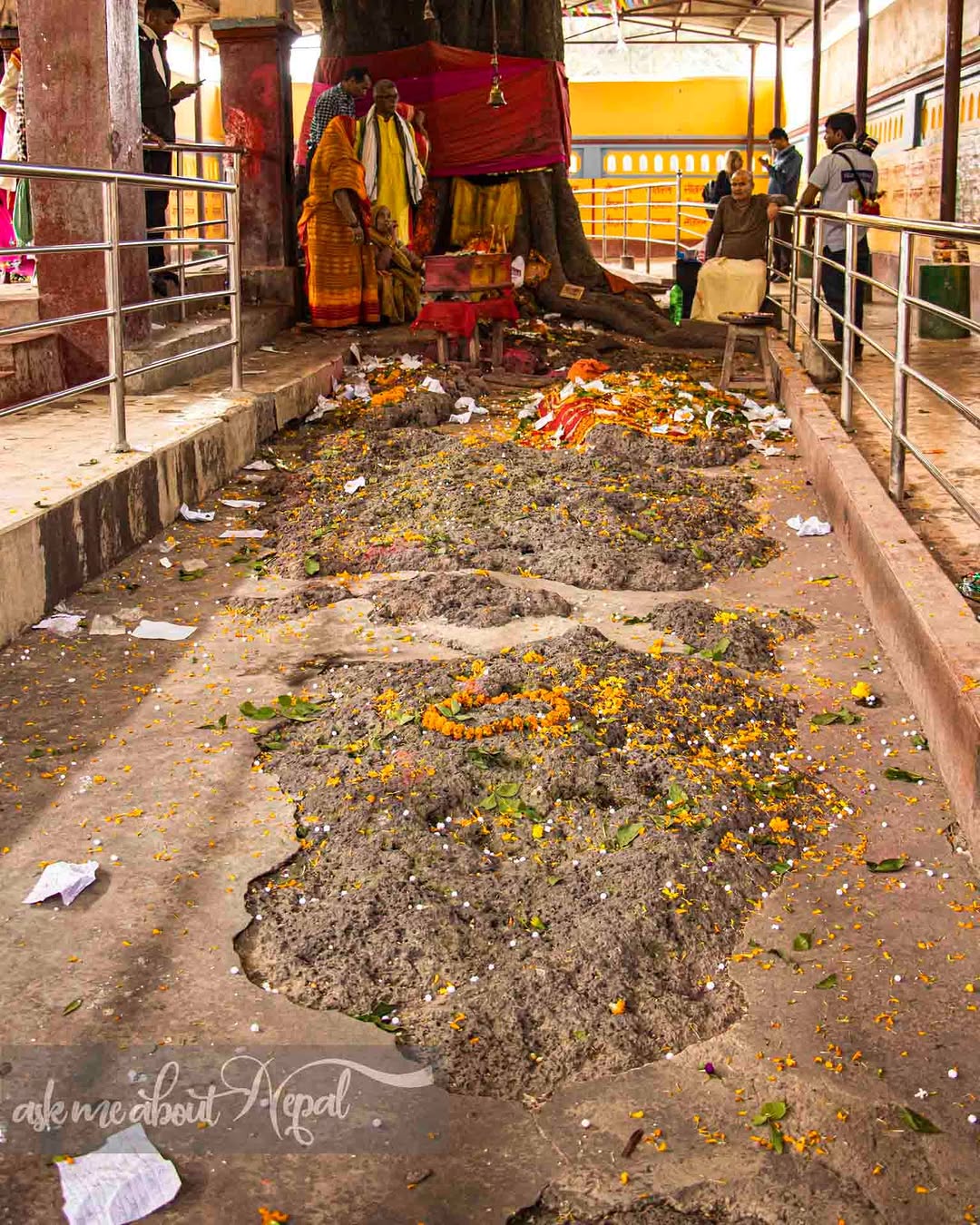
Dhanushadham | Janakpur, Madhesh Province (Nepal)
Dhanushadham Temple
Also known as: Dhanusha Dham / Dhanusadham, Shiv Dhanush Mandir, Dhanush Baba Temple, Baal Ganga Dhanusha Temple
Located a short distance from the historic city of Janakpur in Nepal, this revered pilgrimage site marks the exact spot where a fragment of Lord Shiva's divine bow (Pinaka) fell after being broken by Lord Rama during Goddess Sita's Swayamvara.
The History
Unlike conventional temples that house a sculpted idol, this shrine protects a sacred, fossilized stone that has been worshipped for millennia as the physical remnant of the Shiva Dhanush. Historically, the area was a dense forest where ascetics meditated. Over centuries, as the Ramayana tradition flourished under the Ramanandi sect, the site evolved into a major pilgrimage destination, uniting devotees of both Lord Shiva and Lord Rama.
Sacred Architecture
Mithila Tradition and the Sacred Relic
The architecture of the Dhanushadham Temple complex is relatively modest compared to the grand palaces of Janakpur, focusing entirely on the sanctity of the natural relic. The complex is shaded by massive, ancient banyan and peepal trees, giving it the serene atmosphere of a traditional ashram.
The primary sanctum is built over the fossilized bow fragment, which lies partially buried in the ground. The stone is protected by a concrete enclosure, but devotees can clearly see and touch the sacred rock. A fascinating, deeply held local belief asserts that this fossilized stone naturally grows in size by a tiny fraction every year.
Legend of the Deity
Princes and kings from across the world failed to even move the bow. Finally, Sage Vishwamitra instructed young Lord Rama to step forward. Rama effortlessly lifted the bow, strung it, and pulled the string with such divine force that the bow snapped with a thunderous sound that shook the earth.
According to local lore, the bow broke into three pieces. One piece flew up to the heavens (Swarga), another plunged into the underworld (Patala), and the middle segment flew through the air and struck the earth at this exact location, which became known as Dhanushadham.
Worship & Rituals
A very common practice here is the tying of sacred red and yellow threads (Kalawa/Mauli) around the surrounding ancient trees or the temple enclosures. Devotees tie these threads while making a wish, and it is a tradition to return and untie a thread once the Goddess Sita and Lord Rama have fulfilled their prayers.
Festivals
Vivah Panchami, which falls in November/December, is another spectacular occasion. It commemorates the wedding of Lord Rama and Goddess Sita, with grand processions moving between Janakpur and Dhanushadham.
Ram Navami (the birth of Lord Rama) is also celebrated with continuous chanting of the Ramayana (Akhand Ramayan Paath) and joyous bhajans.
⏳ Daily Schedule
12:00 PM - 02:00 PM: Temple Closed
02:00 PM - 08:00 PM: Evening Darshan & Aarti
Associated Shrines
Janaki Mandir
Birthplace of Goddess Sita
The magnificent central temple in Janakpur; visiting Janaki Mandir is essential for pilgrims traveling to Dhanushadham.
Ram Mandir, Janakpur
Lord Rama
The oldest temple in Janakpur, dedicated to Lord Rama, forming a core part of the Mithila pilgrimage.
Sita Kund / Dhanusha Sarovar
Sacred Waters
Holy water bodies located near the temple where devotees take ritual baths before taking darshan of the bow.