Varanasi | Kashi | Banaras, Uttar Pradesh
Kashi Annapurna Mandir
Also known as: Annapurna Mata Temple, Annapurneshwari Temple, Kashi Annapurna
ShaktismSacred CityAncient TempleAnnakutNagar ArchitectureGolden Idol
Located near the Kashi Vishwanath Temple, this shrine is dedicated to Goddess Annapurna, the divine mother of nourishment, who ensures that no one in the holy city of Kashi ever goes to sleep hungry.
Primary DeityGoddess AnnapurnaForm of Parvati (Goddess of Nourishment)
TraditionShaktism
AdministrationAnnapurna Temple Trust (Mahant tradition)
Historical ManagementConstructed in 1729 by Maratha Peshwa Baji Rao I; deeply tied to the Kashi Vishwanath spiritual circuit.
The History
The Kashi Annapurna Mandir is situated in the Vishwanath Gali, just a few meters away from the famous Kashi Vishwanath Temple. The current magnificent structure was constructed in 1729 by the great Maratha ruler Peshwa Baji Rao I.
Throughout history, the temple has served as the spiritual kitchen of Varanasi. It operates a massive free kitchen (Bhandara) that feeds thousands of pilgrims daily, honoring the Goddess's vow to nourish all living beings. In 2021, a historic 18th-century idol of Goddess Annapurna, which had been stolen and smuggled to Canada over a century ago, was successfully repatriated and re-installed within the temple complex.
Throughout history, the temple has served as the spiritual kitchen of Varanasi. It operates a massive free kitchen (Bhandara) that feeds thousands of pilgrims daily, honoring the Goddess's vow to nourish all living beings. In 2021, a historic 18th-century idol of Goddess Annapurna, which had been stolen and smuggled to Canada over a century ago, was successfully repatriated and re-installed within the temple complex.
Sacred Architecture
Nagara Architecture and Dual Idols
The temple is built in the traditional North Indian Nagara architectural style, characterized by its towering shikhara and intricately carved stone pillars. The entrance porch is heavily ornamented, featuring massive doors plated with brass and silver.
The most unique architectural and spiritual aspect of the temple is its Dual Idols. The primary Garbhagriha (inner sanctum) houses a beautiful brass idol of Goddess Annapurna, which is available for daily darshan. However, hidden deep within the sanctum is a second, solid Golden Idol of the Goddess, alongside a silver idol of Lord Shiva begging for alms. This golden idol is revealed to the public only once a year.
Legend of the Deity
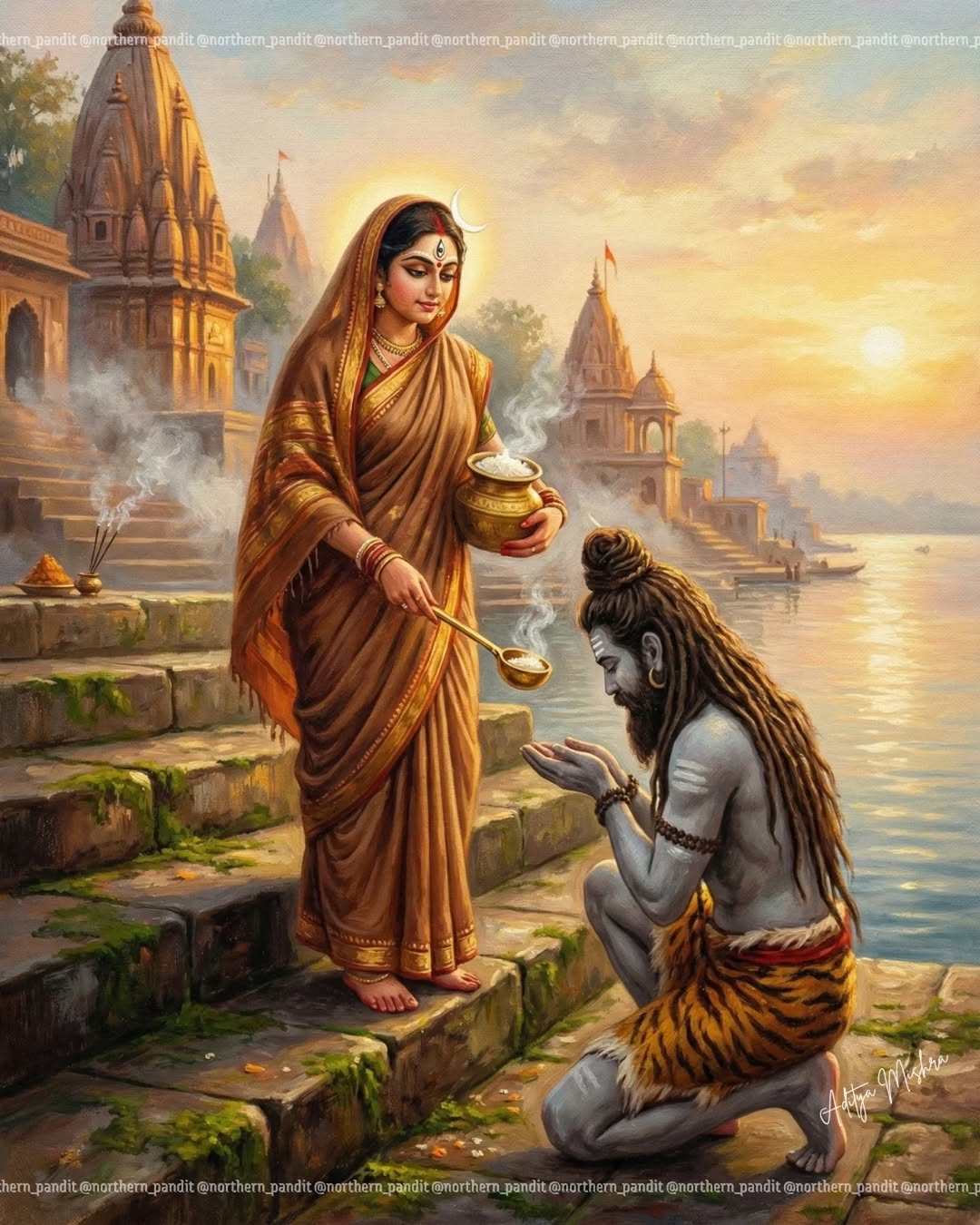
The legend of Goddess Annapurna is deeply philosophical. According to Hindu mythology, Lord Shiva and Goddess Parvati were playing a game of dice. During a theological discussion, Shiva remarked that everything in the material world, including food, is merely an illusion (Maya).
Parvati, who governs material nature, disagreed. To demonstrate her point, she disappeared. The world was plunged into a severe drought and famine, and even the gods begged for food. Realizing that material sustenance is vital for spiritual pursuit, Shiva visited Kashi, where Parvati had manifested as Annapurna (the giver of food). He humbly held out his begging bowl, and she offered him alms, establishing the eternal truth that food is Brahma (Annam Brahmam).
It is a deeply held belief that Goddess Annapurna personally feeds the residents of Kashi, and Shiva grants them Moksha (liberation).
Parvati, who governs material nature, disagreed. To demonstrate her point, she disappeared. The world was plunged into a severe drought and famine, and even the gods begged for food. Realizing that material sustenance is vital for spiritual pursuit, Shiva visited Kashi, where Parvati had manifested as Annapurna (the giver of food). He humbly held out his begging bowl, and she offered him alms, establishing the eternal truth that food is Brahma (Annam Brahmam).
It is a deeply held belief that Goddess Annapurna personally feeds the residents of Kashi, and Shiva grants them Moksha (liberation).
Worship & Rituals
Worship at the Annapurna Temple is deeply associated with gratitude, nourishment, and charity. Devotees offer grains, pulses, fruits, and traditional sweets to the Goddess.
The most significant act of worship associated with this temple is partaking in the Annadanam (the donation of food). The temple runs a continuous Bhandara (free kitchen) where thousands of sadhus, pilgrims, and the poor are fed daily without discrimination. For a devotee, accepting the Mahaprasad from this kitchen is considered a direct blessing from the Goddess's own hands, ensuring they will never face hunger in their lives.
The most significant act of worship associated with this temple is partaking in the Annadanam (the donation of food). The temple runs a continuous Bhandara (free kitchen) where thousands of sadhus, pilgrims, and the poor are fed daily without discrimination. For a devotee, accepting the Mahaprasad from this kitchen is considered a direct blessing from the Goddess's own hands, ensuring they will never face hunger in their lives.
Festivals
The most extraordinary festival of the Annapurna Temple is Annakut (meaning 'Mountain of Food'), celebrated on the day immediately following Diwali (Pratipada). On this highly auspicious day, a massive, tiered mountain of various vegetarian delicacies, sweets, and grains is offered to the Goddess.
More importantly, the rare Golden Idol of Goddess Annapurna is opened for public darshan for just four days during the Dhanteras and Diwali festival period. Millions of devotees queue for hours to witness this golden manifestation and receive the sacred distributed coins and unhusked rice (Dhan), believed to bring eternal prosperity.
Navaratri and Akshaya Tritiya are also celebrated with grand Shringar (adornment) and special Vedic rituals.
More importantly, the rare Golden Idol of Goddess Annapurna is opened for public darshan for just four days during the Dhanteras and Diwali festival period. Millions of devotees queue for hours to witness this golden manifestation and receive the sacred distributed coins and unhusked rice (Dhan), believed to bring eternal prosperity.
Navaratri and Akshaya Tritiya are also celebrated with grand Shringar (adornment) and special Vedic rituals.
⏳ Daily Schedule
04:00 AM - 05:00 AM: Mangala Aarti
05:00 AM - 11:30 AM: General Darshan
12:00 PM - 01:00 PM: Bhoga / Midday Aarti
01:00 PM - 10:00 PM: General Darshan
10:30 PM: Shayan Aarti
05:00 AM - 11:30 AM: General Darshan
12:00 PM - 01:00 PM: Bhoga / Midday Aarti
01:00 PM - 10:00 PM: General Darshan
10:30 PM: Shayan Aarti
Continue Journey
Associated Shrines
Kashi Vishwanath Temple
Husband of Annapurna (Lord Shiva)
The primary Jyotirlinga of Kashi; the legend intricately links the two deities as the eternal provider and the divine ascetic.
Vishalakshi Gauri Temple
Shakti Peeth
Another supreme manifestation of Parvati located at the nearby Mir Ghat.
Kaal Bhairav Temple
Guardian of Kashi
The fierce form of Shiva who protects the city nourished by Annapurna.