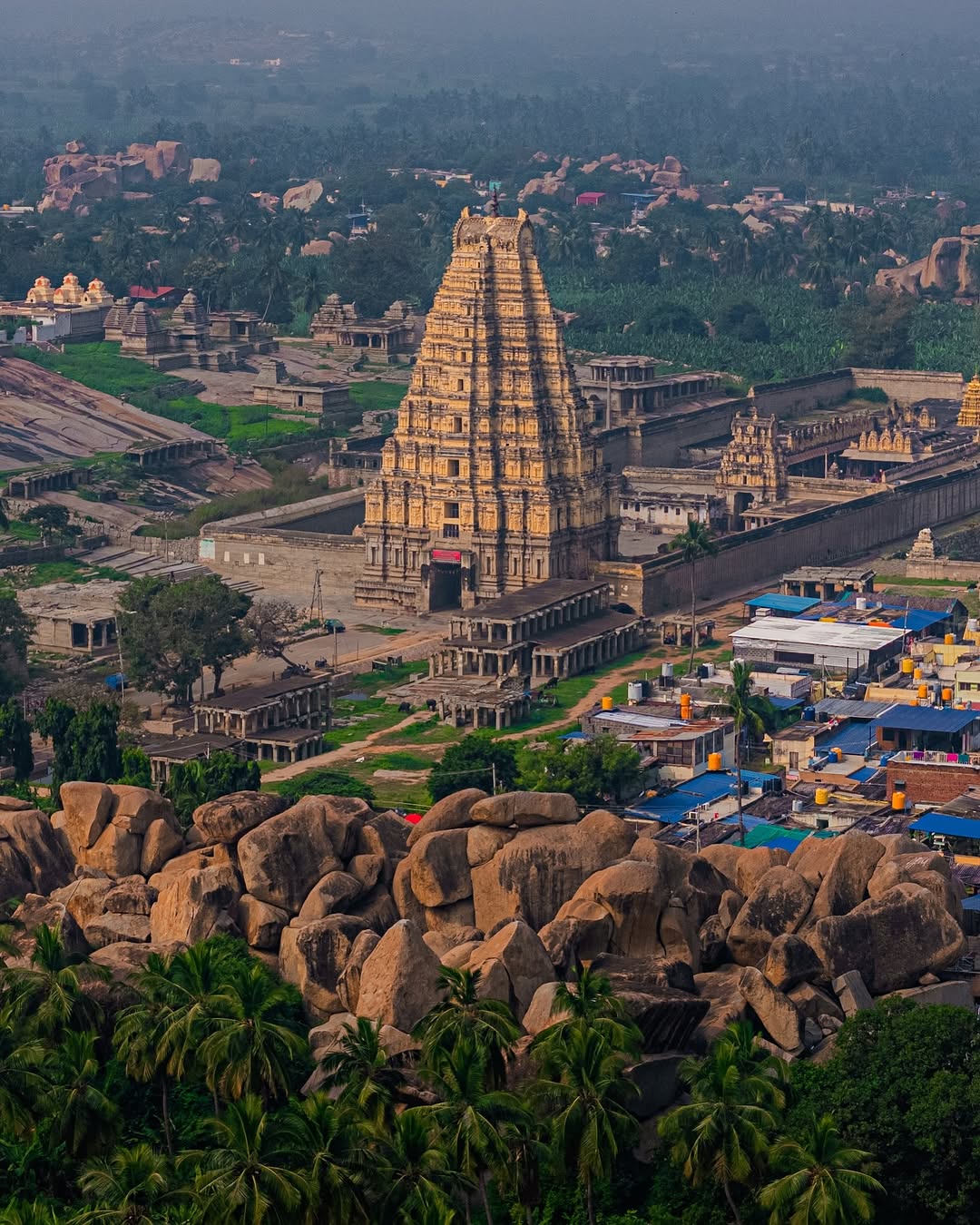
Hampi | Vijayanagara, Karnataka
Virupaksha Temple
Also known as: Pampapathi Temple, Hampi Temple, Virupakshaswami Temple
The spiritual heart of Hampi, this ancient temple is dedicated to Lord Virupaksha, a form of Shiva. Connecting three distinct eras of time—the mythological Pampa Kshetra, the Kishkindha of the Ramayana, and the pinnacle of the Vijayanagara Empire—it is famous for its soaring gopuram, profound devotion, and a unique 15th-century pinhole camera effect that projects an inverted shadow of the main tower.
The History
While most of the surrounding city of Hampi was reduced to ruins in 1565 after the Battle of Talikota, the Virupaksha temple continued to be a site of active worship. Its most significant expansions were commissioned by the great King Krishnadevaraya in 1510 CE to commemorate his accession to the throne, taking nearly 10 years to develop the temple and its surroundings to let the world know the sanctity of Shiva and Parvati's divine marriage.
The temple stands as a testament to the resilience of Hindu culture and the architectural genius of the Vijayanagara craftsmen, who seamlessly integrated the natural granite landscape of the Hemakuta Hill into the temple's sacred geography.
Sacred Architecture
Vijayanagara Architecture and the Pinhole Camera
The Virupaksha Temple is a masterpiece of Vijayanagara architecture. Its most prominent feature is the 50-meter-high eastern Gopuram (Bistappa Tower), which consists of nine tiers and dominates the Hampi skyline. The complex is organized into two courtyards containing shrines, pillared halls (Mandapas), and a temple tank.
The Ranga Mandapa, built by Krishnadevaraya, features 38 pillars intricately carved with figures of mythical lions (Yalis) and scenes from the Ramayana and Mahabharata. The ceiling of this hall is adorned with magnificent 16th-century frescoes depicting the wedding of Pampa and Virupaksha.
Perhaps the most mind-blowing architectural marvel is the Inverted Shadow. Deep inside the temple, a small slit in a stone wall acts as a natural pinhole camera. When sunlight passes through this tiny hole, it projects a perfectly inverted, accurately shaped, and color-reflective image of the massive main Raja Gopuram onto the interior wall. This demonstrates the highly advanced optical physics and practical science mastered by ancient Indian architects over 500 years ago.
Legend of the Deity
Many years later, this exact region became the capital of the monkey kingdom, Kishkindha Nagaram, from the epic Ramayana. When Lord Rama and Lakshmana were searching for Goddess Sita, they came to Hampi and famously met Lord Hanuman at the nearby Anjanadri Hill.
Because of these overlapping eras of divine presence, Hampi is not just viewed as historical ruins, but as an active, pulsating center of Mahadev's energy and timeless devotion.
Worship & Rituals
A deeply beloved aspect of the temple's daily worship is the presence of Lakshmi, the temple elephant. Known for her remarkably long eyelashes and the beautiful red and orange traditional patterns painted on her forehead, she is a sacred part of the temple community. Devotees and visitors eagerly seek her blessings, where she gently touches their heads with her trunk.
Unlike many other Hampi monuments that are now silent museums, Virupaksha is a vibrant, living center of devotion. Pilgrims often begin their worship with a dip in the sacred Tungabhadra River, or by taking a traditional coracle boat ride (available near the temple, Sanapur Lake, or Anegundi Village) before entering to seek the Lord's blessings.
Festivals
Maha Shivaratri is another major festival where the temple stays open throughout the night for special prayers and cultural programs. The Hampi Utsav, organized by the state, also centers around the temple, featuring traditional music and dance that brings the ruins of the empire back to life.
⏳ Daily Schedule
01:00 PM - 05:00 PM: Temple Closed
05:00 PM - 09:00 PM: Evening Darshan & Deeparadhana
Associated Shrines
Vijaya Vittala Temple
Form of Vishnu
Hampi's most iconic architectural marvel. It houses the Ranga Mantapa, featuring 56 'SaReGaMa' pillars that emit distinct musical notes (aligned with the 72 Melakarta ragas) when tapped. Geological analysis reveals the sound comes from metallic ore and high silica content in the resonant stone. Curious British rulers once cut two pillars to find the source of the music, finding them completely solid; these cut pillars remain on display today. The complex also houses the famous Stone Chariot and the gravity-defying 'Hanging Pillar'.
Malyavanta Raghunatha Temple
Lord Rama
The cave temple where Lord Rama and Lakshmana stayed during the monsoon season. A gap on the floor filled with water is said to have been created by Lakshmana's arrow. In a beautiful display of devotion, the Sri Rama Charita Manas is recited here from dawn to dusk, every single day.
Yantrodharaka Hanuman Temple
Devotee of Lord Rama
Installed by Sri Vyasaraja Tirtha over 500 years ago, this shrine depicts a meditative Hanuman seated within a mystical geometric yantra, symbolizing control and energy.
Prasanna Virupaksha (Underground Shiva Temple)
Form of Shiva
A 14th-century temple built below ground level, believed to have been used by the Vijayanagara royal family for private ceremonies. It remained buried for over 400 years before being rediscovered.
Sasivekalu & Kadalekalu Ganesha
Sons of Shiva
Two massive, warmly welcoming, and grand monolithic statues of Lord Ganesha located on the Hemakuta Hill.