🕉️

Vishwaguru

Awakening Heritage...

Chausath Yogini Temple

Mitawali, Morena District, Madhya Pradesh, India

Chausath Yogini Temple

Also known as: Ekattarso Mahadeva Temple, Mitawali Temple

TantrismArchitectural MarvelArchaeological MonumentShaivismIndian Parliament InspirationCircular TempleHypaethral (Roofless)Tantric UniversityKachchhapaghata Dynasty

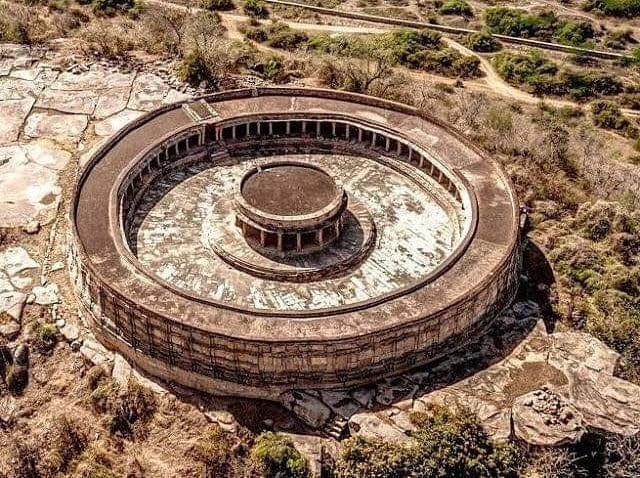
Perched atop a solitary hill in the Chambal valley, the Chausath Yogini Temple of Mitawali is an ancient, spellbinding architectural marvel. Unlike traditional towering Hindu temples, it is a perfectly circular, roofless (hypaethral) structure that historically served as an elite, secretive university for the teaching of astrology, mathematics, and advanced Tantric rituals.

Primary DeityLord Shiva & The 64 YoginisForm of Shiva Lingam & Tantric Goddesses
TraditionHinduism (Tantrism / Shaivism)
AdministrationArchaeological Survey of India (ASI)
Historical ManagementConstructed in the 11th century (around 1055–1075 CE) by King Devapala of the Kachchhapaghata dynasty. Today, it is a protected archaeological and historical monument meticulously maintained by the Archaeological Survey of India (ASI).

The History

While most of North India's temples faced massive destruction during medieval invasions, this temple largely survived, likely due to its remote location and the deep, terrifying reputation of the dark Tantric curses associated with the Yoginis. Originally, the 64 peripheral cells housed the idols of the 64 Yoginis, but over the centuries, these were lost or removed, and they were replaced with 64 Shiva Lingams.

Sacred Architecture

The Circular Cosmos and the Roofless Sky

The temple is a masterclass in ancient geometry and earthquake-resistant engineering. It is a completely circular structure with a radius of 170 feet, featuring 64 small chambers lining the inner perimeter and a grand, open pavilion in the center housing Lord Shiva. It is strictly Hypaethral (roofless). According to Tantric architecture, this is mandatory because the Yoginis are believed to magically take flight at night to roam the cosmos, and a roof would trap their immense energy. Furthermore, the massive circular colonnade features an advanced, ancient rainwater harvesting system with perforated pillars that drained water perfectly without flooding the central courtyard.

Legend of the Deity

In Hindu Tantric lore, the 64 Yoginis are fiercely powerful, mystical female manifestations of the Supreme Goddess (Durga/Kali). They are the masters of magic, cosmic energy, and the esoteric arts. Lord Shiva, as the ultimate master of Tantra (Bhairava), resides in the absolute center of the formation to balance their immense, fiery cosmic energies.

Worship & Rituals

Centuries ago, this was the epicenter of nocturnal Tantric worship, involving complex mantras, fire rituals, and esoteric practices aimed at acquiring 'Siddhis' (supernatural powers). Today, the worship is highly pacified; visitors and locals simply offer basic reverence to the Shiva Lingams during the daytime. The temple is famous for two powerful pieces of modern lore. First, it is an incredibly widespread belief that British architects Sir Edwin Lutyens and Herbert Baker directly copied the unique, pillared circular design of this exact temple when they designed the Old Parliament House of India (Sansad Bhavan) in 1927. Second, local supernatural folklore remains strong: villagers from Mitawali firmly believe that the temple still comes alive at night. It is said that the spirits of the 64 Yoginis return to the roofless temple in the dark, and anyone who dares to stay overnight on the hill will lose their sanity or their life.

Festivals

As an ASI-protected archaeological monument, it does not host grand active agamic festivals or chariot processions. However, the local villagers gather here in large numbers to offer prayers and water to the 64 Shiva Lingams during Maha Shivaratri.

Daily Schedule

Visiting Hours: Daily from 6:00 AM to 6:00 PM.
(Note: As an ASI monument, visitors are strictly not allowed to remain on the hill after sunset due to both security reasons and local superstitions.)
Continue Journey

Associated Shrines

Chausath Yogini Temple, Bhedaghat (Jabalpur)

Sister Tantric Shrine

The largest of the Yogini temples in India, famous for having beautifully preserved, intricate stone idols of the Yoginis still resting in their designated cells.

Chausath Yogini Temple, Hirapur

Eastern Counterpart

A smaller, but incredibly potent and well-preserved circular Yogini temple located in Odisha, representing the eastern branch of ancient Tantric networks.