🕉️

Vishwaguru

Awakening Heritage...

Sri Srikanteshwara Temple

Nanjangud, Mysore District, Karnataka, India

Sri Srikanteshwara Temple

Also known as: Nanjundeshwara Temple, Dakshina Kashi, Nanjangud Temple

ShaivismHealing ShrinePilgrimage EpicenterRiver TempleDakshina KashiHakim NanjundaKapila RiverDodda JathreTipu Sultan

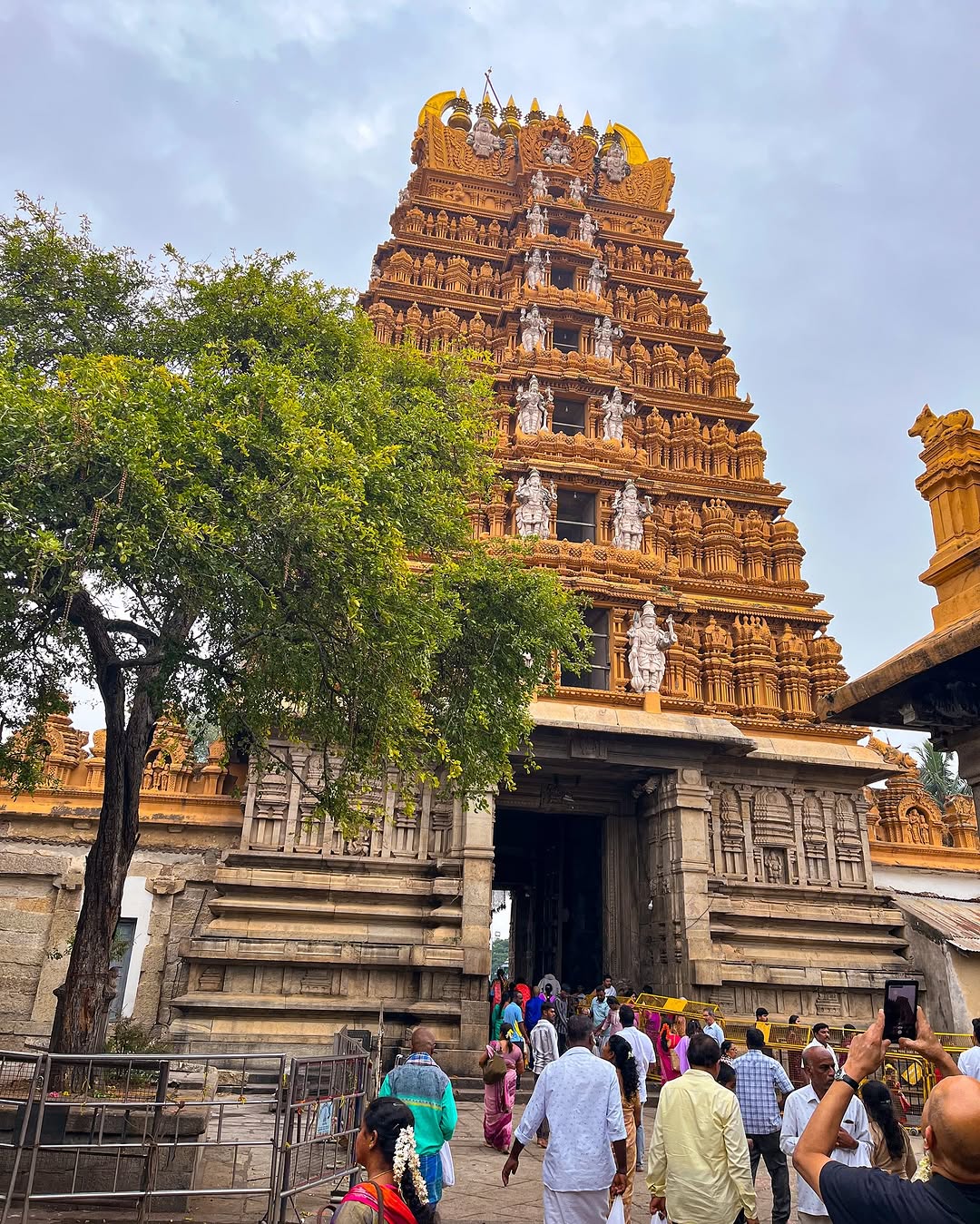
Revered globally as 'Dakshina Kashi' (Varanasi of the South), the Sri Srikanteshwara Temple in Nanjangud is a colossal Dravidian masterpiece situated on the banks of the Kapila river. It is dedicated to Lord Nanjundeshwara—the compassionate form of Lord Shiva who drank the cosmic poison to save the universe, earning him the reputation of a supreme cosmic physician.

Primary DeityLord Shiva (Srikanteshwara / Nanjundeshwara)Form of Shiva Lingam (The Consumer of Poison)
TraditionHinduism (Shaivism)
AdministrationKarnataka State HR&CE Department
Historical ManagementAn ancient site expanded across centuries by the Western Gangas, Cholas, Hoysalas, and the Vijayanagara Empire. The Wadiyars of Mysore provided massive patronage. Interestingly, even the Muslim ruler Tipu Sultan deeply patronized the temple. Today, it is managed by the Karnataka Hindu Religious and Charitable Endowments (HR&CE) department.

The History

The temple's origins trace back to the Ganga dynasty in the 9th century, making it over a millennium old. It evolved into a massive complex through the devotion of successive empires. The Mysore Wadiyars, specifically the Queen Mother Devajammanni, built the monumental 147-foot Rajagopuram in the mid-19th century to commemorate her recovery from illness.

Sacred Architecture

Dravidian Grandeur and the 147-Foot Gopuram

The temple complex is one of the largest in Karnataka, measuring an impressive 385 feet by 160 feet. It features classic Dravidian architecture highlighted by the towering, 9-story Rajagopuram. The outer walls and inner prakarams are breathtakingly lined with over 122 exquisitely carved stone figures depicting the various avatars and manifestations of Lord Shiva, making it a veritable open-air museum of Shaiva iconography.

Legend of the Deity

During the 'Samudra Manthan' (churning of the cosmic ocean) by the Devas and Asuras, a lethal, world-destroying poison named Halahala emerged. To save all of creation, Lord Shiva consumed the poison. Goddess Parvati instantly held his throat to stop the poison from reaching his stomach, turning his neck blue. Thus, he became 'Nanjundeshwara' (The God who drank poison) or 'Srikanteshwara' (The one with the beautiful blue neck).

Worship & Rituals

Worship here is deeply associated with physical and mental healing. Because Lord Nanjundeshwara is the consumer of poison, devotees suffering from chronic ailments, skin diseases, and poisons frequently perform severe vows here, such as 'Urulu Seve' (rolling around the temple complex). A highly unique tradition involves offering small clay or wooden figures representing afflicted body parts to the temple to seek a cure. One of the most fascinating pieces of true historical folklore involves Tipu Sultan and 'Hakim Nanjunda'. According to records, Tipu Sultan's favorite royal elephant completely lost its eyesight. After all royal physicians failed, Tipu was advised to pray to Lord Srikanteshwara. For 48 days, the elephant was kept on the temple premises and washed with the holy water of the Kapila river. Miraculously, the elephant's sight was completely restored. Overjoyed and humbled, Tipu Sultan gifted the temple an incredibly precious emerald necklace (which is still adorned by the Lord on special occasions) and officially titled the deity 'Hakim Nanjunda' (The Doctor Nanjunda), cementing a beautiful, enduring story of cross-faith devotion.

Festivals

The absolute grandest event is the Dodda Jathre (Big Chariot Festival) held during the month of March/April. During this staggering event, five massive, elaborately decorated wooden chariots—dedicated to Ganesha, Srikanteshwara, Parvathi, Subramanya, and Chandikeshwara—are pulled through the streets of Nanjangud by hundreds of thousands of ecstatic devotees.

Daily Schedule

Visiting Hours: Daily from 6:00 AM to 1:00 PM, and 4:00 PM to 8:30 PM.
(Note: Devotees traditionally take a purifying dip in the Kapila river before entering the temple for darshan.)
Continue Journey

Associated Shrines

Chamundeshwari Temple, Mysore

Royal Patronage Circuit

Both temples share intense patronage from the Wadiyar dynasty and represent the supreme Shaiva/Shakta heritage of the greater Mysore region.

Kashi Vishwanath Temple, Varanasi

Spiritual Equivalent

Nanjangud is considered the exact spiritual equivalent of Varanasi in South India, sharing the immense power to grant salvation and wash away sins.