🕉️

Vishwaguru

Awakening Heritage...

Sri Vadakkunnathan Temple

Thrissur, Kerala, India

Sri Vadakkunnathan Temple

Also known as: Tenkailasam, Vrishabhachalam, Thrissur Vadakkunnathan

ShaivismKerala ArchitectureUNESCO Awarded HeritagePilgrimage EpicenterThrissur PooramNeyyabhishekam (Ghee Mound)Thekkinkadu MaidanLord ParashuramaKoothambalam

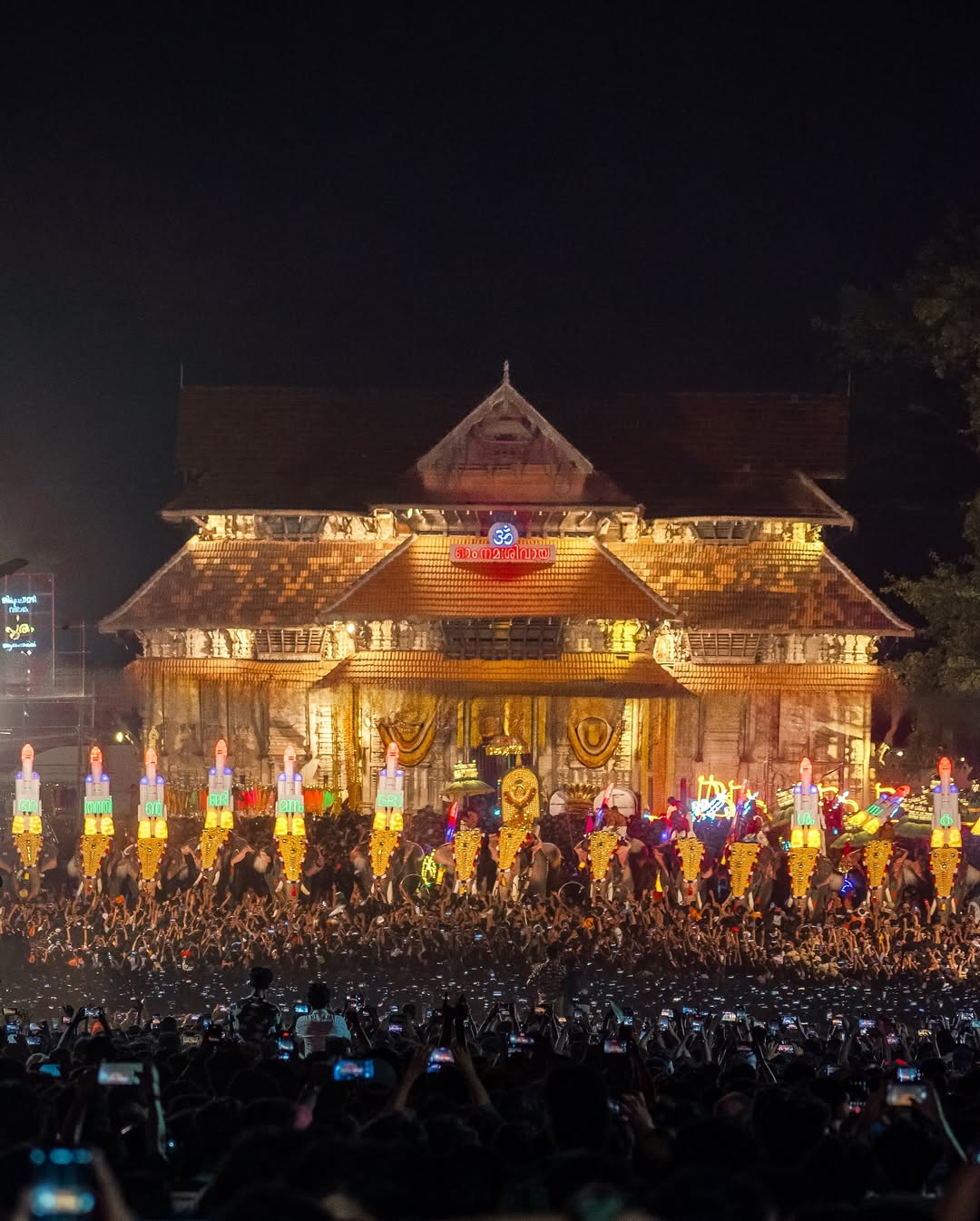
Sitting majestically at the dead center of the sprawling 65-acre Thekkinkadu Maidan, the Sri Vadakkunnathan Temple is the architectural and spiritual soul of Thrissur city. It is revered as the first and oldest Shiva temple in Kerala, globally famous for hosting the monumental 'Thrissur Pooram' festival and housing an inexplicable, centuries-old mountain of ghee in its main sanctum.

Primary DeityLord Shiva (Vadakkunnathan)Form of Maha Shiva Lingam (Concealed inside a massive mound of ghee)
TraditionHinduism (Shaivism / Kerala Tantric)
AdministrationCochin Devaswom Board
Historical ManagementHistorically patronized by the Zamorins of Calicut and later deeply expanded and restructured by Sakthan Thampuran (the King of Cochin) in the 18th century, who also initiated the Thrissur Pooram. In 2012, the temple won the prestigious UNESCO Asia-Pacific Award for Cultural Heritage Conservation. It is currently managed by the Cochin Devaswom Board.

The History

According to ancient texts, this is the very first temple built by Lord Parashurama after he reclaimed the land of Kerala from the sea. Historically, it has been the seat of immense political and spiritual power, heavily influencing the art, culture, and martial history of central Kerala. Adi Shankaracharya's parents are said to have prayed here for a child, and the great philosopher himself is believed to have spent his final days within this temple complex.

Sacred Architecture

Wood, Stone, and the Koothambalam

The temple is an absolute masterclass in traditional Kerala-style architecture. It features four towering monumental gateways (Gopurams) facing the cardinal directions, with multi-tiered sloping roofs clad in copper. Inside the massive stone walls, the shrines are circular (Vrittakara) and feature incredibly exquisite, 400-year-old natural dye mural paintings depicting the Mahabharata. The complex also houses a magnificent Koothambalam (traditional temple theatre) used for performing ancient Sanskrit arts like Chakyar Koothu and Koodiyattam, built with spellbinding acoustic woodwork without using a single metal nail.

Legend of the Deity

After reclaiming Kerala, Lord Parashurama requested Lord Shiva to manifest there. Shiva arrived with Goddess Parvati, Lord Ganesha, and Lord Murugan, and halted at the spot where the temple now stands. Parashurama worshipped the Lord under a massive banyan tree, and Shiva subsequently manifested as a Swayambhu (self-emerged) Lingam.

Worship & Rituals

Worship is governed by incredibly strict tantric rituals. The most mind-boggling aspect of worship here is the Neyyabhishekam (Ghee Bath). For centuries, devotees have offered pure ghee to the Shiva Lingam. Over time, this has formed a colossal, solid mound of ghee over the Lingam, currently estimated to be around 10 to 12 feet high and wide, representing the snow-clad Mount Kailash. The folklore surrounding the Ghee Mound completely baffles modern science. Despite the scorching tropical heat of Kerala, the thousands of burning oil lamps inside the unventilated sanctum, and the fact that ghee is highly perishable, the mountain of ghee never melts, never collapses, and has absolutely no foul smell of rotting fat. In fact, the ancient layers of ghee at the very bottom are considered a highly potent Ayurvedic medicine capable of curing chronic respiratory and skin diseases. Locals firmly believe the absolute purity of the chanting and the raw cosmic energy of the Lingam is what keeps the ghee perfectly solid and fresh for centuries.

Festivals

Thrissur Pooram (April/May) is the mother of all temple festivals in India. Interestingly, Vadakkunnathan *does not* participate in the festival with its own idol; instead, the Lord acts as the royal host. Dozens of caparisoned elephants from neighboring temples converge on the Thekkinkadu Maidan to pay respects to Shiva, culminating in a deafening traditional percussion ensemble (Ilanjithara Melam) and an earth-shaking fireworks display. Another major event is Aanayoottu (feeding of elephants) in July.

Daily Schedule

Visiting Hours: Daily from 4:00 AM to 10:30 AM, and 5:00 PM to 8:30 PM.
(Note: Strict Kerala dress code applies. Men must wear mundu/dhoti bare-chested; women must wear traditional sarees or long skirts. Non-Hindus are traditionally not permitted inside the inner walled complex.)
Continue Journey

Associated Shrines

Paramekkavu Bhagavathy Temple

Pooram Participant

One of the two primary participating temples in the Thrissur Pooram, located just outside the eastern gate of Vadakkunnathan.

Thiruvambadi Sri Krishna Temple

Pooram Participant

The second major participating temple in the Thrissur Pooram, engaging in the legendary 'Kudamattam' (umbrella exchange) competition.