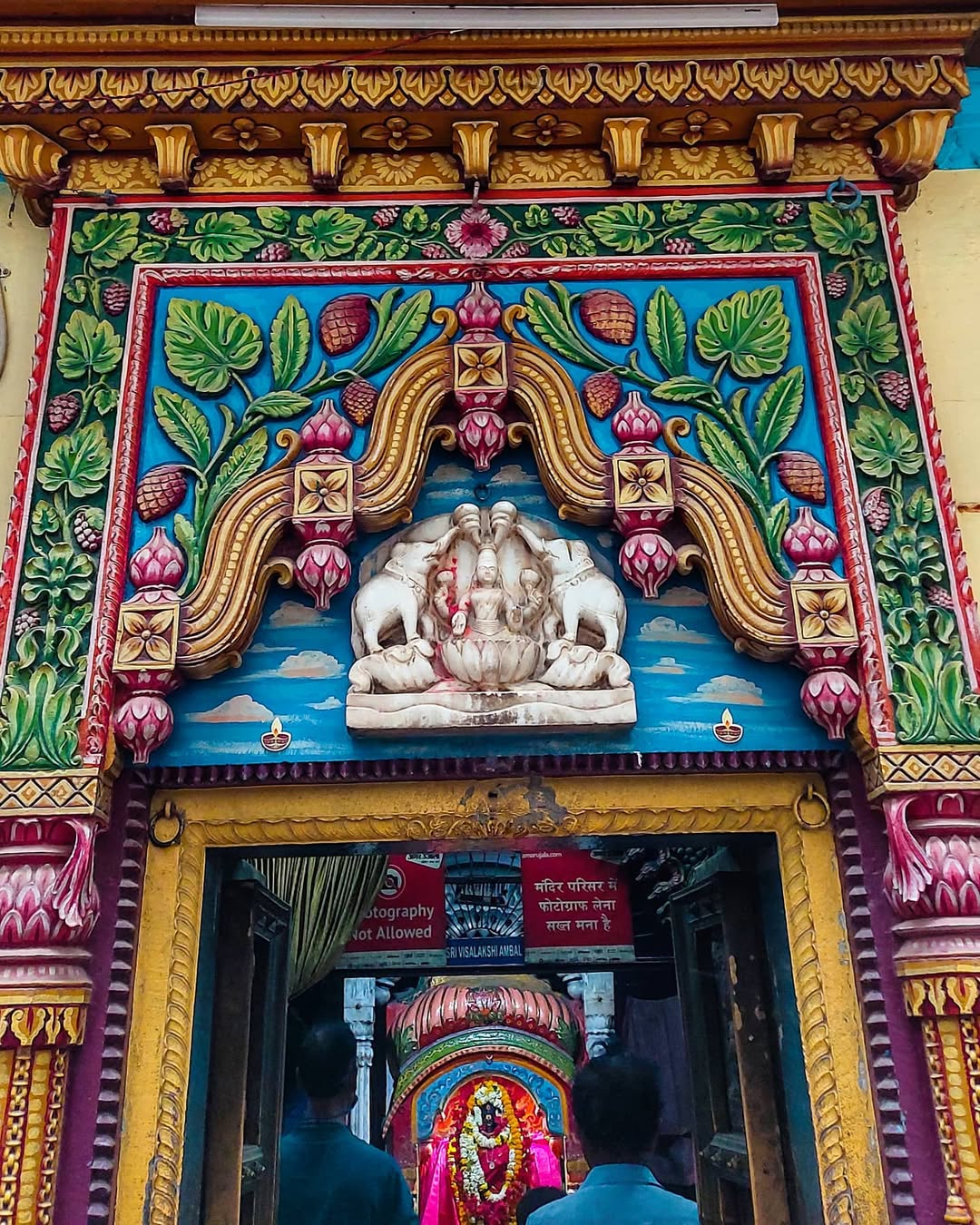
Varanasi | Kashi, Uttar Pradesh
Vishalakshi Gauri Temple
Also known as: Kashi Vishalakshi Shaktipeetha, Vishalakshi Mata Shaktipeeth, Manikarni/Manikarnika Shakti Peeth, Vishalakshi Temple
Situated just steps away from the sacred Ganges in Varanasi, this temple is one of the 51 Shakti Peethas. 'Vishalakshi' translates to 'She who has large, beautiful eyes.' Worshipped both as a supreme Shakti Peetha and a vital stop on the Nav Gauri Yatra, she is globally renowned as the bestower of absolute abundance, health, and moksha (liberation).
The History
In 1971, the temple underwent a massive renovation funded by South Indian devotees, giving it its distinct current appearance. Spiritually, it holds an incredibly high status and is considered one of the 'Three Primary Shakti Shrines' alongside Kanchi Kamakshi and Madurai Meenakshi, forming a powerful triad of Goddess worship in Hinduism.
Sacred Architecture
South Indian Architecture in Kashi
The current temple structure stands out in North India as it is predominantly built in the South Indian (Dravidian) architectural style. The temple's Vimana (tower over the sanctum) and entrance Gopuram are adorned with elaborate, vibrant stucco carvings of various deities and mythological scenes.
Inside the Garbhagriha (sanctum sanctorum), devotees are blessed with two distinct idols of Goddess Vishalakshi: a smaller, ancient Swayambhu (self-manifested) black stone idol (often referred to as Adi Vishalakshi), and a taller, beautifully carved idol installed later to encompass the older one.
A unique architectural feature of this temple is its intricately carved ceiling, which displays the 12 signs of the zodiac (Rashis) and planetary positions, echoing the deep astrological traditions of the region.
Legend of the Deity
Because of its proximity to the sacred Manikarnika Ghat (the cosmic cremation ground), the temple is deeply associated with liberation and final rites. Lord Shiva protects this sacred site and the entire city of Kashi in his fierce, uncompromising form as Kaal Bhairav.
Worship & Rituals
The worship of Vishalakshi Mata is profoundly revered; it is believed to grant everything a devotee could ask for—health, wealth, abundance, progress, and prosperity. In local tradition, the line between her and Goddess Annapurna dissolves completely; it is taught that Annapurna is Vishalakshi herself, acting as the divine mother who feeds and nourishes the entire city of Varanasi.
Daily recitations of the Lalita Sahasranama and continuous Kumkumarchana are central to the worship here, bestowing Soubhagya (marital bliss) and peace to all who visit.
Festivals
The temple is a crucial pillar of the Nav Gauri Yatra. According to Puranic procedure, the darshan of all 9 Gauri forms must ideally be completed in a single day on the Tritiya (third day) of the Shukla Paksha, commencing at the Mukhnirmalika Gauri Mata shrine.
Kajali Teej and Dev Deepawali are also celebrated with immense grandeur, with thousands of lamps illuminating the nearby Ganga ghats.
⏳ Daily Schedule
06:00 AM - 12:30 PM: General Darshan
12:30 PM - 04:00 PM: Temple Closed
04:00 PM - 09:00 PM: Evening Darshan & Shringar
Associated Shrines
Kashi Vishwanath Temple
Husband of Vishalakshi (Lord Shiva)
The primary Jyotirlinga of Kashi; spiritually, a visit to Vishalakshi is intricately linked with darshan of Vishwanath.
Annapurna Devi Temple
Form of Parvati / Identical Energy
In the deep theological landscape of Kashi, it is believed that Annapurna Devi is Vishalakshi Mata herself, providing food and nourishment to the entire city.
Mukhnirmalika Gauri Mata
Fellow Nav Gauri
The mandatory starting point for the sacred Nav Gauri Yatra as prescribed in the Skanda Purana.
Kaal Bhairav Temple
Guardian of Kashi (Form of Shiva)
Known as the Kotwal (Chief of Police) of Kashi; devotees traditionally seek his permission before entering or leaving the city.